blog

Characterization of Rotavirus A isolated from bat and rodent hosts

A group from Division of Molecular Pathobiology, International Institute for Zoonosis Control, Hokkaido University, Sapporo, Japan, etc. has reported about isolation and characterization of distinct Rotavirus A (RVA) in bat and rodent hosts.
https://pubmed.ncbi.nlm.nih.gov/36633410/

Here, RVA was isolated from Egyptian fruit bat and Natal multimammate mouse collected in Zambia (representative strains: 16-06 and MpR12).
The RVA genome consists of 11 dsRNA segments, each encoding 6 structural viral proteins (VPs) and 5 or 6 nonstructural proteins (NSPs). RVA has a nonenveloped, triple-layered virion, with the outer capsid layer consisting of the spike protein VP4 and the glycoprotein VP7.

It was found that 16-06 entered cells by binding to sialic acids on the cell surface, while MpR12 entered in a sialic acid-independent manner. Notably, glycan-binding analysis suggested that 16-06 recognizes both human and animal-type sialic acid, NeuAc and NeuGc.

Rice phyllosphere microbiome: Differences in microbial communities between wild and cultivated rice

A group from State Key Lab of Urban and Regional Ecology, Research Center for Eco-Environmental Sciences, Chinese Academy of Sciences, Beijing, China, etc., has reported about differences in microbial communities between wild and cultivated Rice.
https://pubmed.ncbi.nlm.nih.gov/36625666/

The core rice phyllosphere bacteria contained 27 Proteobacteria that made up 62.8% of relative abundance, and Pantoea was the most abundant genus (42.7%), followed by Methylobacterium (4.8%), Pseudomonas (3.6%), Acinetobacter (2.9%), and Serratia (2.1%). Except for Proteobacteria, Actinobacteriota (11.7%), Firmicutes (8.5%), and Bacteroidota (0.5%) were the abundant phyla of the core phyllosphere bacteria. As for fungi, 29 core fungal ASVs were mainly classified in the genera of Nigrospora (13.2%), Pyrenophora (13.1%), Papiliotrema (12.5%), and Phaeosphaeria (4.5%). Although the core taxa were present in all the samples, the relative abundance of these ASVs varied significantly across rice species and sampling sites.

For bacteria, Xanthomonas, Klebsiella and Sphingomonas were mostly enriched in the wild rice. Meanwhile, there were some core bacteria significantly enriched in the wild rice, such as Methylobacterium, Xanthomonas, Hymenobacter, and Klebsiella. Compared to the cultivated rice, Methylobacterium was the most enriched genus in wild rice. For fungi, Khuskia, Acidomyces, and Pyrenophora were mostly enriched in the wild rice, while none of core fungal taxa were enriched in the wild rice. Compared to the wild rice, Pseudomonas and Comamonas were the main enriched bacterial genera in the cultivated rice, and Chaetomium, and Rhodotorula were the main enriched fungal genera in the cultivated rice, respectively.

From a view point of functional profiles of the rice phyllosphere microbiome, significantly higher functional potentials of methanol oxidation (+594%), methylotrophy (+460%), ureolysis (+430%), and photoheterotrophy (+345%) were expected in wild rice than in cultivated rice (P < 0.05) (Fig. S5C). In addition, cultivated rice had significantly higher potentials of plant pathogens (+91%), human-associated (+88%) and human pathogens (+88%).
Burkholderia oklahomensis agglutinin (BOA) lectin effectively inhibits various variants of concern of SARS-CoV-2

A group from Department of Structural Biology, University of Pittsburgh School of Medicine, Pittsburgh PA, USA, etc. has reported about Burkholderia oklahomensis agglutinin (BOA) lectin which could effectively inhibit SARS-CoV-2 infection.
https://www.ncbi.nlm.nih.gov/pmc/articles/PMC9810211/

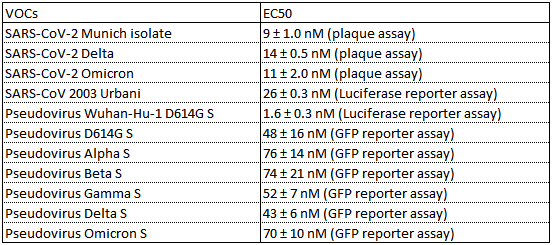
It was shown that BOA lectin could effectively inhibit various variants of concern (VOC) of SARS-CoV-2 as shown below (EC50 for VOCs of SARS-CoV-2).

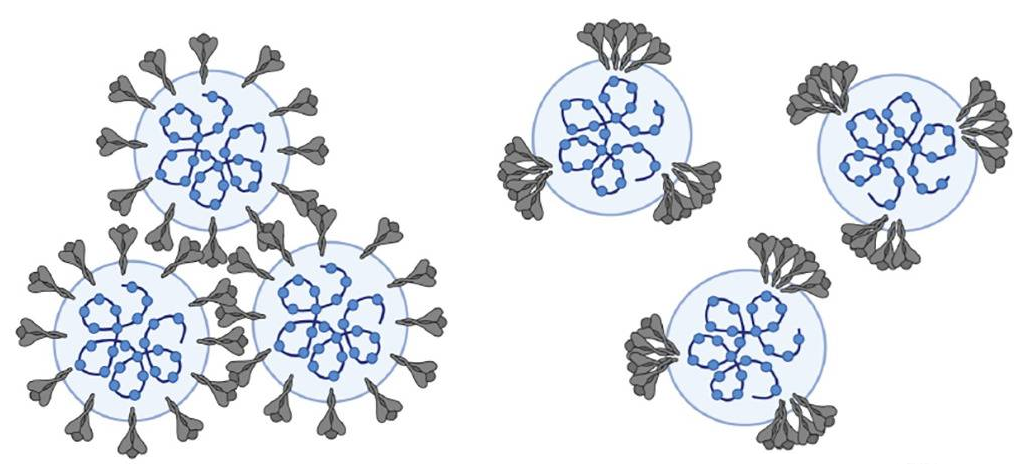
It is known that VOCs of SARS-CoV-2 possess minimal changes with respect glycosylation. Probably with this reason and since BOA binds glycans on multiple Spike proteins, possibly crosslinking different Spike proteins on a single virion or crosslinking Spike proteins on different virions, BOA lectin could inhibit various VOCs of SARS-CoV-2 infection effectively.

Actually, BOA contains two domains and therefore four glycan binding sites, and makes interviron and intraviron crosslinkings as show below.

Sialidase activity of intestinal bacterial is related to severity of acute colitis in mice

A group from Institute of Physiology, University of Zurich, Zurich, Switzerland, etc. has reported that increase of intestinal bacterial sialidase activity exacerbates acute colitis in mice.
https://www.ncbi.nlm.nih.gov/pmc/articles/PMC9780602/

The gut microbiota mainly consists of the phyla Bacteroidetes and Firmicutes, while members of Actinobacteria, Verrucomicrobia, Fusobacteria and Proteobacteria represent a minor fraction. The gut microbiota plays a vital role in human health, supplying essential nutrients, training the immune system, and helping to protect against pathogens. The gut microbiota is also involved in the host metabolism and has been linked to a variety of chronic diseases.

Gut microbes express a multitude of genes, including a vast group of carbohydrate-active enzymes, which are required to digest complex oligo- and polysaccharides. In addition to digesting dietary carbohydrates, these enzymes are also active on the thick mucus layer lining intestinal surfaces. The cleavage of host glycans by bacterial GHs may also alter carbohydrate structures involved in cell adhesion, trafficking and activation. Especially fucosylated and sialylated epitopes are recognized by endogenous lectins, such as selectins and siglec, which regulate leukocyte trafficking and activation, respectively.

To investigate the impact of bacterial glycoside hydrolase activities on the gut microbial composition and on host glycans during colon inflammation, local glycoside hydrolase activity was promoted by supplementing mice developed acute colitis with recombinant E. coli expressing specific sialidase, fucosidase and rhamnosidase enzymes. Interestingly, whereas increased fucosidase and rhamnosidase activity did not alter the course of colitis, increased sialidase activity exacerbated disease severity.

Of note, the microbial composition of mice gavaged with recombinant E. coli expressing specific sialidase, fucosidase and rhamnosidase enzymes had little changes in the gut microbiota composition.

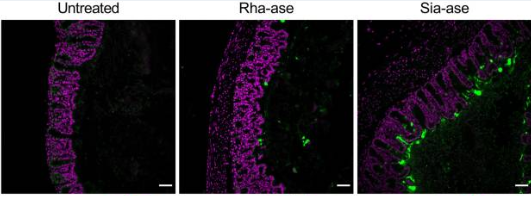
On the other hand, it was found that the sialic acid on mucosal glycans and also on resident leukocytes in the colon mucosa was cleaved from PNA stainning and siglec ligand staining experiments.

PNA staining in proximal colon

As a conclusion, the remodeling of surface sialylation caused by increased sialidase activity could account for the observed exacerbation of acute colitis in mice due to down-regulate activation of immune cells.

Changes in glycan patterns in the medial prefrontal cortex of autism spectrum disorders (ASD) rats

A group from College of Life Sciences, Shaanxi Normal University, Xi’an, Shaanxi, China, etc, has reported about changes in glycan patterns and glycan-related genes in the medial prefrontal cortex of autism spectrum disorders (ASD) rats.
https://www.ncbi.nlm.nih.gov/pmc/articles/PMC9772556/

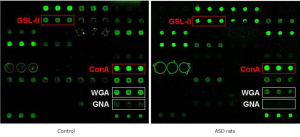
With using lectin microarrays, the following changes in glycosylation were found in ASD rats.
(1) Branched high-mannose (recognized by ConA) was upregurated in ASD rats,
(2) complex-type antennary agalacto N-glycan (recognized by GSL-II and PHA-E) was up-regulated in ASD rats, and
(3) Siaα2-3 Gal/GalNAc (recognized by WGA and MAL-I) and terminal GalNAc structure (recognized by BPL and VVA) were down-regulated in ASD rats.

“lectibody”, bispecific molecule of a lectin and an antibody scFv, for cancer therapy

A group from Faculty of Biology, University of Freiburg, Freiburg, Germany, etc. has reported about a lectibody recruiting cytotoxic T lymphocytes while simultaneously binding to tumor-associated antigen on cancer cells as a new modality for cancer therapy.
https://www.ncbi.nlm.nih.gov/pmc/articles/PMC9733292/

The lectibody was realized by conjugating an anti-CD3 single-chain antibody fragment to the B-subunit of Shiga toxin. The tumor-related glycosphingolipid globotriaosylceramide (Gb3) expressed on malignant cancer cells can be selectively recognized by the B-subunit of Shiga toxin (which is a kind of lectin), and the CD3 receptor on T cells can be targeted by the single chain variable fragment (scFv) OKT3 as the anti-CD3-binding molecule.

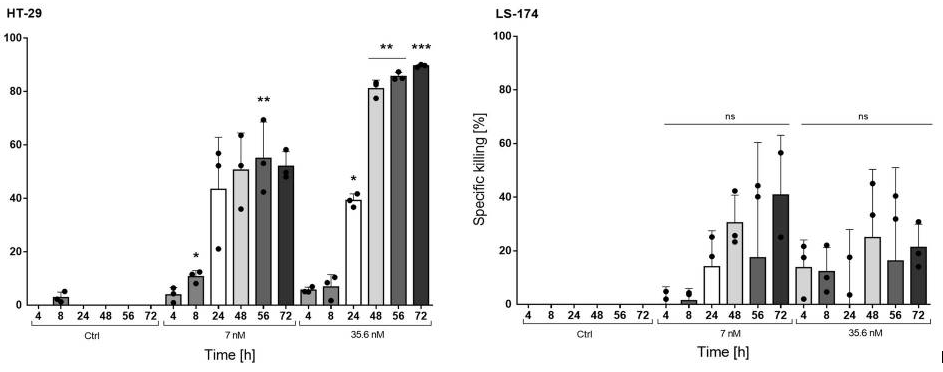
To show the proof of the concept, two human colon adenocarcinoma cell lines HT-29 and LS-174 which express different abundance of Gb3 antigen were targeted with the lectibody. The HT-29 cell line expresses a high amount of Gb3, in contrast, the LS-174 cell line expresses very low or no amounts of Gb3. As shown below, it was demonstrated that the killing activity strongly correlates to the abundance of the Gb3 antigen at the surface of the target cells.

Two diazotrophic beneficial bacteria isolated from the rhizosphere of a wild wheat ancestor (Pseudomonas and Enterobacter)

A group from UMR IPSiM, Université de Montpellier, Institut Agro, CNRS, Montpellier, France, etc. has reported about two diazotrophic PGPR strains, isolated from the rhizosphere of a wild wheat ancestor as beneficial bacteria.
https://www.ncbi.nlm.nih.gov/pmc/articles/PMC9740669/

Two bacterial strains, Pseudomonas BPMP-PU-28 and Enterobacter BPMP-EL-40, were isolated from the rhizosphere of a wild wheat ancestor. These strains have been shown to stimulate plant growth when the availability of nitrogen in the soil is limiting for the growth.

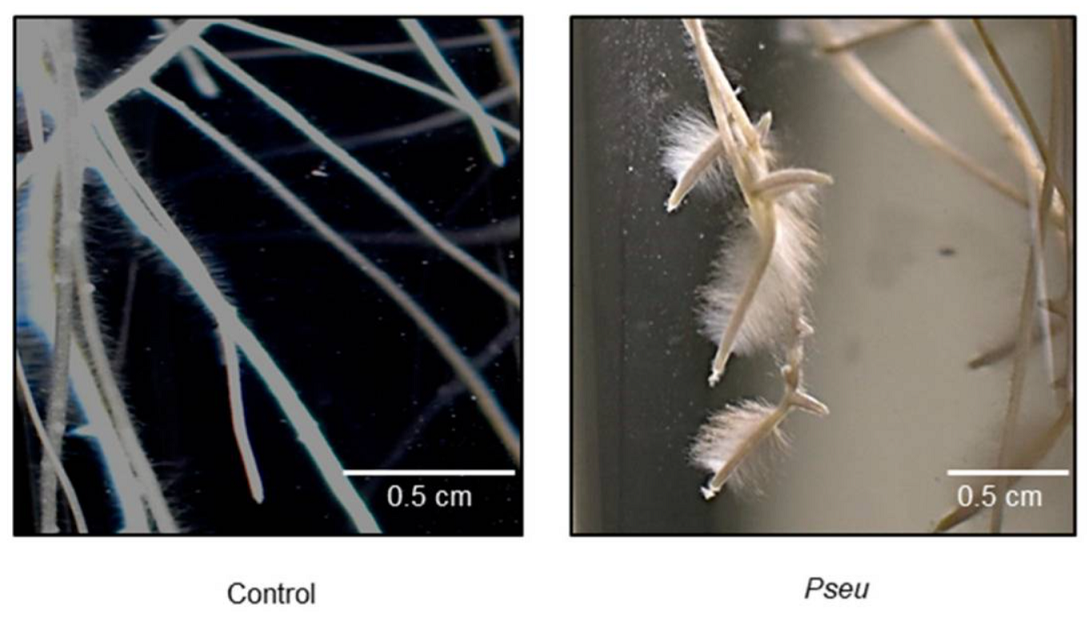
A striking effect of culture supernatant obtained from these beneficial bacteria was observed on root hair density and length in root apical regions as shown below (left-hand side is a control and right-hand side shows that of Pseudomonas).

The following features were seen in exudates from these bacteria.

The AHL N-tetradecenoyl-L-homoserine lactone (TDHL) has been found in BPMP-PU-28 and BPMP-EL-40 exudates. AHLs play a role in bacterial quorum sensing and in bacterial communication networks. They have positive effects on plant growth, and could be recognized by plant receptors and lead to modifications of plant gene expression.

It should also be noted that while no amino acids were detected in the bacterial exudates, some cyclopeptides were present. Together with AHLs, cyclic peptides have been shown to play a role in quorum sensing. In addition to playing a role in quorum sensing, cyclic peptides can act as mimetics of phytohormones which upregulate salicylic acid, ethylene and jasmonic acid signaling.

In addition to AHLs and cyclopeptides, many of the metabolites identified in exudates may play a role in plant growth promotion, for example by behaving as antibiotics (about 18% of the identified metabolites can be expected to have antibiotic effects), or by improving nutrient ion acquisition.

Changes in rhizospheric microbiota due to chitin addition into soybean soils

A group from Key Laboratory of Mollisols Agroecology, Northeast Institute of Geography and Agroecology, Chinese Academy of Sciences, Harbin, China, etch. has reported about changes in dominant bacterial and fungal taxa due to chitin addition into soybean soils.
https://www.ncbi.nlm.nih.gov/pmc/articles/PMC9730418/#SM1

Chitin addition is considered promising methods for alleviating soybean continuous cropping obstacles, however, the underlying mechanisms of soil sickness reduction remain unclear.

In this study, changes in dominant bacterial and fungal taxa due to chitin addition were evaluated.
At the bacterial OTU level, chitin distinctly increased the relative abundance of Streptomyces, Sphingomonas, Bacillus, Mesorhizobium and Nitrospira. At the fungal phylum level, chitin addition markedly increased the relative abundance of Zygomycota, and conversely drastically reduced the relative abundance of potential pathogens affiliated with Fusarium, Paraphoma, Cylindrocarpon and Septoria.

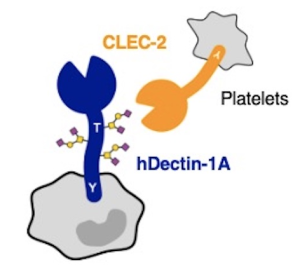
Dectin-1 is O-glycosylated and serves as a ligand for C-type lectin receptor CLEC-2

A group from Department of Medicine and Bioregulatory Science, Graduate School of Medical Sciences, Kyushu University, Fukuoka, Japan, etc. has reported that Human Dectin-1 is O-glycosylated and serves as a ligand for C-type lectin receptor CLEC-2.
https://pubmed.ncbi.nlm.nih.gov/36479973/

Dectin-1 is known as the best-characterized C-type lectin receptors (CLRs) recognizing β-glucan on pathogens. Here, it was first found that Dectin-1 could be a ligand for CLEC-2, another CLR expressed on platelets. It was also known that CLEC-2 recognizes its endogenous ligand podoplanin in an O-glycosylation-dependent manner.

Dectin-1 is a mucin-like protein and its stalk region is highly O-glycosylated with sialylated core 1 (Galβ1-3GalNAc) and/or sialylated core 3 (GlcNAcβ1-3GalNAc) glycans. This finding will be the first example of an innate immune receptor also functioning as a physiological ligand to regulate ontogeny upon glycosylation.

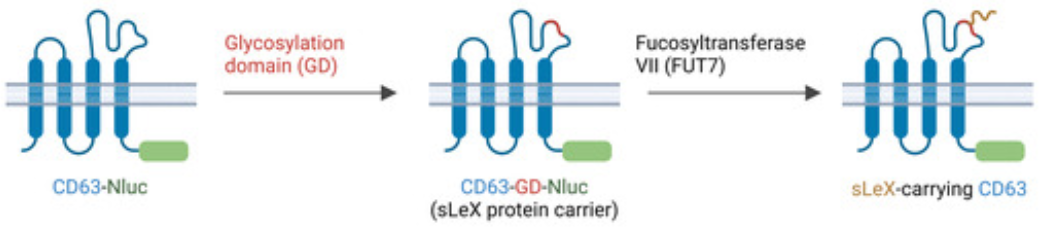
Glycosylation engineering of the extracellular loop of CD63 on the surface of exosomes to improve the targeting performance of its DDS

A group from Biomolecular Medicine, Division of Biomolecular and Cellular Medicine, Department of Laboratory Medicine, Karolinska Institute, Huddinge Sweden, etc. has reported about cell‐specific targeting of extracellular vesicles (EVs) though engineering of glycan expression on EVs.
https://www.ncbi.nlm.nih.gov/pmc/articles/PMC9719568/

Extracellular vesicles are thought to be promising carriers for the delivery of a variety of chemical and biological drugs. In order to improve the targeting performance of EVs, EVs were engineered to display the glycan of interest.
EV producer cells were genetically engineered to co‐express a glycosylation domain (GD) inserted into the large extracellular loop of CD63 and fucosyltransferase VII (FUT7) or IX (FUT9). P19 (19‐mer, derived from PSGL‐1) and CTP (28‐mer, from beta‐chorionic gonadotropin) were selected as potential sLeX peptide carriers (i.e., as the glycosylation domain). The combination of FUT7 and PSGL-1 resulted in the highest expression of sLeX, and also the combination of FUT9 and PSGL‐1 resulted in the highest expression of Lewis X (LeX) but not sLeX.

Through this strategy, surface display of two types of glycan ligands, sLeX and LeX, on EVs was demonstrated, and achieved high specificity towards activated endothelial cells and dendritic cells, respectively.

Powered by WordPress |Copyright © 2020 Emukk. All rights reserved