The importance of booster vaccine doses for protection against all Omicron variants

A group from Center for Retrovirus Research, The Ohio State University, Columbus, OH 43210, USA, etc. has reported about the importance of booster vaccine doses for protection against all Omicron variants.
https://www.sciencedirect.com/science/article/pii/S1931312822002207?via%3Dihub

There are several Omicron sub-lineages with significant variations in their S proteins, including BA.1, BA.1.1, and BA.2. While the constellation of mutations varies between isolates, the BA.1.1 lineage is defined by the presence of a single R346K mutation that is absent from the BA.1 lineage, whereas the BA.2 lineage is defined by key S mutations T19I, L24S, Δ25/27, V213G, T376A, and R408S. Although BA.1 was the major variant during the Omicron wave of the pandemic, the BA.2 variant, and to a lesser extent BA.1.1, has begun to account for an increasing proportion of cases. In particular, the BA.2 variant exhibits enhanced transmissibility relative to BA.1 and can reinfect previously BA.1-infected individuals.

In this study, authors have demonstrated the followings:
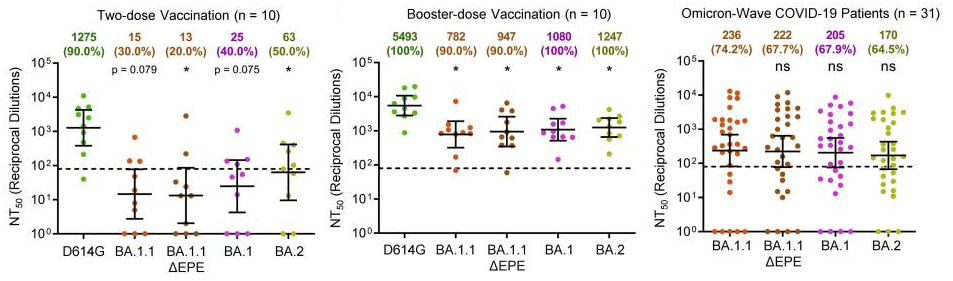
Omicron BA.1.1 is effectively neutralized by Omicron patient sera, and Omicron sub-lineages are comparably neutralized by Omicron patient sera.
Omicron BA.1 and BA.2 are resistant to neutralization by two-dose mRNA vaccination but sensitive to neutralization after a booster dose.
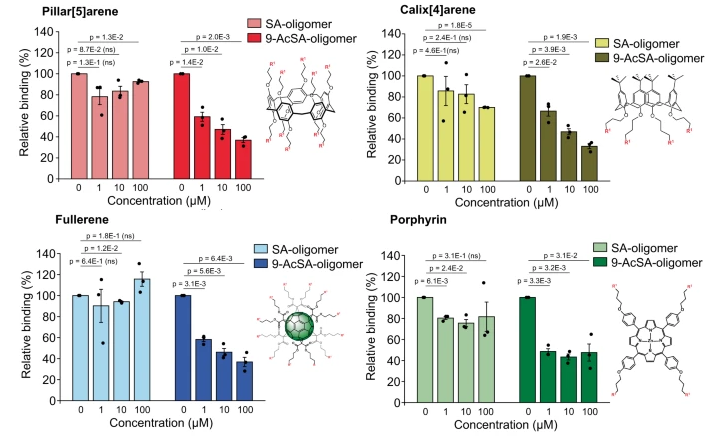
Multivalent 9-O-Acetylated-sialic acid glycoclusters could be potent inhibitors for SARS-CoV-2 infection

A group from Louvain Institute of Biomolecular Science and Technology, Université catholique de Louvain, Louvain-la-Neuve, Belgium, etc. has reported that multivalent 9-O-Acetylated-sialic acid glycoclusters could be potent inhibitors for SARS-CoV-2 infection.
https://www.nature.com/articles/s41467-022-30313-8

The S1-subunit of SARS-CoV-2 Spike protein can be divided into the N-terminal domain (NTD) containing the glycan-binding domain (GBD) and the C-terminal domain (CTD) accommodating the receptor-binding domain (RBD). The GBD engages glycoproteins and glycolipids in most CoVs8, whereas the RBD binds to the ACE2 receptor.

Here authors focused on 9-O-acetylated-SA (9-AcSA), that are of particular interest, since it has been shown that coronaviruses OC43 and HKU bind this glycan via a conserved receptor-binding site in their spike protein.

While monovalent 9-AcSA shows a high IC50 > 100 µM, we observed for all 9-AcSA-derived glycoclusters screened an IC50 in the range 1-10 µM confirming a multivalent effect for these molecules. Among these, 9-AcSA-porphyrin even shows an IC50 in the sub-micromolar range, both on purified 9-AcSA and in the cellular context, making it an excellent candidate as a therapeutic agent.

Wheat Rhizosphere: Effects of ACC deaminase-producing rhizobacteria (Enterobacter cloacae ZNP-4)on wheat growth

A group from Department of Bioengineering and Biotechnology, Birla Institute of Technology, Mesra, Ranchi, Jharkhand, India, etc. has reported about the effects of 1-aminocyclopropane-1-carboxylic acid deaminase (ACCD) producing Plant growth promoting rhizobacterium (PGPR) designated as Enterobacter cloacae ZNP-4 on wheat growth under abiotic stressors such as salt (NaCl) and metal (ZnSO4) stress.
https://www.ncbi.nlm.nih.gov/pmc/articles/PMC9075627/

Many of the rhizosphere bacteria produce ACCD, which reduces the level of ‘stress ethylene’ in their associated plants by degrading ACC to ammonia and α-ketobutyrate, thereby minimizing the substrate availability for ethylene generation. It has been shown that micro-organisms with ACCD activity >20 nmol α-ketobutyrate mg-1 h-1 are sufficient to enhance plant growth under stress conditions.

Like many other crops, germination of wheat seed and seedling growth are severely affected by salt and metal stress worldwide. The various conventional methods are in practice for alleviating salt stress, but most of them are costly and deleterious to environments. The micro-organisms residing in the rhizosphere have proved to regulate plant growth under normal and stress conditions. Therefore, this study aimed to investigate the effectiveness of ACCD-producing bacterium Enterobacter cloacae ZNP-4 as a biological tool for alleviating the adverse effects of abiotic stressors and examined for its potential to alleviate stress-induced plant growth inhibition.

As a result, the inoculation of strain ZNP-4 significantly improved the various growth parameters of wheat plant such as shoot length (41%), root length (31%), fresh weight (28%), dry weight (29%), photosynthetic pigments chlorophyll a (62%) and chlorophyll b (34%). Additionally, the strain was found to be efficient for minimizing the imposed Zn stress in terms of improving plant growth, biomass and photosynthetic pigments in pots containing different levels of metal stress of 150 mg kg-1 (treatment T1) and 250 mg kg-1 (treatment T2), where (T0: 0 mM; T1: 150 mM, T2: 200 mM NaCl) are different salinity conditions.

In addition, Effect of bacterial inoculation on generation of abiotic stress-induced reactive oxygen species (ROS) was monitored under salinity and metal stress treatments.
The positive effects of PGPR occurred concurrently with the decrease in abiotic stress-induced reactive oxygen species (ROS) molecules such as hydrogen peroxide (H2O2) and superoxide (O2) contents, which lead to lipid peroxidation, membrane deterioration, metabolic and structural dysfunctions, further leading to cell death.
The bacterial inoculation significantly reduced the H2O2 level under tested salinity stress. The highest significant (p=0.05) decrease of 43.2% was recorded at treatment T1 followed by 32.5% at treatment T2. The salinity induced generation of O2 content was also minimized with 52.7% (p=0.05) and 49% (p=0.05) at treatment T1 and T2 in bacterial treated plants.

Pseudomonas strains inhibit Ralstonia solanacearum and its underlying mechanisms: Importance of Secondary metabolites, DAPG and Orfamides

A group from Department of Biology, University of York, York, UK, etc. has reported about Ralstonia solanacearum (the causative agent of bacterial wilt) inhibition by Pseudomonas strains and its underlying mechanisms of potential pathogen suppression.
https://onlinelibrary.wiley.com/doi/10.1002/mbo3.1283

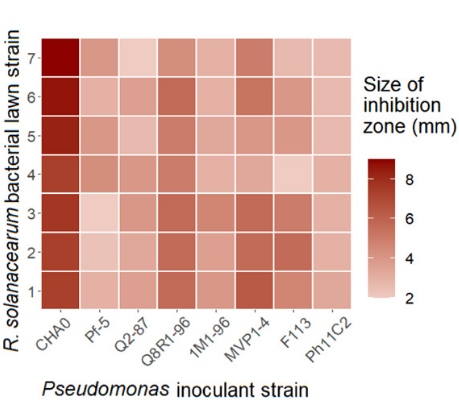
It was found that Pseudomonas protegens CHA0 was the most inhibitory biocontrol strain against Ralstonia solanacearum.

Secondary metabolite clusters were analyzed by using antiSMASH, and from 11 to 17 metabolic clusters were identified in each of the eight Pseudomonas genomes. Nonribosomal peptide synthetases (NRPS) were the most abundant secondary metabolite clusters. Similarly, DAPG metabolite (belonging to the T3PKS cluster), as well as the pyoverdine siderophore (NRPS cluster) metabolite clusters, were found in all strains. Overall, the highest number of clusters were detected in CHA0 and Pf-5 strains. These strains also harbored some unique metabolite clusters such as the T1PKS metabolic cluster, which encodes pyoluteorin antimicrobial, and the CDPS cluster, which encodes unknown metabolites. CHA0 and Pf-5 also had the greatest number of NRPS clusters and were the only two strains capable of producing the cyclic lipopeptides known as orfamides, and only orfamide A was production by CHA0 strain.

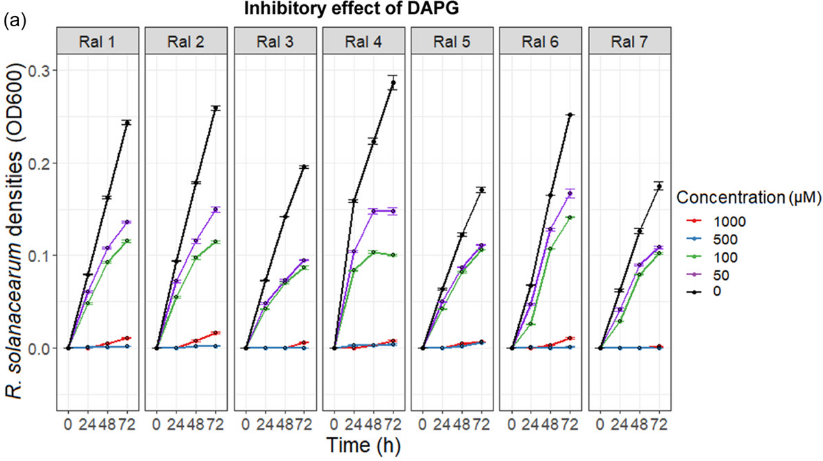
DAPG suppressed every R. solanacearum strain in a concentration-dependent manner, and all tested strains were unable to grow at the two highest concentrations (500 and 1000 μM).

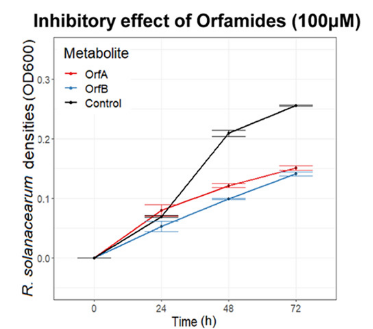
Orfamide variants “A” and “B” isolated from the Pseudomonas CHA0 strain were tested against R solanacearum strains (only #1 and #7 due to limited quantities of extracted compounds). Orfamide variants suppressed both Ralstonia strains as well.

It is quite likely that secondary metabolites from Pseudomonas strains such as DAPG and Orfamides could be pathogen-suppressing materials against R. solanacearum.

A unique plant lectin from Narcissus tazetta bulb, NTL-125, could effectively inhibit SARS-CoV-2 replication

A group from Division of Plant Biology, Bose Institute, P/12 C.I.T. Scheme VII(M), Kolkata, 700054, India, etc. has reported that a unique mannose binding plant lectin from Narcissus tazetta bulb, NTL-125, could effectively inhibit SARS-CoV-2 replication in Vero-E6 cell line.
https://www.ncbi.nlm.nih.gov/pmc/articles/PMC8988448/

A unique mannose binding plant lectin from Narcissus tazetta bulb named NTL-125 could inhibit SARS-CoV-2 replication in Vero-E6 cell line. The inhibitory concentration using Vero-E6 cells that reduced the SARS-CoV-2 viral entry by 50% (IC50) was approximately 0.8 µg/mL (i.e., 50 nM), and the cytotoxicity of NLE-125 on Vero-E6 cells was above 95% viable at 5 µg/mL and 85% viable at 10 µg/mL concentration.

The molecular docking studies revealed that thirty-six residues of RBD and 44 residues of NTL-125 were located within 5Å distance from each other in the complex whereas 27 residues of ACE-2 are in proximity to 32 residues of RBD. There are 17 common residues of RBD that interact with both ACE-2 and NTL-125. Among all these residues, for the RBD:NTL-125 complex, 10 of RBD and 11 of NTL-125 are within 3Å distance in the docked structure. For the RBD:ACE-2 complex, 9 residues of RBD and 9 residues of ACE-2 are within 3Å distance. NTL-125 occupies exactly the same region of the receptor binding motif (RBM) of the spike protein where hACE2 usually binds. As a result, the binding free energy change of NTL125–Spike protein interaction (-13.3 kcal/mol, kd ~0.41nM) is more negative than that between ACE2-Spike protein (-11.2 kcal/mol, kd ~12 nM) which clearly indicates that the former is more stable than the later.

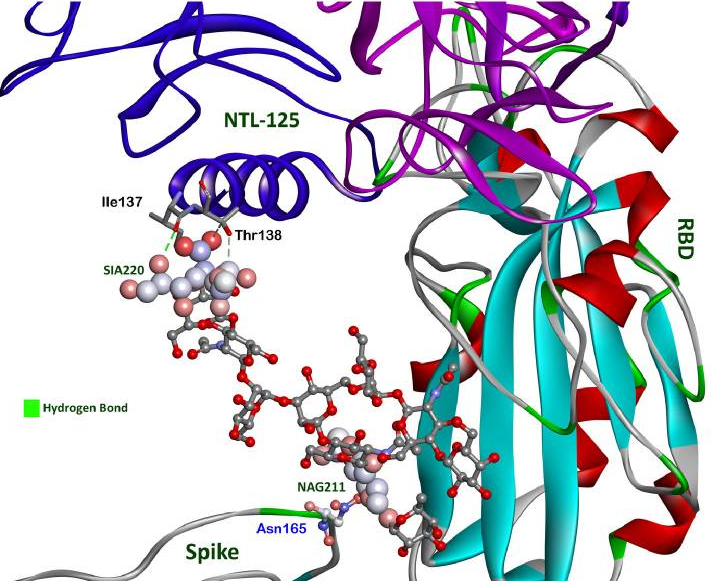
Docking study confirmed further that the interaction between NTL-125-spike protein is also mediated through a S-protein glycan moiety, covalently linked to Asn165 of the spike protein and interacts with Ile137 and Thr138 of NTL-125 protein. Thus, the interaction between NTL-125-Spike is not only through amino acid residues but also through the glycan moieties.

Plant Natural Biopesticides: natural antimicrobial volatile organic compounds produced by entomopathogenic fungi

A group from Faculty of Science and Engineering, Swansea University, Singleton Park, Swansea SA2 8PP, Wales, UK, etc. has reported that natural antimicrobial volatile organic compounds (VOCs) produced by entomopathogenic fungi (EPF) have have the potential for use as plant natural biopesticides.
https://www.ncbi.nlm.nih.gov/pmc/articles/PMC9025432/

EPF form symbiotic relationships with plants, leading to improved plant growth and productivity. Plants treated with EPF species, such as Metarhizium brunneum and Beauveria bassiana, usually have more extensive root systems, greater biomass and higher crop yields than untreated plants.

In this study, antimicrobial properties of fungal VOCs produced by these EPF were investigated against the following soil microbes,
Gram-negative bacteria (Escherichia coli, Pantoea agglomerans, Pseudomonas aeruginosa),
Gram-positive bacteria (Micrococcus luteus, Staphylococcus aureus, Bacillus subtilis, B. megaterium, B. thuringiensis),
Yeasts (Candida albicans, Candida glabrata), and
Plant pathogenic fungi (Pythium ultimum, Botrytis cinerea, Fusarium graminearum).

The most potent antimicrobials were isovaleric acid and 1-octen-3-ol, which inhibited or killed bacteria, yeasts, filamentous fungi and the oomycete P. ultimum. In contrast, isoamyl formate, 3-octenone, cedrene and farnesene, although potent, were more restricted in their specificity. Some microbes were clearly more sensitive to M. brunneum VOCs than others. In order of sensitivity, F. graminearum was inhibited by far more compounds than any other test microbe, followed by B. cinerea, then P. ultimum. Of the test bacteria, B. megaterium was the most sensitive, followed by B. thuringiensis.

The natural antimicrobial VOCs identified in this study have the potential for use as plant natural biopesticides.

Why does the neutralizing antibody 35B5 show high neutralizing ability against the SARS-CoV-2 Omicron variant?

A group from Department of Gastroenterology of the Second Affiliated Hospital, School of Medicine and Life Sciences Institute, Zhejiang University, Hangzhou, China, etc. has reported that 35B5 potently neutralizes SARS-CoV-2 Omicron and other variants by causing significant conformational changes within a conserved N-glycan switch that controls the transition of RBD from the “down” state to the “up” state, which allows recognition of the host entry receptor ACE2.
https://www.ncbi.nlm.nih.gov/pmc/articles/PMC8960183/

Neutralization of SARS-CoV-2 by antibodies is carried out through mechanisms including ACE2 competition, ACE2 molecular mimicry, and Fc-receptor-mediated neutralization. N-linked glycosylation has important roles in viral pathology, including mediating protein folding and stability and shaping viral tropism. Glycosylation shields specific epitopes to facilitate viral immune evasion. Beyond the shield function, the glycans at N165 and N234 from the N-terminal domain (NTD) in SARS-CoV-2 act a molecular switch to control the conformational transition of the RBD from the “down” state to the “up” state, which is required for the receptor to bind to ACE2. N165 and N234 are conserved in SARS-CoV-1 and MERS-CoV, highlighting the common mechanism of RBD conformational transition in S proteins.

The Omicron S protein has significant antigenic shifts and structural changes, leading to immune escape of the Omicron variant from most mAbs. Previously, it had been shown that 35B5 has neutralizing activities against the WT and the Beta and Delta variants of SARS-CoV-2. 35B5 dissociates the S trimer and neutralizes SARS-CoV-2. In this study, it was found that 35B5 could neutralize the Omicron variant with a potent neutralizing efficacy much higher than that of many other neutralizing antibodies.
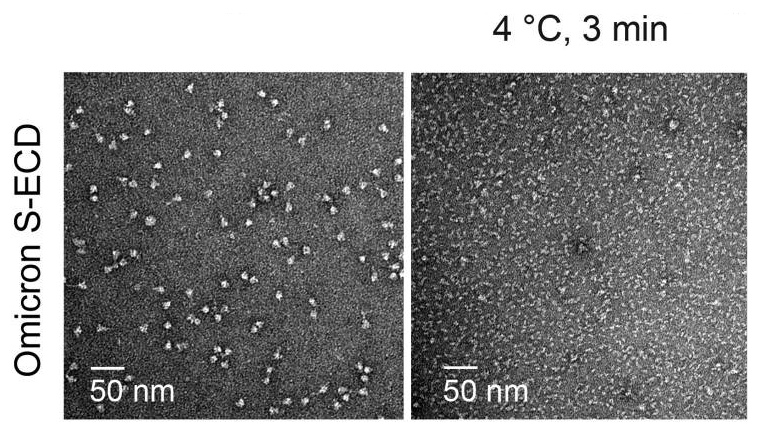
The actual reason why the S protein dissociates is that 35B5 displaces the conserved glycan switch from the RBD, leading to the unstable up states of the RBD and eventually causing the shedding of S1 from the S trimer. The glycan-displacement action of 35B5 represents an unprecedented neutralizing action of mAbs against SARS-CoV-2, which is different from the previously determined ACE2 competition and molecular mimicry mechanisms utilized by class 1 and 2 RBD mAbs and the Fc-receptor-mediated neutralizing mechanisms of class 3 and 4 RBD mAbs

 This figure shows that in vitro incubation with 35B5 led to complete dissociation of the Omicron S trimer.

Salivary glycan profiles could be good markers for discriminating diabetic nephropathy from non-diabetic renal disease

A group from Department of Nephrology, The First Medical Centre, Chinese PLA General Hospital, Chinese PLA Institute of Nephrology, State Key Laboratory of Kidney Diseases, National Clinical Research Center of Kidney Diseases, Beijing Key Laboratory of Kidney Disease, Beijing, China, etc. has reported that salivary glycan profiles could be good markers for discriminating diabetic nephropathy (DN) from non-diabetic renal disease (NDRD).
https://www.ncbi.nlm.nih.gov/pmc/articles/PMC9009518/

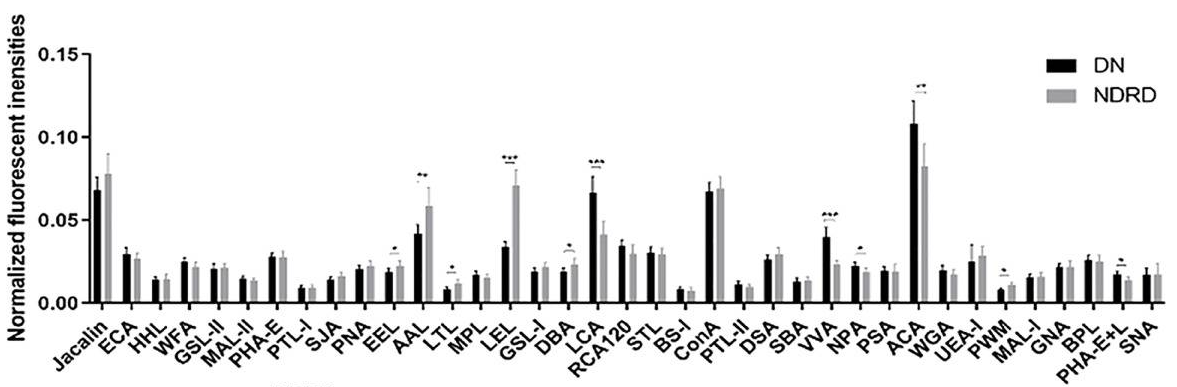
Glycan profiles in the saliva could be a non-invasive tool for distinguishing between DN and NDRD.

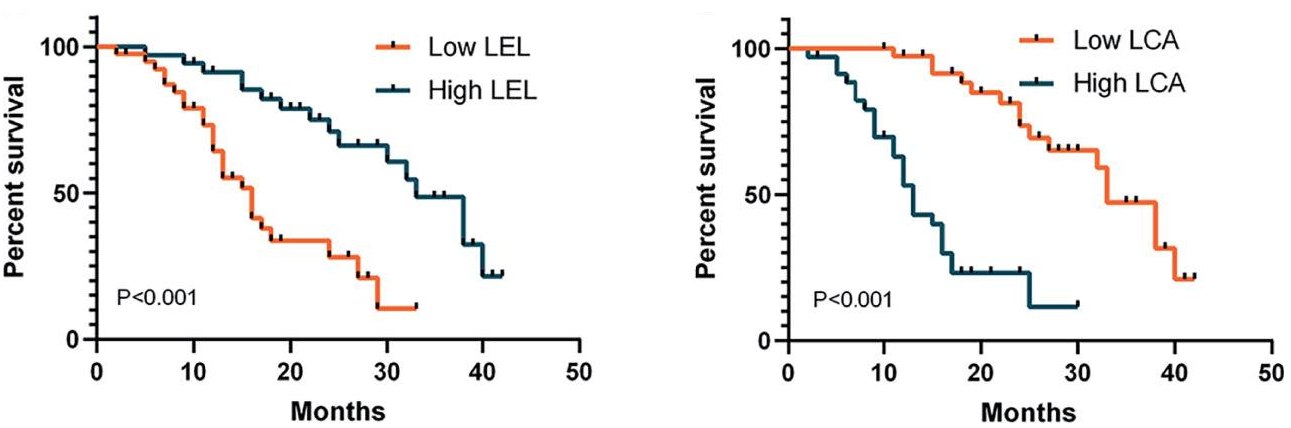
The AAL, LEL, LCA, VVA, and NPA levels could reflect the severity of DN, and

the LEL and LCA levels could indicate the prognosis of DN.

NeuGc specific hemagglutinins on Influenza A virus were engineered by introducing some mutations

A group from Department of Chemical Biology & Drug Discovery, Utrecht Institute for Pharmaceutical Sciences, Utrecht University, Utrecht, the Netherlands, etc. has reported that the binding specificity of hemagglutinin on influenza A virus can be switched from NeuAc to NeuGc by introducing several mutations.
https://pubmed.ncbi.nlm.nih.gov/35044215/

Influenza A viruses (IAV) initiate infection by binding to glycans with terminal sialic acids on the cell surface. Hosts of IAV variably express two major forms of sialic acid, N-acetylneuraminic acid (NeuAc) and N-glycolylneuraminic acid (NeuGc). NeuGc is present only in species that express an active form of the enzyme CMP-N-acetyl neuraminic acid hydroxylase (CMAH), which facilitates the hydroxylation of NeuAc to convert it to NeuGc. The gene encoding CMAH, mainly expressed in mammalian species, has been partially or completely lost at several distinct events during evolution, causing NeuGc to be absent in, among others, humans, ferrets, European dogs, and avian species.

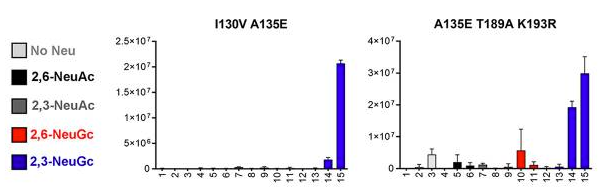
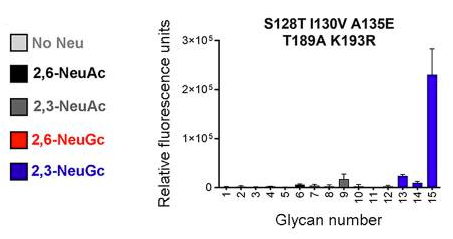
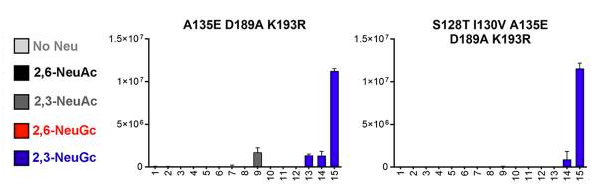
NeuGc binding specificity on hemagglutinin was achevied by the following methods,
(1) combining mutation A135E with mutations I130V or T189A+K193R in A/Chicken/Jalisco/12283/2012 H7N3 HA,

(2) combining five mutations S128T, I130V, A135E, T189A, and K193R in A/Turkey/Italy/214845/02 H7N3 HA, and

(3) combining three mutations A135E, D189A, and K193R or five mutations S128T, I130V, A135E, D189A, and K193R in A/Duck/Australia/341/1983 H15N8 HA.

urine Galectin-3 binding protein (uG3BP) is a potential biomarker of Lupus nephritis (LN)

A group from Department of Rheumatology, Shanghai Institute of Rheumatology, Renji Hospital, School of Medicine, Shanghai Jiao Tong University School of Medicine, China, etc. has reported that urine Galectin-3 binding protein (uG3BP) is a potential biomarker of Lupus nephritis (LN).
https://www.ncbi.nlm.nih.gov/pmc/articles/PMC8962213/

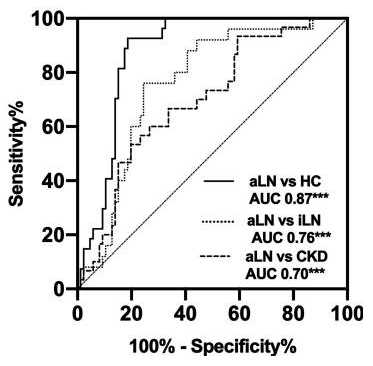
The levels of uG3BP were significantly increased in active LN patients compared to those in inactive LN (p<0.001), CKD patients (p=0.01), and healthy controls (p<0.001). ROC analysis indicated a good discrimination ability of uG3BP to differentiate active LN from chronic kidney diseases (CKD) patients (AUC=0.7), inactive LN (AUC=0.76), or healthy controls (AUC=0.87). The uG3BP levels were measured in urine samples by ELISA assay using human Galectin-3BP/MAC-2BP ELISA kit (DY2226) from R&D Systems (Minneapolis, MN, USA) according to the manufacturer’s instructions. All urine samples were diluted 1:30. uG3BP levels were normalized by urine creatinine levels. Urine creatinine levels were measured by Creatinine Parameter Assay Kit (KGE005, R&D Systems, Minneapolis, MN) using the same samples.

Powered by WordPress |Copyright © 2020 Emukk. All rights reserved