Archive 21/3/24

The amount of serum IgG in SARS-CoV-2 positive patients is inversely correlated with age at around 20 years old as a boundary

A group from Weill Cornell Medicine, New York has reported on the relationship between serum IgG and Age with using serum samples gathered from April 2020 to June 2020.
https://jamanetwork.com/journals/jamanetworkopen/fullarticle/2777743

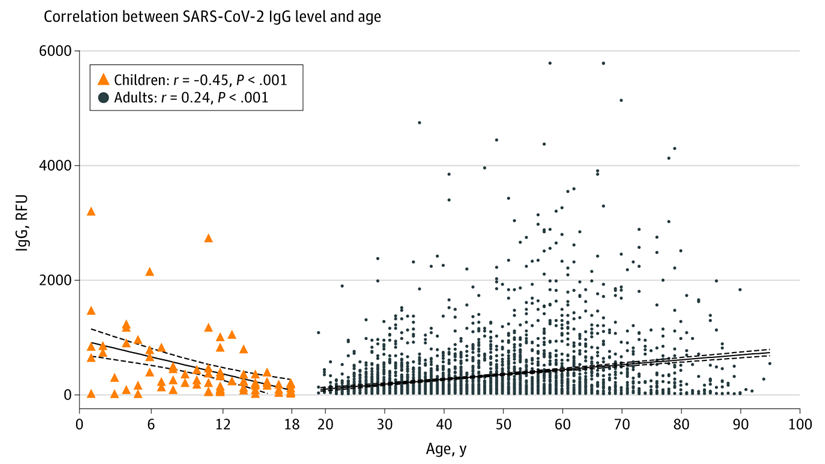
The correlation diagram between serum IgG and Age using 85 SARS-CoV-2 positive pediatric and 3648 positive adult patient samples is shown below. The result is quite interesting. It is clearly found that the amount of serum IgG is inversely correlated with age at around 20 years old as a boundary. It remains unclear why patients aged 19 to 25 years exhibited lower levels of SARS-CoV-2 IgG antibodies than children and older adults.

Site-specific O-glycan analysis of the new coronavirus (SARS-CoV-2)

A group from University of Copenhagen, etc. has reported on site-specific O-glycan analysis of the new coronavirus (SARS-CoV-2).
https://www.biorxiv.org/content/10.1101/2021.02.03.429627v2

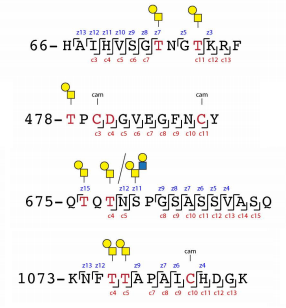
Authors used SARS-CoV-2 Spike proteins expressed in Drosophia and HEK 293 F cells. N-glycans were removed by PNGase F, and then Sialic acids were also removed by neuraminidase. Glycan analysis was done by using ETD/HCD LC-MS/MS. O-glycan modification in HEK 293 F is shown blow. Tn-antigen seems to be more expressed than Tn-antigen. There is no information about sialylation of T- and Tn-antigens.

O-glycan analysis of the new coronavirus (SARS-CoV-2)

A group from University of Wisconsin-Madison, etc. has reported on the analysis of O-glycans expressed on the new coronavirus (SARS-CoV-2).
https://www.biorxiv.org/content/10.1101/2021.02.28.433291v1

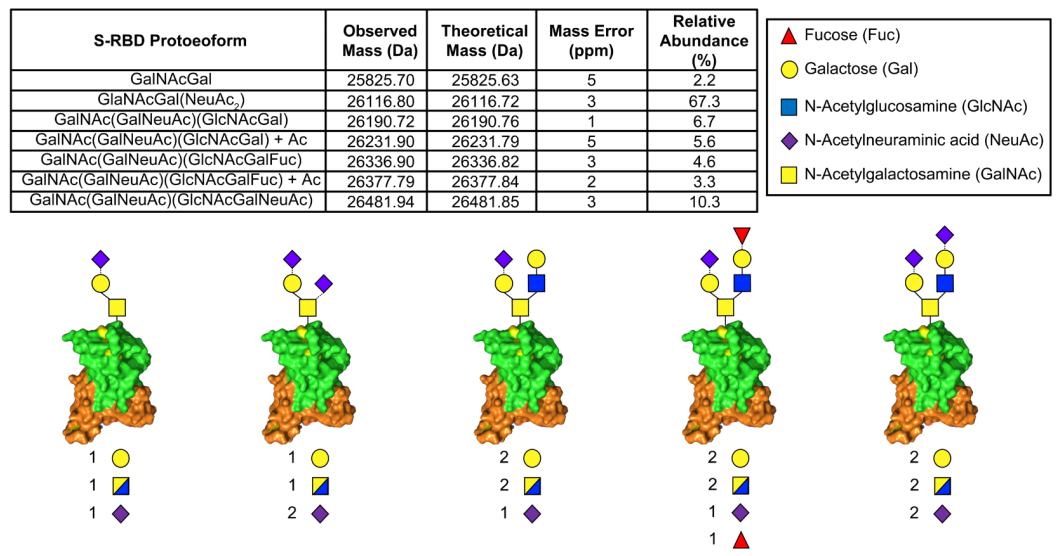
In order to analyze O-glycans, N-glycans on SARS-CoV-2 spike protein expressed with HEK293 were removed by PNGase F treatment. Authors combined ion mobility spectrometry (TIMS) and ultrahigh-resolution Fourier transform ion cyclotron resonance (FTICR) MS analysis.
As a result, it was found that the majority of the O-glycan modification was Sialyl-T-antigen.

The low level of anti-Tn is related to COVID-19 status

A group from Université de Nantes, etc. has reported on the relationship between anti-Tn and COVID-19 status.
https://www.frontiersin.org/articles/10.3389/fmicb.2021.641460/full

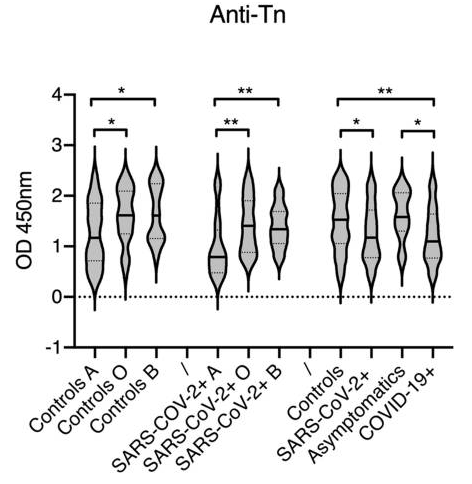
Taking into consideration that Tn-antigen (α-GalNAc) has a structural similarity to blood A-antigen (GalNAcα1-3(Fucα1-2)Galβ1-4GlcNAc), it is easily understood that the level of anti-Tn in bood group A individuals is lower than those in blood groups B and O individuals. The fact that the level of anti-Tn is lower in SARS-CoV-2 infected and developed COVID-19 individuals than controls and asymptomatic individuals would mean that the lower the level of anti-Tn is, the higher the COVID-19 developing possibility is. This does not conflict with the existing report saying that blood group A individuals are prone to develop COVID-19 than blood group O individuals.
https://www.nejm.org/doi/pdf/10.1056/NEJMoa2020283?articleTools=true
In additon, there are almost no changes in anti-T, anti-core-3, anti-Lec, anti-GlcNAcLac, and anti-Gb3.

Quantitative and Comparative Urine proteome analysis of the new coronavirus (COVID-19) 

A group from Beijing Proteome Research Center, etc. has reported results of quantitative and comparative urine proteome analysis from healthy individuals, mild and severe COVID-19 positive patients.
https://pubmed.ncbi.nlm.nih.gov/33688631/

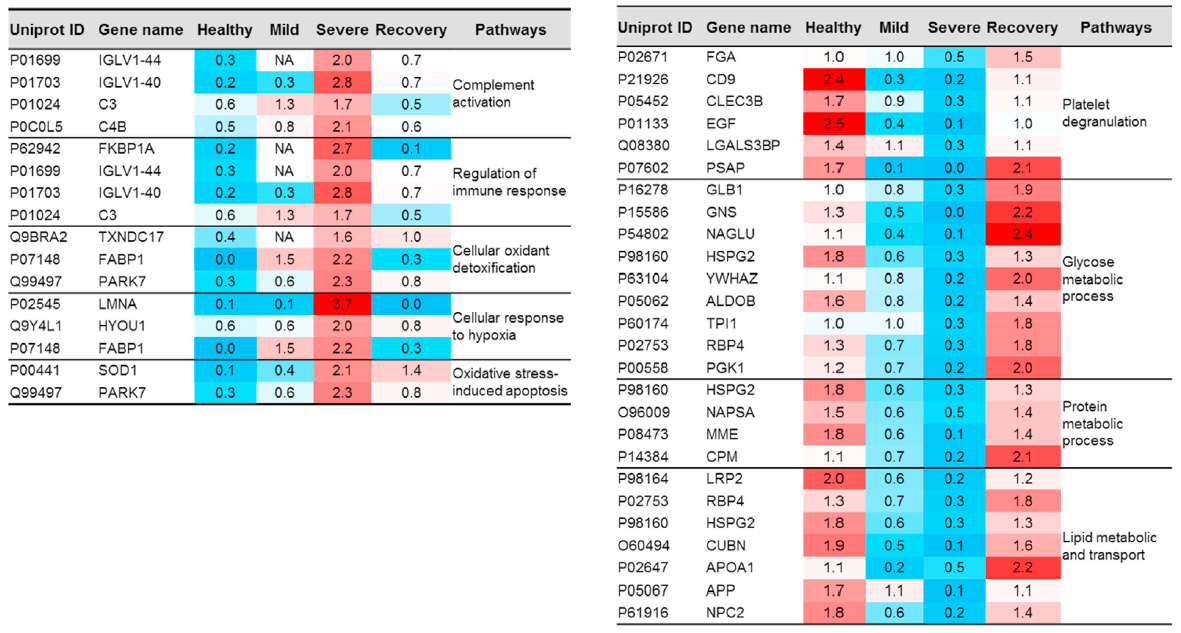
A total number of 2656 proteins was identified from healthy control samples. There were 1008 proteins being commonly identified and quantified among healthy, mild and sever cases. However, 211 and 63 proteins were uniquely expressed in COVID-19 patients and recovery samples.

Some proteins increased in COVID-19, but some proteins decrease inversely in COVID-19.
Typical examples are listed below. However, from a view point of this blog Admin, there is some question if urine proteome can be used as a diagnostic tool, because it seems that urine proteome can not discriminate severity of COVID-19 from moderate, mild, to sever. But, it would definitely contribute to elucidation of COVID-19 pathology. The fact that the urine proteome of recovered patients is not the same as healthy individuals would suggest that the aftereffects are remaining for a longer time.

IGLV1-40: 14 times higher in the severe COVID-19
FKBP1A: 13 times higher in the severe COVID-19
LUNA: 37 times higher in the severe COVID-19
PARK7: 7 times higher in the severe COVID-19

CD9: 1/12 times lower in the sever COVID-19
EGF: 1/25 times lower in the sever COVID-19
MME: 1/18 times lower in the sever COVID-19
CUBN: 1/19 times lower in the sever COVID-19

Immune modulations in Pancreatic Ductal Adenocarcinoma (PDAC) through aberrant glycan modification, especially upregulated Sialylation, and its interaction with Siglec-7, Siglec-9 

A group from Amsterdam UMC, etc. has reported on mechanisms of immune modulations in pancreatic ductal adenocarcinoma (PDAC) through aberrant glycan modification, especially upregulated α2-3 sialic acids.
https://www.nature.com/articles/s41467-021-21550-4.pdf

PDAC is surrounded by dense fibrotic stroma and suppressive immune cells, mostly of the myeloid lineage such as dendric cells and macrophages (called TME). It has been known that aberrant glycosylation changes in PDAC are upregulation of sialyl Lewisx, sialyl Lewisa, truncated O-glycans, increased branched and fucosylated N-glycans, and are related to tumor cell proliferation, invasion, metastasis, and inflammation. However, their detailed link to the immune cell function in PDAC is still unknown.

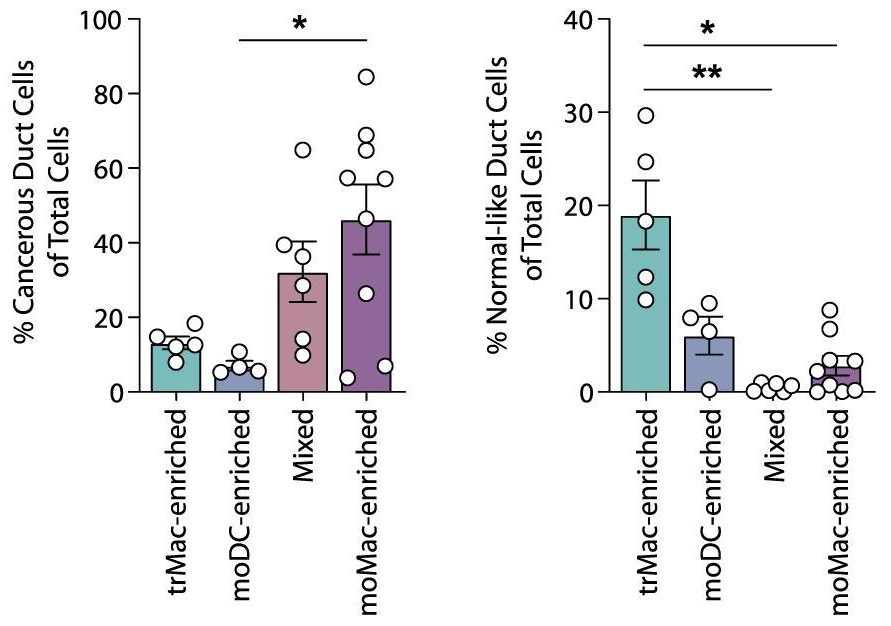
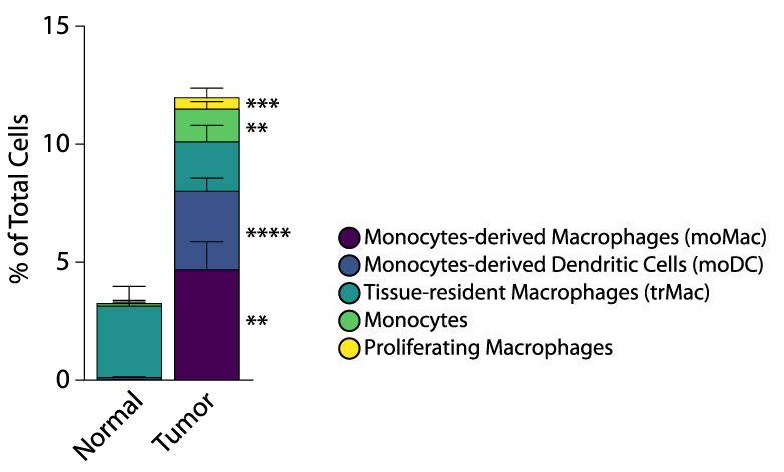
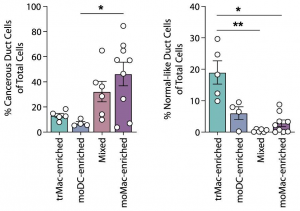
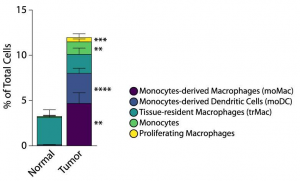
Authors have deep dived into the link between the aberrant sialylation and immune cells, and further its relationship with survival rate of PDAC. Composition of myeloid linkage cells composing TMA is greatly different between PDAC and healthy tissues. In PDAC, monocyte-derived macrophages (moMac) and monocyte-derived dendritic cells (moDC) accounted for the majority of the composition. Interestingly, patients with a higher presence of moMac over moDC had shorter survival, and the other myeloid populations did not correlate with the survival rate.

It was clearly shown that upregulated α2-3Sia bound to Siglec-7 and Siglec-9 expressed on myeloid cells, and drove the differentiation of monocytes to moMac with upregulation of CD206. Further, these changes induced upregulation of immune check point molecule PD-L1 and secretion of immunosuppressive cytokines such as IL-10.
Recently Emergent SARS-CoV-2 Variants (B.1.427, B.1.429) in San Francisco Bay Area

A group from University of California, San Francisco, etc. has reported recently emergent SARS-CoV-2 variants in San Francisco Bay area from Nov. 2020 to Jan. 2021.
https://www.ncbi.nlm.nih.gov/pmc/articles/PMC7941666/

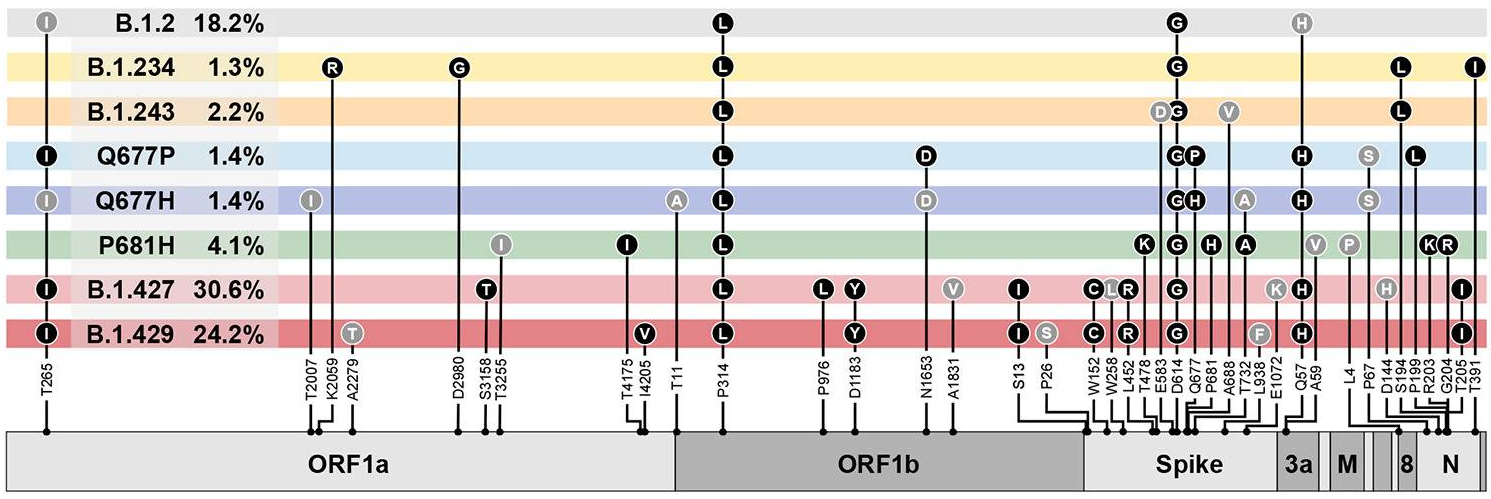
In the Bay Area, it seems that B.1.427 and B.1.429 variants are dominant. Please refer to the figure below (L452R, S13I, W152C are major spike mutations). Additional studies are required to understand differences between those variants.

Longitudinal analysis of IgG levels and memory B cells following Pfizer (BNT162b2)/Moderna (mRNA-1273) vaccination

A group from University of Pennsylvania Perelman School of Medicine has reported longitudinal analysis results of IgG levels and memory B cells following Pfizer (BNT162b2)/Moderna (mRNA-1273) vaccination.
https://www.ncbi.nlm.nih.gov/pmc/articles/PMC7941668/

  1. Vaccination boosts antibody levels for both SARS-CoV-2 recovered people and SARS-CoV-2 inexperienced people
  2. but, no additional boosting is observed after the second vaccine dose for SARS-CoV-2 recovered people
  3. Memory B cell responses continue to improve after the second dose for SARS-CoV-2 inexperienced people
  4. All ages benefit from vaccination, but vaccine induction of memory B cells declines with age
  5. No relationship between post-vaccine IgG levels and memory B cells in SARS-CoV-2 inexperienced people
  6. Memory B cells strongly correlate with post-vaccination IgG levels in SARS-CoV2 recovered people
  7. The importance of measuring memory B cells induced by the vaccination is emphasized

So, this means that SARS-CoV-2 recovered people do not need vaccination twice, but SARS-CoV-2 inexperienced people do need vaccination twice definitely.

A counter-receptor of Siglec-7 was identified as  leukosialin (CD43)

A group from Nagoya Univ. has identified a counter-receptor of Siglec-7.
https://www.jbc.org/article/S0021-9258(21)00251-9/fulltext

Siglec-7 binds to sialic acids and are expressed on natural killer (NK) cells and monocytes. Siglec-7 suppress cytotoxicity of NK cells through interaction with a counter-receptor on it. However, the counter-receptor of Siglec-7 has not been identified yet completely. Authors purified the receptor with using K562 cells, FC-Siglec-7 fusion protein, diSia-dextran polymer, and identified it as leukosialin (CD43) with MS analysis. Additionally, they demonstrated that the cytotoxicity of NK cells toward K562 cells was suppressed by overexpression of leukosialin in a Siglec-7-dependent manner.
 

SARS-CoV-2 NTD could bind to A blood type I antigen expressed on respiratory epithelium cells

A group from Harvard Univ. and Emory Univ. has reported on the interaction between ABO(H) blood group and SARS-CoV-2 RBD.
https://ashpublications.org/bloodadvances/article/5/5/1305/475250/The-SARS-CoV-2-receptor-binding-domain

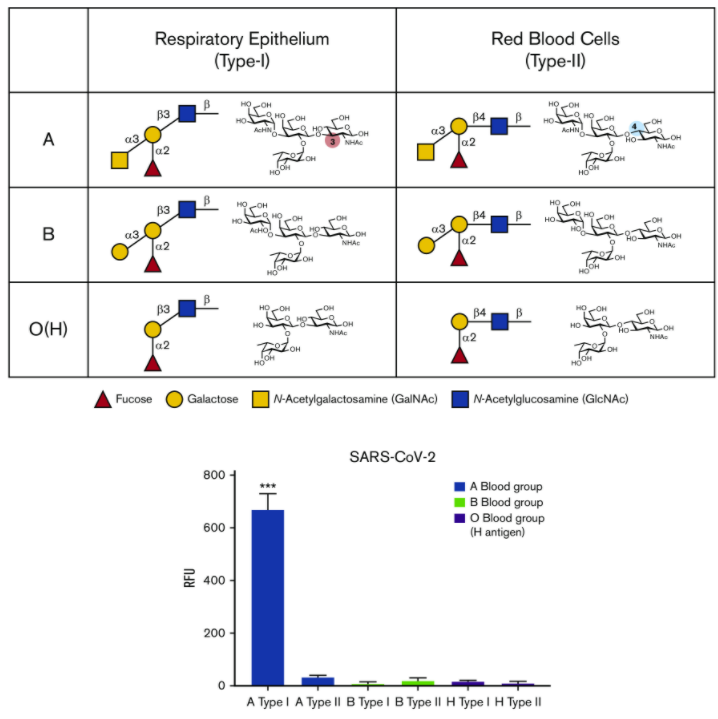
It has been suggested that SARS-CoV-2 NTD might be bid to ABO(H) blood antigens, because SARS-CoV-2 RBD shares sequence similarity with a galectin family. Authors have confirmed that SARS-CoV-2 RBD could bind to A blood type I antigen expressed on respiratory epithelium cells with using glycan arrays.

Powered by WordPress |Copyright © 2020 Emukk. All rights reserved