Binding of galectins to the N-glycans of fibroblast growth factor receptors (FGFRs) affects cellular activity

A group from Department of Protein Engineering, Faculty of Biotechnology, University of Wroclaw, Poland, etc. has reported that the clustering of FGFR triggered by galectins (Gal-1, Gal-s, Gal-7 and Gal-8) binding to those N-glycans can activate the receptor and initiate downstream signaling cascades.
https://www.ncbi.nlm.nih.gov/pmc/articles/PMC10070233/

It was demonstrated that galectins modulate FGF/FGFR cellular processes through direct action on the receptor and the cellular consequences of galectin-induced FGFR signaling largely differ from those achieved by the canonical ligand (FGF).

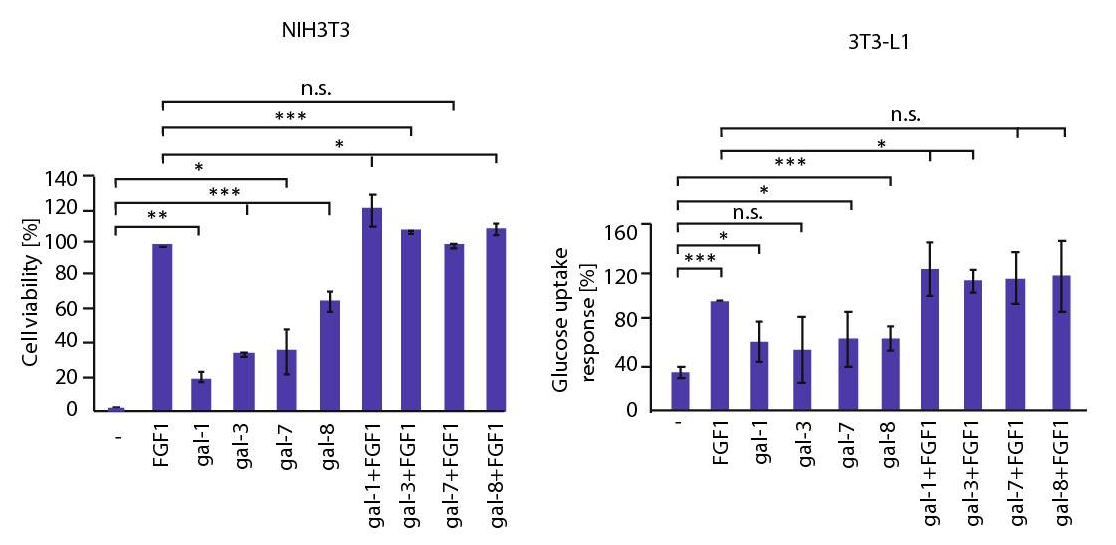
Galectin-1, -3, -7, and -8 were the most effective binders of FGFRs (FGFR1–FGFR4) among human galectins, and FGFR1 clustering promoted by multivalency of galectins was essential for FGFR1 activation and initiation of downstream signaling cascades. Interestingly, the combination of galectin-1, -3, and -8 with FGF1 enhanced the number of viable cells more effectively than each single protein. And further, glucose uptake was enhanced by mixtures of FGF1 with galectin-1 and -3 compared to treatments with each single protein.

Specific MUC1 glycan marker (sialylated core-2 O-glycan) in mucoepidermoid carcinoma (a type of salivary gland tumors)

A group from Department of Oral Oncology, Oral and Maxillofacial Surgery, Ichikawa General Hospital, Tokyo Dental College, Ichikawa-Shi, Chiba, Japan, etc. has reported that MUC1 modified with α2,3-linked sialic acid-containing core-2 O-glycans could be a new potential diagnostic marker of Mucoepidermoid carcinoma (MEC).
https://www.ncbi.nlm.nih.gov/pmc/articles/PMC10082819/

Salivary gland tumours account for approximately 1% of all tumours and 3–6% of head and neck tumours. MEC is the most frequent of the rare salivary gland malignancies. MEC has a distinct feature of producing mucus and abnormally expressing Mucin 1 (MUC1), a type of mucin that is a heavily glycosylated, high-molecular-weight glycoprotein. It was found that MEC produced MUC1 distinctively modified by sialylated core-2 O-glycans (GlcNAcβ1-6(Galβ1-3)GalNAcαSer/Thr), and further, the MUC1 modified with core-2 O-glycans containing α2,3-linked sialic acid is expressed in mucous cells and non-mucous cells of MEC.

Relationship between peanut root exudates and changes in gene expression of the plant growth-promoting effects of burkholderia pyrrocinia strain P10

A group from College of Life Sciences, Guizhou University, 550025 Guiyang, Guizhou, China has reported about relationship between peanut root exudates and changes in gene expression of the plant growth-promoting effects of burkholderia pyrrocinia strain P10.
https://www.ncbi.nlm.nih.gov/pmc/articles/PMC10061817/

The peanut root exudates were mainly composed of organic acids and amino acids, but it also contained sugars, alcohols, fatty acids, sugar alcohols, sugar acids, and other components. The detected compounds included low-molecular-weight organic acids, such as malic acid, lactic acid, succinic acid, pyruvic acid, oxalic acid, and citric acid, which were present at relatively high concentrations. Various amino acids were also detected, including alanine, glycine, proline, valine, phenylalanine, isoleucine, tyrosine, methionine, threonine, glutamic acid, serine, lysine, asparagine, glutamine, and aspartic acid. Xylose, allose, lyxose, and ribose were the most prominent sugars in the peanut RE, which also contained fatty acids (e.g., palmitic acid, stearic acid, myristic acid, oleic acid, and palmitoleic acid), alcohols (e.g., 4-hydroxyphenylethanol, myo-inositol, and phytol), sugar alcohols (e.g., threitol, xylitol, sorbitol, and arabitol), sugar acids (e.g., galactonic acid, gluconic acid, and threonic acid), and some other components (e.g., indole-3-acetamide and urea).

And, the up-regulated genes of burkholderia pyrrocinia strain P10 tended to be associated with ATP binding cassette (ABC) transporters, steroid degradation, quorum sensing (QS), biosynthesis of siderophore group nonribosomal peptides, and galactose metabolism. More specifically, 47 genes with expression levels that were up-regulated by 1.01- to 5.83-times were associated with the transport of minerals and organic ions, oligosaccharides, monosaccharides, amino acids, peptides, iron-siderophores, and ATP binding cassette subfamily C (ABCC) subfamily members. In some cases, the transcription of an entire gene cluster was observed, including the ssuA-C-B genes responsible for alkanesulfonate transport, afuA-B-C genes (Fe3+ transport), proX-W-V genes (glycine betaine/proline transport), and araF-H-G genes (L-arabinose transport). Additionally, the expression of 19 genes involved in QS and four genes contributing to steroid degradation were up-regulated. The expression levels of three genes involved in the biosynthesis of siderophore group nonribosomal peptides and five genes related to galactose metabolism were also up-regulated. The expression of genes associated with strain P10 adhesion and biofilm formation were also up-regulated. In the pathways mediating the metabolism of glucose and mannose, amino sugars, and ribose, the expression of the mannose-1-phosphoguanyltransferase gene algA, which encodes the enzyme that converts mannose-1-phosphate to GDP-mannose, was up-regulated. The GDP-mannose is an important exopolysaccharide (EPS) constituent and the main component of biofilms.
Burkholderia gladioli strain KJ-34 exhibiting broad-spectrum antifungal activity as Plant Growth Promoting Rhizobacteria

A group from Ecological Security and Protection Key Laboratory of Sichuan Province, Mianyang Normal University, Mianyang, China, etc. has reported Burkholderia gladioli strain KJ-34 exhibiting broad-spectrum antifungal activity.
https://www.ncbi.nlm.nih.gov/pmc/articles/PMC10020716/

It was shown that Burkholderia gladioli strain KJ-34 is a potential biocontrol bacterium isolated from the rhizosphere soil of rice and can fight multiple fungal pathogens (i.e. Ustilaginoidea virens, Alternaria solani, Fusarium oxysporum, Phytophthora capsica, Corynespora cassiicola).

Metabolites of this strain exhibiting antifungal activity appeared to be Ac-Yvad-cho, benzoylstaurosporine, TAXOL C, morellin, jubanine B, trichostatin A, thapsigargin, kabiramide B, scopolamine, enniatin B, latrunculin A, rifaximin, rigin, and garcinone C.

We have to be careful that some Burkholderia bacteria are pathogenic. For instance, Burkholderia gladioli BSR3 infects rice, causing bacterial blight, and another rice seed−borne bacterium, B. glumae, causes rice grain rot.

Root exudate compounds induced under low P conditions can stimulate the ability of bacteria to solubilize P

A group from Department of Horticulture and Landscape Architecture, Center for Root and Rhizosphere Biology, Colorado State University, Fort Collins, CO USA, etc. has reported that root exudate compounds (galactinol, threonine, and 4-hydroxybutyric acid) induced under low P conditions can stimulate the ability of bacteria to solubilize P.
https://www.ncbi.nlm.nih.gov/pmc/articles/PMC10006420/
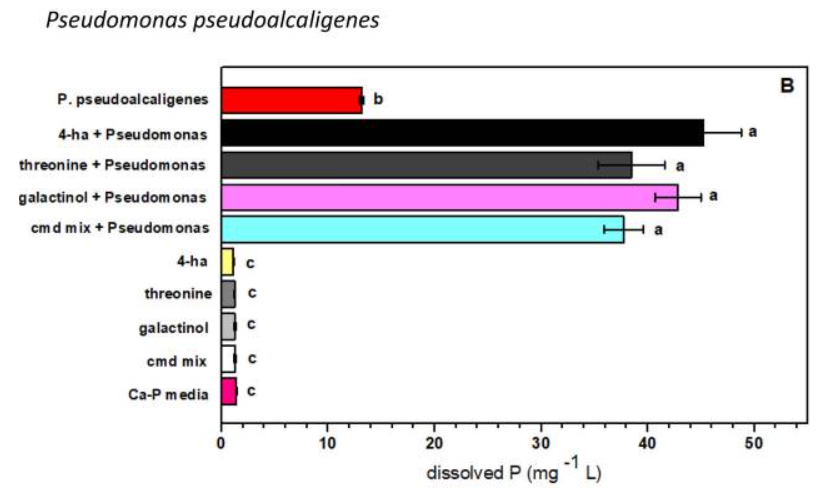
The effect of the three root-exudate derived compounds on the enhancement of P solubilization by bacteria was assessed.

In the calcium phosphate (inorganic) media, threonine, 4-hydroxybutyric acid, galactinol, and the combination of compounds significantly increased dissolved P in the medium for Enterobacter cloacae and Pseudomonas pseudoalcaligenes. For Bacillus thuringiensis, only threonine and 4-hydroxybutyric acid increased dissolved P.

In phytin (organic phosphate) media, the effect of the compound additions on the enhancement of P solubilization was not significant for any of the bacterial strains.

Odd phenomenon that HIV infection is enhanced by interaction with an O-glycan-specific bacterial lectin

A group from Catarina Hioe, Icahn School of Medicine at Mount Sinai, New York, USA, etc. has reported that HIV infection is enhanced by interaction with an O-glycan-specific bacterial lectin.
https://www.ncbi.nlm.nih.gov/pmc/articles/PMC9949255/

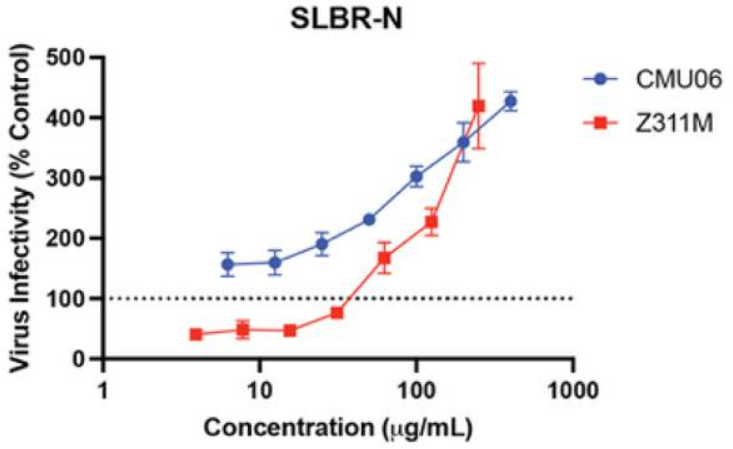
I was shown that the O-glycan-specific lectin SLBR-N, which is expressed on oral commensal Streptococcus gordonii strains and recognizes α2–3 sialylated O-glycans on HIV-1, was found to enhance HIV-1 infection in the context of both cell-free virus infection and a CD4-dependent cell-to-cell viral transfer assay.
Surprisingly, virus treatment with SLBR-N enhanced virus infection up to 4-fold in a dose-dependent manner, while strangely, the interaction with high-mannose N-glycan-binding bacterial lectins FimH and Msl did not affect infectivity.

This strange mechanisms by which SLBR-N and other O-glycan-binding lectins increase HIV-1 infectivity are not fully understood.


CMU06 and C.Z331M are full length infectious molecular clones oh HIV-1.

The beneficial effect of Bacillus to suppress phytopathogen is due to double-sided nature of its secondary metabolites

A group from Faculty of Science and Technology, Thammasat University, Pathumtani, Thailand, etc. has reported that the beneficial effect of Bacillus to suppress phytopathogen is due to double-sided nature of its secondary metabolites.
https://www.ncbi.nlm.nih.gov/pmc/articles/PMC9986491/

It has been known that Bacillus exhibit potent antagonistic activity against phytopathogens through the secondary metabolites, i.e., lipopeptide biosurfactants such as iturin A and surfactin.

However, such antagonistic activity of Bacillus is not only due to the direct effect of biosurfactants but also due to boosting plant immunity by the biosurfactants. Salicylic acid (SA), jasmonic acid (JA), and ethylene (ET) are important hormonal signal molecules involved in biotic stress responses during plant–pathogen interactions.
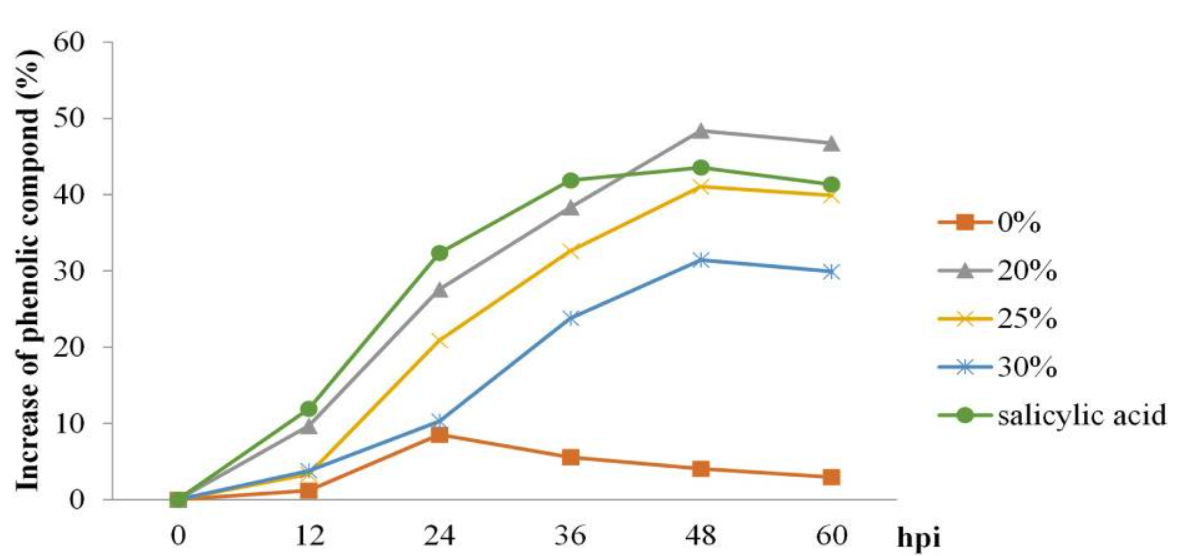
In this work, it was shown that biosurfactant treatments elevated both salicylic acid and total phenolic content, with a faster rate, whereas total phenolic content in the control treatment (i.e., 0%) was only slightly increased.


efficacy of the Bacillus biosurfactant as the sole regulator at concentrations of 20%, 25%, and 30% v/v.

Changes in glycosylation of melanoma tumor cells and its impacts on functionality of dendritic cells

A group from Institute for Advanced Biosciences, Université Grenoble Alpes, Grenoble, France, etc. has reported changes in glycosylation of melanoma tumor cells and its impacts on functionality of dendritic cells.
https://www.ncbi.nlm.nih.gov/pmc/articles/PMC9986448/

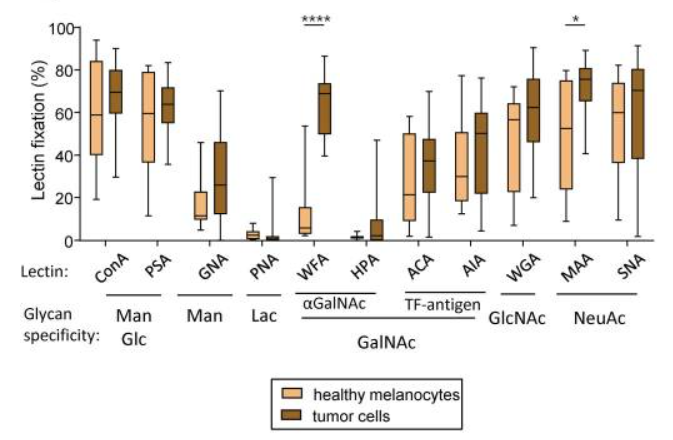
It was found that higher levels of GalNAc and NeuAc residues (revealed by the interaction of WFA and MAA respectively) were observed in melanoma tumor cell lines when compared to healthy melanocytes.

The global view of tumor glyco-code profiles upon separation of patients based on better or worse overall survival (median OS) or progression-free survival (median PFS) revealed a pattern of higher expression of Thomsen-Friedenreich antigen (TF-antigen), GlcNAc, Fuc and NeuAc residues (detected by ACA, WGA, RPL-αMan, UEA-I, MAA and SNA) in tumor cell lines from patients with worse clinical outcome. Strikingly, tumor cells with higher levels of f TF-antigen and GlcNAc residuesi (detected by ACA and WGA respectively) were found in patients with worse OS, whereas tumor cells with higher levels of terminal αGalNAc (seen by HPA) were found in patients with a better PFS.
It should be highlighted that higher levels of Man/Glc residues on tumor cell lines (detected by ConA) correlate with better PFS, whereas higher levels of NeuAc and Fuc residues (detected by SNA, MAA or UEA-I respectively) predict a worse clinical outcome in melanoma patients

Interestingly, there was positive correlations between levels of Man/Glc and GlcNAc residues on tumor cells and proportions of tumor-infiltrating cDC1s. Man/Glc were linked with a good clinical outcome, and GlcNAc was a candidate to boost cDC1s’ functionality. Strikingly, levels of Fuc residues on tumors negatively correlated with infiltration by T cells, and were associated with a poor outcome. In addition, levels of TF-antigen residues on tumor cells from melanoma patients negatively correlated with tumors’ infiltration by CD8+ T cells, and were linked to a shorter survival.

Cyanobacteria lectin, CV-N, binds selectively to SARS-CoV-2 spike and blocks infection by SARS-CoV-2

A group from Molecular Targets Program, Center for Cancer Research, National Cancer Institute-Frederick, NIH, Frederick, MD, USA, etc. has reported that Cyanovirin-N binds selectively to SARS-CoV-2 spike oligosaccharides outside of the receptor binding domain (RBD) and blocks infection by SARS-CoV-2.
https://www.pnas.org/doi/full/10.1073/pnas.2214561120

Cyanovirin-N, CV-N, showed inhibitory activity against all tested variants of SARS-CoV-2 (WH-1, D614G, B1.1.7 (Alpha), P.1 (Gamma), B1.351 (Beta), B.1.617.2 (Delta), and B1.1.529 (Omicron)) with EC50 values ranging from 40 nM for Omicron to 180 nM for Alpha.

CV-N bound with good affinity to Spike protein and did not bind to the RBD. In detail, CV-N could bind oligo-mannose at N61, N122, and N234 sites of the S1 domain of Spike protein. Since the glycan at position N234 played important roles in both shielding the RBD and in stabilizing the RBD in the “up” conformation, the specific binding of CV-N to the S1 domain of Spike at 234 might sterically block the RBD binding to ACE2.

Paenibacillus produces antibiotics suppressing fusarium head blight of wheat

A group from School of Food Science, Henan Institute of Science and Technology, Xinxiang, China, etc. has reported about Paenibacillus polymyxa 7F1 suppressing fusarium head blight of wheat.
https://www.ncbi.nlm.nih.gov/pmc/articles/PMC9963053/

Fusarium head blight is a severe disease of wheat, corn, barley, and other grain and occurs in all regions worldwide. Several bacteria and fungi have been found to inhibit the growth of Fusarium graminearum. Among the antimicrobial agents identified, Bacillus is the most compelling antibiotic-producing strain, and it has more advantages than other biocontrol microorganisms due to its inherent endospore formation and resistance to extreme conditions.

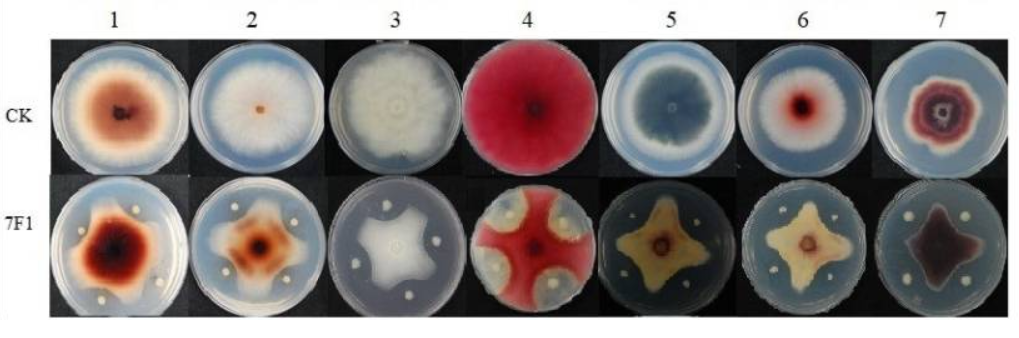
Paenibacillus polymyxa 7F1 was isolated from the rhizosphere of a wheat field, and it was shown that Paenibacillus polymyxa 7F1 showed high antifungal activity against all fungi strains tested in this study.


Antifungal activity of Paenibacillus polymyxa 7F1 against seven pathogenic fungi. 1. Fusarium equiseti, 2. Fusarium verticillioide, 3. Fusarium semitectum, 4. Fusarium graminearum, 5. Colletotrichum gloeosporioides, 6. Fusarium proliferatum, 7. Fusarium oxysporum

The antibiotics produced by Paenibacillus polymyxa 7F1 included lipopeptides such as iturin A and surfactin.

Powered by WordPress |Copyright © 2020 Emukk. All rights reserved