blog

Antiviral activity of UDA llectin against SARS-CoV-2

A group from Laboratory of Virology and Chemotherapy, Rega Institute, Department of Microbiology, Immunology and Transplantation, KU Leuven, Belgium, etc. has reported about antiviral activity of UDA against SARS-CoV-2.
https://www.ncbi.nlm.nih.gov/pmc/articles/PMC9468479/

UDA is one of the smallest plant lectins reported, and has a binding preference for GlcNAc and high-mannose sugars on target glycoproteins.

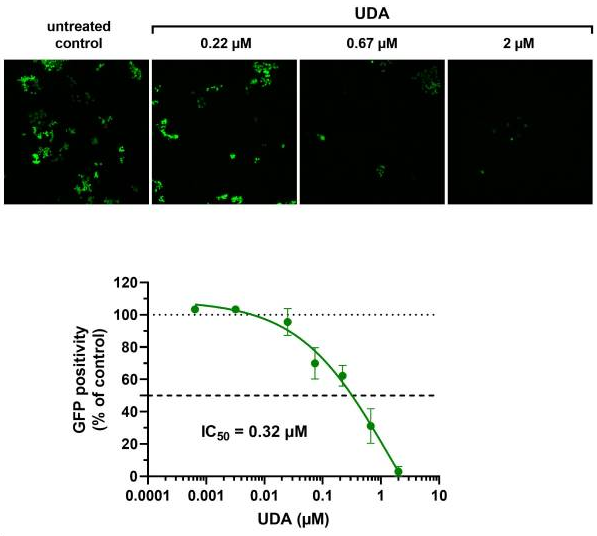
It was shown that UDA prevents viral replication of the early Wuhan-Hu-1 strain in Vero E6 cells (IC50 = 225 nM), but also the replication of SARS-CoV-2 variants of concern, including Alpha, Beta and Gamma (IC50 ranging from 115 to 171 nM). In addition, UDA exerts antiviral activity against the latest circulating Delta and Omicron variant in U87.ACE2+ cells (IC50 values are 1.6 and 0.9 µM, respectively).

It was found that UDA is not acting as a direct receptor-attachment competitor, and its strongest interaction site is not located in the RBD from SPR analyses.

Site-specific N-Linked glycan characterization of PSMA from metastatic prostate cancer cells

A group from Leroy T. Canoles Jr. Cancer Research Center, Eastern Virginia Medical School, Norfolk, Virginia 23507, USA, etc. has reported about site-specific N-Linked glycopeptide characterization of Prostate-Specific Membrane Antigen from metastatic prostate cancer cells.
https://www.ncbi.nlm.nih.gov/pmc/articles/PMC9435049/

The prostate-specific membrane antigen (PSMA), also known as folate hydrolase 1 (FOLH1) or glutamate carboxypeptidase 2, was previously studied as a PCa biomarker in tissues and body fluids using conventional biochemical methods with mixed results. PSMA is not exclusively expressed in prostatic tumors; the protein is expressed in low abundance in prostate epithelium, in the neo-vasculature of exclusive solid tumor types, and in some healthy tissues including proximal renal tubes, duodenum, and ganglia of the nervous system. In PCa, PSMA abundance increases with disease severity, and up to 100-fold higher abundance has been observed in advanced aggressive forms of the disease compared to normal tissue.

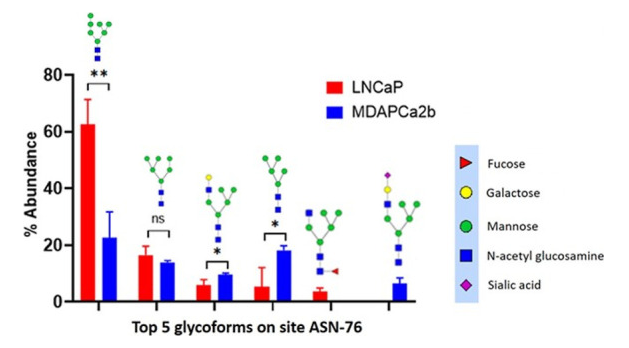
In this study, two PCa cell lines, LNCaP cells (CRL-1740) and MDAPCa2b (ATCC CRL-2422) were used to compare site-specific N-linked glycopeptide characterization of PSMA.
It was demonstrated that there are significant differences in the expression of several glycans in two cell lines LNCaP and MDAPCa2b (see below), which have different phenotypes, and further there are significantly more glycans identified in MDAPCa2b compared to LNCaP cells.
These studies will form the basis of developing site-specific PSMA glycoform-based prognostic markers for PCa disease stratification in the future.

How extract the features of the complex systems of rhizobacterial microbiomes, and efficiently control the microbiomes?

For self-organizing complex systems, feature extraction methods such as principal component analysis and clustering analysis are often used. Conversely, it means that there is no other good analysis methodology close at hand. In self-organizing complex systems, the properties of the whole can often be neither understood nor predicted by knowledge of its constituents alone, and the interactions between the constituents of the system give rise to new structures and functions, and those will appear on a large scale.
In the case of the rhizobacterial microbiomes, it is possible that when good bacteria is exceeded a certain threshold, opportunistic bacteria become allies and a synergistic effect appears remarkably. The reverse is also true, and when the number of bad bacteria exceeds a certain threshold, the plant dies at once.

The problem is how to perform feature extraction (in other words, pattern recognition) of such a complex system of rhizobacterial microbiome in the field (farm). At the research level, 16S rRNA read analysis of the rhizobacterial microbiomes and computer analysis on the full use of the obtained big data might be able to visualize the hidden patterns which could not be identified with  conventional methods. But, can such a method be used in the field? No, this kind of work will remain in the world of papers. If the technology is not easy for anyone to use, it will not succeed in reality as a business. To be used on site, it has to be cheap, and it has to give immediate results.

Bacillus, Pseudomonas, Streptomyces, Arthrobacter are said to be representative good bacteria as rhizobacteria, and Enterobacter and Barkholderia are also to be good bacteria.
The bacterial classification of such representative good bacteria and bad bacteria is written below.
First of all, good bacteria,
Actinobacteria phylum→ Actinobacteria class → Streptomyces order → Streptomycetae → Streptomyces genus (good guys)
Proteobacteria phylum → γ-Proteobacterial class → Pseudomonad order → Pseudomonadidae → Pseudomonas genus (typical good guys)
Proteobacteria phylum → γ-Proteobacterial class → Enterobacter order → Enterobacteraceae → Enterobacter genus (good guys)
Proteobacteria phylum → β-Proteobacterial class → Barkholderia order → Barkholderidae → Balkholderia genus (good)
Firmicutes phylum→ Bacillus class → Bacillus order → Bacillus family → Bacillus genus (typical good guy)
Actinobacteria phylum→ Actinobacteria class → Actinobacteria family→ Micrococcaceae → Arthrobacter genus (good guys)
and bad bacteria,
Ascomycota phylum → Hydrangea class → Pistanthus → Asteraceae → Fusarium genus (typical bad guys)

If we can sense the phylum Actinobacteria, Proteobacteria, and Firmicutes, it will be possible that we can grasp major patterns in the rhizosphere, I think.
For your information, Proteobacteria are Gram-negative bacteria, while Actinobacteria and Firmicutes are Gram-positive bacteria.
Humic acid could be a good organic fertilizer in greenhouse-planted cherry tomato

A group from College of Environment, Zhejiang University of Technology, Hangzhou 310032, China, etc. has reported that Humic acid could be a good organic fertilizer in greenhouse-planted cherry tomato.
https://www.ncbi.nlm.nih.gov/pmc/articles/PMC9434616/

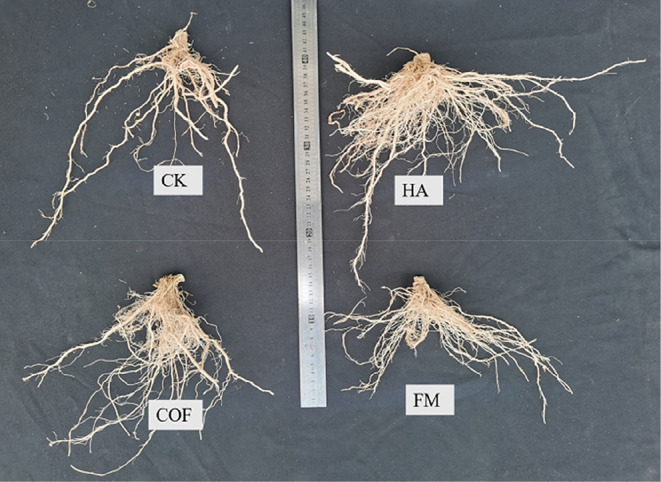
Due to the adverse effects of chemical fertilization on greenhouse soils, nowadays, special attention has been paid to organic and biological fertilizers or those technical managements that avoid soil fertility reduction in greenhouses. Humic acid is a component of humus, and it is also a natural component and contributes toward the reduction of the diseases and stresses and increase of the crop yield. Actually, several studies have shown that Humic acid application in vegetable production can improve the primary and secondary metabolism of plants, increase crop yields and quality, and decrease pests and diseases. Humic acid can accelerate soil organic material decomposition by increasing the microbial activity in soil. Furthermore, Humic acid can also alter the root exudation profile by affecting the plant metabolism and thus influence the structure of the rhizosphere microbial community. Principal coordinate analysis of the bacterial communities revealed that control, Humic acid application, and organic fertilizer formed different clusters.


where, humic acid (HA), farmyard manure (FM), commercial organic fertilizer (COF), and control check (CK)

Milk lactose can improve diarrhea problems in young pigs

A group from Laboratory of Virology, Faculty of Veterinary Medicine, Ghent University, Merelbeke, Belgium, etc. has reported that lactose can improve diarrhea problems in young pigs by a combination of a direct effect by reducing rotavirus infection and inhibiting the growth of bacterial pathogens by balancing the environment.
https://www.ncbi.nlm.nih.gov/pmc/articles/PMC9428151/

Rotavirus is an important pathogen causing diarrhea in animals and humans. High morbidity and mortality are mainly observed during the first weeks after birth. The rotavirus particles have 11 double-stranded RNA segments encoding six structural viral proteins (VP1-VP4, VP6, and VP7) and six non-structural proteins (NSP1-NSP6). Rota virus has been classified into 10 species, and RVA, B, and C are the most common genotypes that infect humans and animals, including pigs. Among them, the RVA strains have the highest prevalence in a variety of species and is a main cause of diarrhea in the veterinary world.

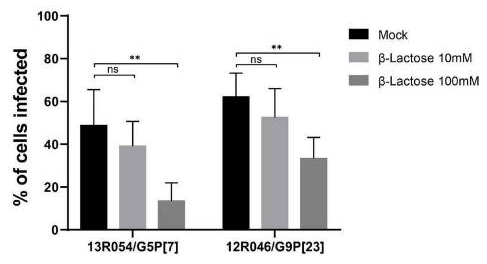
The carbohydrate binding specificity of recombinant VP8* protein of RBA was determined using a glycan array comprised of 300 glycans, and it was found that it binds to β-lactose strongly.
It was also shown that β-lactose decreases rotavirus infection of MA104 cells with dose dependent manner.

where, RVA strains 13R054 G5P[7] and 12R046 G9P[23]

Changes in high-mannosylated gylcan structures of complement C3 could be a good biomarker for children’s type 1 diabetes

A group from Faculty of Pharmacy and Biochemistry, University of Zagreb, Zagreb, Croatia, etc. has reported that plasma high-mannose glycan change of complement C3 showed notable discriminative power between children with early onset type 1 diabetes and their healthy siblings with AUC of 0.879.
https://www.mcponline.org/article/S1535-9476(22)00215-8/fulltext

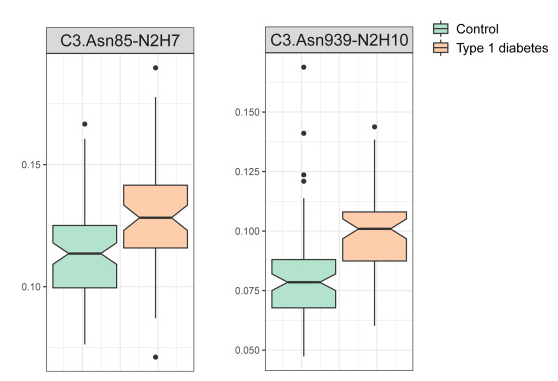
Children’s type 1 diabetes was associated with an increase in the proportion of high-mannose structures of complement C3 with more mannose units.
In this experiment, high-mannosylated C3 was enriched by ConA lectin, and the glycan structures were analyzed by LC-MS/MS. C3 has two glycosylation sites at Asn85 and Asn939, and the high-manosylated structure gets longer with developing type 1 diabates as shown below.

Tamoxifen (TAM)-resistant breast cancer cells bind to WFA lectin which recognizes LacdiNAc glycan

A group from Department of Breast Oncology, Juntendo University Faculty of Medicine, Tokyo, Japan, etc. has reported that Tamoxifen (TAM)-resistant breast cancer cells bind to WFA lectin which recognizes LacdiNAc glycan.
https://www.ncbi.nlm.nih.gov/pmc/articles/PMC9409572/

Some breast cancers require estrogen (female hormone) for the growth of cancer cells, and account for 60-70% of all breast cancers. Anti-estrogen drugs (tamoxifen), which suppress the action of estrogen, are expected to be effective against such types of breast cancer that proliferate with estrogen. However, some breast cancer cells result in developing resistance to tamoxifen.

Glycosylation is a major post-translational modification of proteins through the sequential action of glycosyltransferases, and alterations in glycosylation are well known to be associated with carcinogenesis, malignant progression and metastasis.
Therefore, in this study, it was investigated the glycan profiles of TAM-resistant human breast cancer cells were evaluated by using lectin microarrays, to investigate whether changes in glycosylation can be used as predictive biomarkers for endocrine therapy.

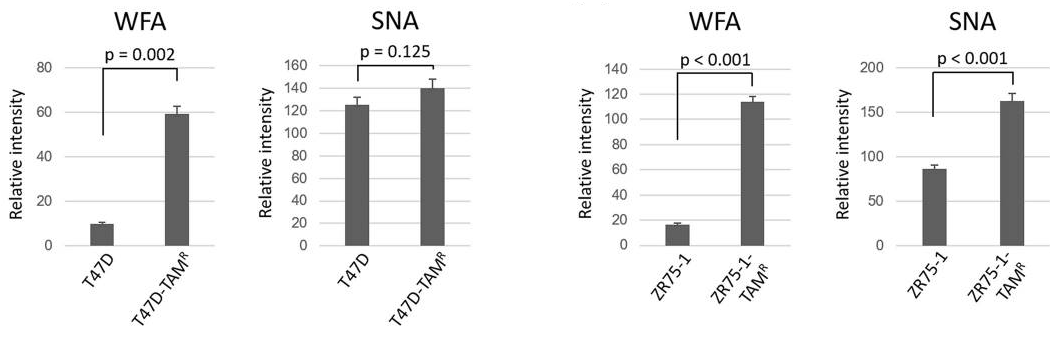
As a result, it was shown that TAM-resistant breast cancer cells have LacdiNAc glycosylation and strongly react with WFA lectin.

High bacterial diversity and siderophore-producing bacteria are important in suppressing Fusarium oxysporumin

A group from Key Laboratory of Plant-Soil Interactions, China Agricultural University, Beijing, China, etc. has reported that high bacterial diversity and siderophore-producing bacteria collectively suppress Fusarium oxysporumin maize/faba bean intercropping.
https://www.ncbi.nlm.nih.gov/pmc/articles/PMC9389221/

It is generally known that global food production is subject to various threats, in which soil-borne pathogens account for approximately 20% of yield losses. Intensive large-scale monocultures are prone to disease outbreaks, which cause yield losses. Fungal disease can be effectively controlled by sustainable diversified cropping systems such as rotations and/or intercropping.

In this study, three planting patterns were compared:
(1) monocultured maize,
(2) monocultured faba bean, and
(3) maize/faba bean intercropping.

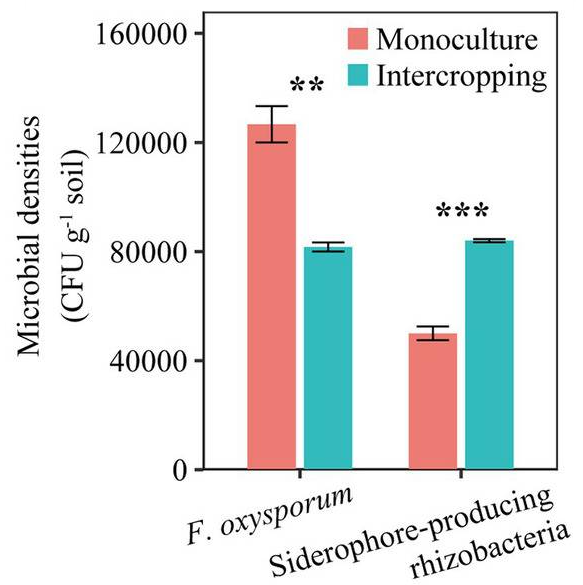
As a result, intercropping increased the yields of maize and faba bean over monocropping by 21.3 and 14.4%, respectively, intercropping significantly decreased the gene copies of Fusarium oxysporum over monoculture by 2.91, 7.33 and 9.56% in bulk soil, rhizosphere soil and root endosphere, respectively, and the suppression of F. oxysporum was much stronger in faba bean than in maize.

From the analysis of bacterial diversity and community composition, the followings were highlighted:
(1) rhizosphere bacterial diversity and network connections are enhanced in the intercropping, which correlates the decrease of Fusarium oxysporum,
(2) Number of siderophore-producing rhizobacteria in rhizosphere of maize and faba bean was inversely correlated with the the abundance of Fusarium oxysporum.

A novel monoclonal IgG1 antibody specific for α-Gal epitope

A group from Technical University of Munich, School of Medicine, Neuherberg, Germany, etc. has reported about a novel monoclonal IgG1 antibody specific for α-Gal epitope.
https://www.ncbi.nlm.nih.gov/pmc/articles/PMC9391071/

The alpha-Gal (α-Gal) epitope is a carbohydrate immunogen in humans that has relevance in allergy and xenotransplantation. Interestingly, antibodies of different isotypes against the α-Gal epitope are quite abundant in humans with IgG levels estimated to range between 1% to 0.1% of total plasma IgG with high variability between subjects and lowest abundance in individuals carrying the blood type B antigen. This observation is likely due to the structural similarity between the α-Gal epitope and blood type B antigen, which contains an additional fucose molecule on the second last galactose molecule. These human anti-α-Gal antibodies pose a challenge for xenotransplantation, in particular for pig organ transplantation, which was overcome to some extend with developing GGTA1 knockout (KO) pigs.

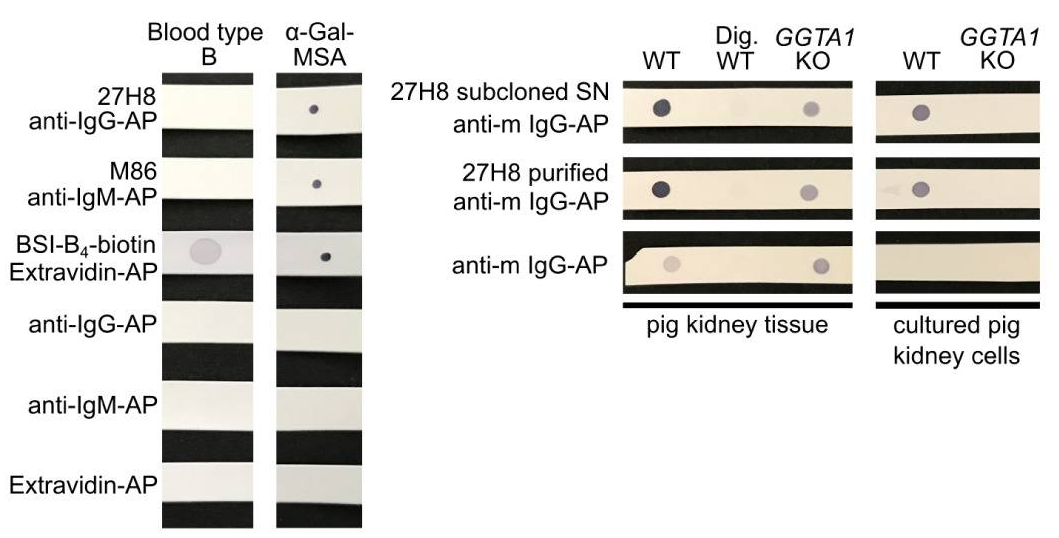
In this paper, the development of a novel IgG1 antibody called 27H8 was reported, which is highly specific for both synthetic and naturally occurring α-Gal epitopes. In order to generate a monoclonal antibody specific for the α-Gal epitope determining structure Gal-α1,3-Gal that is equally able to bind to the naturally occurring α-Gal epitope Gal-α1,3-Gal-β1,4-GlcNAc, α-galactosyltransferase knockout mice (Ggta1 KO) were immunized with Gal-α1,3-Gal-β1,4-GlcNAc coupled to ovalbumin as carrier protein (α-Gal-OVA).

To verify the specificity, the 27H8 monoclonal antibody was compared to Bandereia simplifolica isolectin B4 (BSI-B4: GSL-I B4) and to the monoclonal IgM antibody M86, which are both widely used to detect the α-Gal epitope. BSI-B4 is specific for terminal α-galactose oligosaccharides and therefore recognizes also the blood group B antigen, which differs from the α-Gal epitope only in the addition of one fucose residue and is thus structurally very similar. To assess whether 27H8 also binds to the blood group B antigen we blotted lysates of whole blood from a type B donor on a membrane and applied the antibodies 27H8 and M86 or biotinylated BSI-B4 for detection. While BSI-B4 bound to the blood type B specimen as expected, neither 27H8 or M86 did. Next, it was investigated whether 27H8 also binds to natural α-Gal epitopes. As pig kidney is naturally rich in α-Gal and reactions in α-Gal allergic patients are severe after ingestion, it was also tested if 27H8 recognizes α-Gal in pig kidney lysates in a dot blot assay. 27H8 binding to wildtype (WT) pig kidney lysate was observed with strong staining intensity. However, there was no signal on a sample digested with α-Galactosidase (Dig. WT).

 refer to the original paper for detailed explanation

Altered sialidase expression in human myeloid cells undergoing apoptosis and differentiation

A group from Baltimore Veterans Affairs Medical Center, Research Service, Baltimore, MD, USA, etc. has reported about altered sialidase expression in human myeloid cells undergoing apoptosis and differentiation.
https://www.nature.com/articles/s41598-022-18448-6

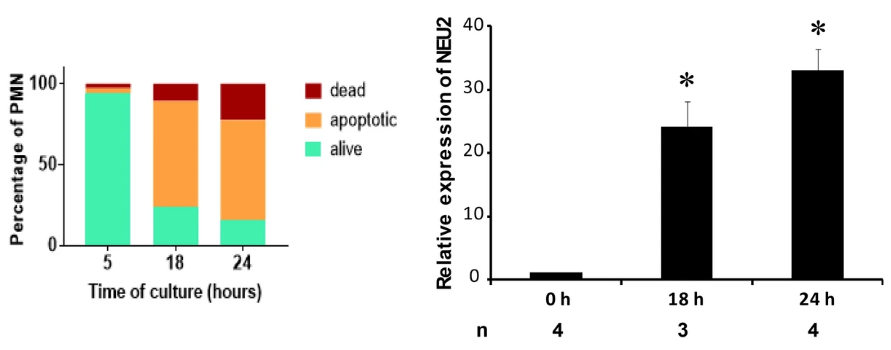
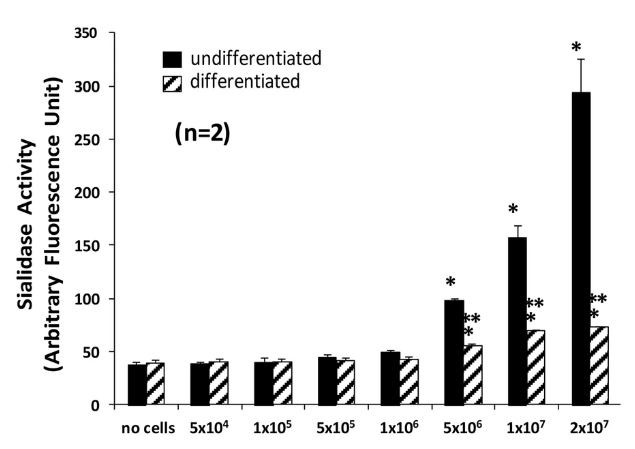
The sialidase/neuraminidase (NEU) activity and expression in mature human neutrophil (PMN)s and the HL60 promyelocytic leukemic cell line were studied, and changes in sialic acid modification that would occur in PMNs undergoing apoptosis and HL60 cells during their differentiation into PMN-like cells were observed.

PMNs are part of the first line of host defenses against invasive prokaryotic pathogens4. Myeloid progenitors undergo maturation within the bone marrow into mature PMNs. PMNs undergo profound shape changes permitting these cells to squeeze through the small caliber microvasculature and interendothelial cell junctions to enter extravascular tissues, where they adhere to and engulf bacteria for successful phagocytosis and intracellular killing. The HL60 promyelocytic leukemia cell line has been used as a model for myelopoiesis.

In proapoptotic PMNs, NEU2 protein expression increased >30.0-fold as shown below.

The total NEU activity in differentiated HL60 (dHL60) cells was dramatically reduced compared to that of nondifferentiated cells as shown below.

Thus, changes in PMN surface sialylation could regulate accessibility of both Siglecs and Galectins.

Powered by WordPress |Copyright © 2020 Emukk. All rights reserved