Archive 22/3/7

Complement activation might be strongly involved in systemic worsening of COVID-19: studies from autopsy lung and kidney samples

A group from Department of Nephropathology, University Hospital Erlangen, Friedrich-Alexander-University (FAU) Erlangen-Nürnberg, Erlangen, Germany, etc. has reported that complement activation might be involved in systemic worsening of COVID-19.
https://www.ncbi.nlm.nih.gov/pmc/articles/PMC8884149/

One pathway potentially involved in the SARS-CoV-2 driven inflammatory cytokine overproduction is activation of the complement system. This system, which belongs to the innate immune system, acts as a crucial component in the defense against infection by opsonizing pathogens or damaged cells, attracting and activating leukocytes or directly lysing bacteria or cells through the membrane attack complex.

Initiation of the complement cascade can be done by three different pathways, the classical pathway, the lectin pathway, and the alternative pathway.
The classical pathway is activated by immune complexes (antigen-IgM and antigen-IgG complexes) and many other self and non-self molecules binding to C1q, leading to a conformational change, and activating serine proteases C1s and C1r.
The lectin pathway is activated by plasma-circulating lectins (collectins like mannan-binding lectin and ficolins) recognize carbohydrate patterns on the surface of microorganisms, called pathogen-associated molecular patterns (PAMPs), and activate MAPS-1 and MAPS-2 which cleave C4 to C4a and C4b.
The alternative pathway is constantly active at a low level and is initiated by spontaneous hydrolysis of C3. Hydrolysed C3 binds to factor B (CFB) which acts as a substrate to serine protease factor D (CFD), resulting in formation of a C3 convertase.
In the end, all 3 complement pathways can lead to C3 convertase activation which cleave C3 to C3a and C3b, followed by the same pathway triggering the formation of the membrane attack complex (MAC).

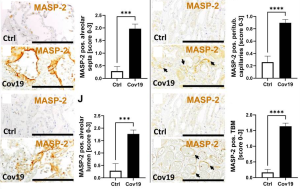
In this study, though comparative study of autopsy lung and kidney tissue samples died from COVID-19 with those of died from non-COVID-19, it was found that the lectin pathway was activated in both lungs and kidneys of patients with severe COVID-19. Activation of the lectin pathway was supported by staining for C4d in the same localization as described for MASP-2, suggesting that complement activation might be strongly involved in systemic worsening of COVID-19 inflammatory response.

< a href="">
Possible pathogenesis of worsening COVID-19 could be direct activation of platelets by SARS-CoV-2 spike protein

A group from Department of General and Laboratory Medicine, Mie Prefectural General Medical Center, Yokkaichi 510-0885, Japan, etc. has reported importance of the spike protein-induced direct platelet activation as a basis of COVID-19 pathogenesis.
https://www.ncbi.nlm.nih.gov/pmc/articles/PMC8877880/

Several mechanisms underlying the worsening of the condition of COVID-19 patients have been proposed, for instance, cytokine storm, primary pulmonary thrombosis, vascular endothelial injuries, and platelet activation. One of the clinical features of COVID-19 is the high prevalence of arterial thrombosis such as stroke and ischemic heart disease. Therefore, it was assumed that the activation in platelets would be involved in the pathogenesis. On the other hand, soluble C-type lectin-like receptor 2 (sCLEC-2) has been discovered as a new biomarker of platelet activation.

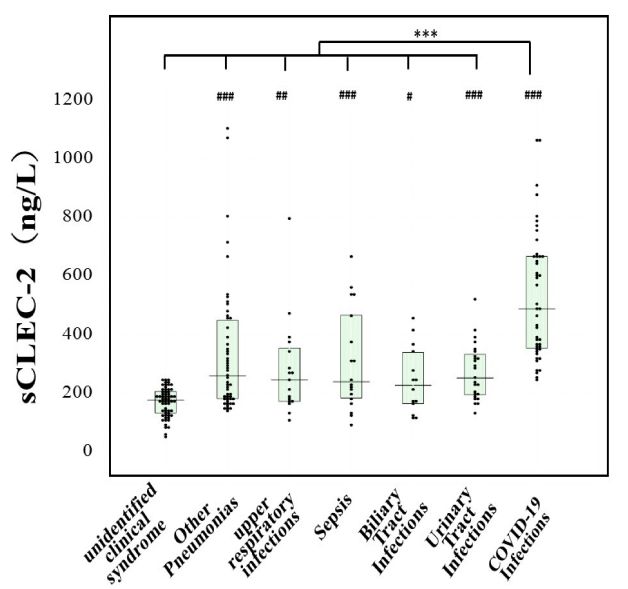
In this study, the levels of plasma biomarkers, such as sCLEC-2 and D-dimer, in 46 patients with COVID-19 were measured and compared to those in 127 patients with other infections to determine the mechanism underlying the worsening of COVID-19 infection.

Plasma sCLEC-2 levels were significantly higher in patients with COVID-19 infection than in those with bacterial infections. On the other hand, plasma D-dimer levels were significantly higher in patients with bacterial infections than COVID-19 infection. These findings suggest that COVID-19 infection tends to facilitate platelet activation, while bacterial infections tend to facilitate fibrin generation.

Possible pathogenesis of worsening COVID-19:
SARS-CoV-2 spike protein activates platelets directly via apoptosis of lymphocytes and induces thrombosis.

Glycan binding specificities of the SARS-CoV-2 spike protein

A group from Department of Medical Laboratory Science and Biotechnology, College of Medicine, National Cheng Kung University, Tainan 70101, Taiwan, etc. has reported about glycan binding specificities of the SARS-CoV-2 spike protein.
https://www.ncbi.nlm.nih.gov/pmc/articles/PMC8880561/

Assay:
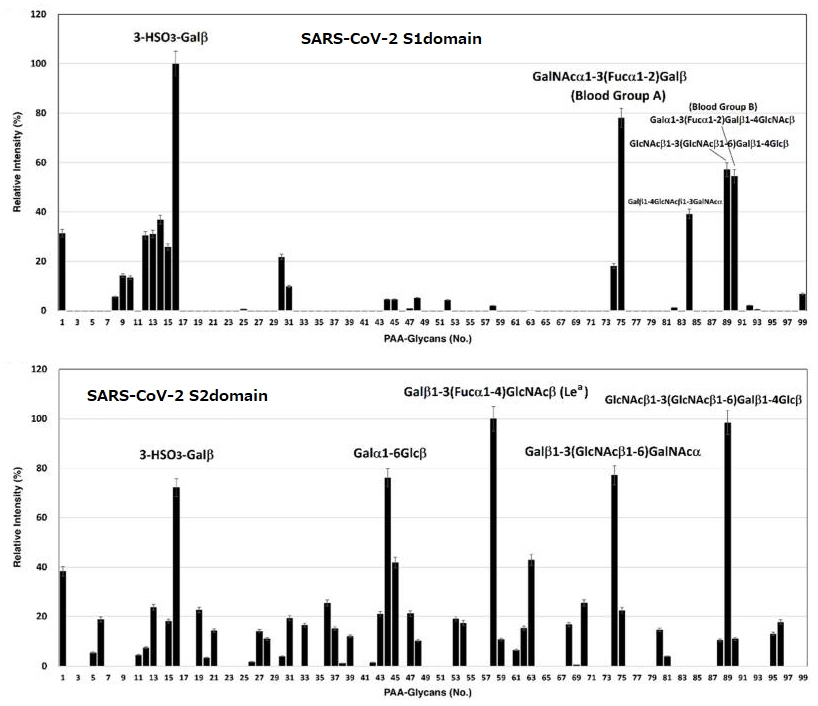
Donor beads (500 ng/well) and biotin-polyacrylamide (PAA)-sugars (20 ng/well) mixed with SARS-CoV-2 spike protein S1 or S2 subunits (10–20 ng/well) were incubated at room temperature for 1 h. A mixture of acceptor beads (500 ng/well) and rabbit antisheep IgG Fc antibodies (10 ng/well) was added to the reaction to reach a final volume of 25 μL. All reactions were performed in the dark. After incubation for 2 h, the binding signals were measured and analyzed using the AlphaScreenTM detection program.

Results:
It was found that the SARS-CoV-2 spike protein S1 subunit binds specifically to blood group A antigen (strongly) and B antigen (weakly), and that the spike protein S2 subunit has a binding preference for Lewisa antigen. However, in the eyes of blog admin, it does not mean that SARS-CoV-2 Spike proteins have no affinity for glycan structures other than these ones, and the specificity is not so remarkable, especially in S2 subunit.

Pentosan polysulfate (PPS), Mucopolysaccharide polysulfate (MPS) could be potential antiviral drugs against SARS-CoV-2

A group from Department of Chemical and Biological Engineering, Center for Biotechnology and Interdisciplinary Studies, Rensselaer Polytechnic Institute, Troy, NY 12180, USA, etc. has reported that sulfated glycans and highly negatively charged compounds could show strong antiviral activities against SARS-CoV-2.
https://www.ncbi.nlm.nih.gov/pmc/articles/PMC8875565/

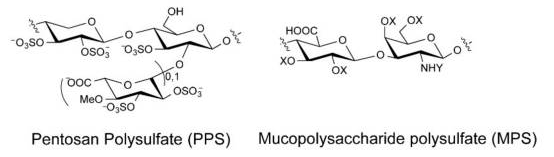
It was know that many sulfated glycans, such as heparin, fucoidans, and rhamnan sulfate show anti-SARS-CoV-2 activities. In this study, a small library of sulfated glycans and highly negatively charged compounds, including pentosan polysulfate (PPS), mucopolysaccharide polysulfate (MPS) were evaluated as antiviral sulfated glycans against SARS-CoV-2.

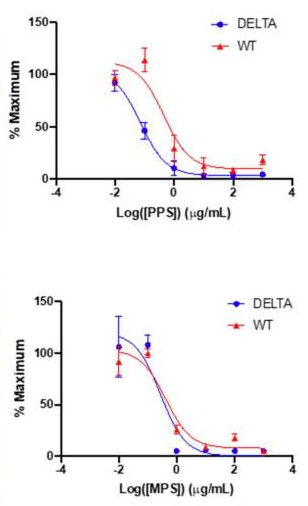
The neutralizing effect of PPS and MPS on SARS-CoV-2 pseudotyped virus in vitro were confirmed with neutralization assays. The IC50 values of PPS for the WT and Delta variant were 0.45 and 0.07 µg/mL, and the IC50 values of MPS for the WT and Delta variant were 0.42 and 0.28 µg/mL, respectively (see below). These results suggest the potential use of PPS and MPS as therapeutic and/or preventative antiviral drugs.

Microbiome in a deep hyperarid core of the Atacama Desert

A group from Departamento de Ingeniería Química, Universidad Católica del Norte, Antofagasta, Chile, etc. has reported about microbiome in a deep hyperarid core of the Atacama Desert.
https://www.ncbi.nlm.nih.gov/pmc/articles/PMC8859261/

Extensive and diverse microbial life remains to be discovered at greater soil depths within the hyperarid Atacama Desert. It was found that the moisture content changed from 2 to 11% by depth from (i) surface zone A (0–60 cm), (ii) intermediate zone B (60–220 cm), to (iii) deep zone C (220–340 cm).

The microbial composition in the soil core was dominated by Proteobacteria, Actinobacteria, Bacteroidetes and Firmicutes in all studied depth zones. However, community composition varied with soil depth.
In general,

  • Firmicutes exhibited a slightly greater detection frequency in surface zone A than in zone C, while it was not detected in zone B.
    Within Firmicutes, the occurrence of the families Lachnospiraceae and Bacillaceae was limited to zone A, while Oscillospiraceae and Salisediminibacter incerta sedis occurred only in zone C (wetter conditions).
  • Similarly, the actinobacterial families had different niches, with Sporichthyaceae being only detected in layers of zones B and C, while Illumatobacteraceae were only present in different layers within zone A.
  • The deepest part of the profile was dominated by Proteobacteria, especially by the families Comamonadaceae (330–340 cm) and Marinobacteraceae (320–330 cm).
  • The family Sphingomonadaceae of Proteobacteria showed a high abundance in several layers of zone B but a lower abundance in zone C.
  • Remarkably, Cyanobacteria of the class Oxyphotobacteria were detected with low prevalence in various samples across the soil profile.

The combined application of Bacillus spp. inoculant and sucrose can improve the growth and quality of Rheum palmatum

A group from Gansu Gaolan Field Scientific Observation and Research Station for Agricultural Ecosystem, Northwest Institute of Eco-Environment and Resources, Chinese Academy of Sciences, Lanzhou 730000, China, etc. has reported that the combined application of a bacterial inoculant and sucrose can improve the growth and quality of Rheum palmatum suppressing pathogen Fusarium spp.
https://www.ncbi.nlm.nih.gov/pmc/articles/PMC8835959/

There are many bacterial and fungal species that can function as (plant growth-promoting microbes) PGPM, of which Bacillus members are well-described in the literature for successfully promoting plant growth in diverse ways. Bacillus isolates colonize host plant roots and promote plant growth by producing bio compounds, such as the hormone indole-3-acetic acid (IAA), as well as spermidine and 2,3-butanediol, by defending against pests and pathogens by producing antibiotic substances such as hydrogen cyanide (HCN), chitinase, and siderophores.

In general, soil is usually a carbon-limited state, and less than 5% of total bacteria are in an active state under such conditions. Carbon sources, especially the most common sucrose, could impact bacteria as a direct energy source for growth. So, in this work, it was evaluated how Baillus spp. respond to the small molecular carbon addition such as sucrose and their co-effects on the rhizosphere microecology.

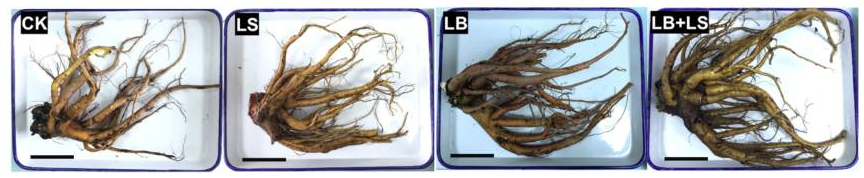
The combinations of three concentrations of Bacillus amyloliquefaciens EZ99 inoculant (1.0 × 10⁵, 1.0 × 10⁶, and 1.0 × 10⁷ colony-forming units (CFU)/mL, denoted as LB, MB, and HB, respectively) and with three sucrose concentrations (0.15, 1.5, and 15 g/L, denoted as LS, MS, and HS, respectively) were evaluated on R. palmatum growth and yield.

Although the HB treatment increased the growth of R. palmatum (plant length, crown weight, leaf length, and leaf weight) comparing with control (CK), it decreased the growth when coupled with sucrose, especially under the highest concentration of sucrose (HS). This indicates that a high level of bacterial inoculant (1.0 × 10⁷ CFU/mL) amended with a high level of sucrose (15 g/L) suppressed the plant growth-promoting function of PGPM. And, further, the fresh weight of R. palmatum roots were the most significantly improved under the LB + LS and LB + MS treatments (see below)

Typical differences observed in the comparisons are as follows:

  • Eight kinds of anthraquinones, the major constituents of rhubarb, were differentially identified in the comparisons. The LB + LS group accumulated the highest level of aurantio-obtusin-6-O-glucoside and torachrysone-8-O-glucoside, but reduced levels of torachrysone and laccaic acid D, while the rhubarbs under the LB treatment accumulated only 2-acetoxymethyl-anthraquinone.
  • The co-effects of PGPM and sucrose in the LB + LS treatment did not lead to a significant net difference in the total contents of soil nutrients, but they significantly increased the contents of total potassium which could mediate the bioavailability of potassium and nutrients’ cycling in the soil.
  • As for rhizobacteria community, sucrose addition had little impact on bacterial community structure in LS soil, yet it modulated the diversity induced by the PGPM addition in LB + LS soil.
  • As for fungal community, the Ascomycota and Mortierellomycota were the two most abundant phyla, together accounting for more than 92.5% of the relative abundance of the total fungal sequences. The most abundant phylum Ascomycota was enriched the most in CK (79.1%), and diminished the most in LB + LS (71.6%) treatment. At the genus level, compared with CK, the first dominant genus Fusarium was decreased, whereas the second dominant genus Mortierella was increased in all treatments, with the highest increase recorded in the LB + LS treatment.

Differences in microbiome in peanut rhizosphere between continuous and rotational cropping

A group from College of Forestry, Shandong Agricultural University, No. 61, Daizong Street, Taian, 271018 Shandong China, etc. has reported differences in microbiome in peanut rhizosphere between continuous and rotational cropping.
https://www.ncbi.nlm.nih.gov/pmc/articles/PMC8854431/

At he phylum level, comparing monoculture (LIZ) and rotation (LUZ) soils,
in bacterial phyla, Proteobacteria (higher in LUZ), Chloroflexi (higher in LUZ), Acidobacteria (higer in LUZ), WPS-2 (significantly higher in LUZ), and Firmicutes (significantly lower in LUZ),
in fungal phyla, Ascomycetes (higher in LUZ) and Mortierellomycota (significantly lower in LUZ).

At the genus level, comparing monoculture (LIZ) and rotation (LUZ) soils,
in bacterial genus, Acidibacter (higher in LUZ), Puia (higher in LUZ), Ralstonia (significantly higher in LUZ), Clostridium_Sensu_Stricto_1 (significantly lower in LUZ), Turicibacter (significantly lower in LUZ), Romboutsia (significantly lower in LUZ), Streptomyces (significantly lower in LUZ), Bryobacter (lower in LUZ), and Paeniclostridium (significantly lower in LUZ),
In fungal genus, Talaromyces (significantly higher in LUZ), Chaetomium (significantly lower in LUZ), Mortoerella (significantly lower in LUZ), Neocosmospora (significantly lower in LUZ), Solicoccozyma (significantly lower in LUZ), and Papulaspora (significantly lower in LUZ).

For bacteria, Proteobacteria was shown to be dominating the bacterial community and soil types in different geographic regions, and has been known as beneficial bacteria suppressing rhizoctonia disease.

For fungi, Talaromyces species have antagonistic fungal functions on species such as Cylindrocarpon destructans, Fusarium oxysporum, Rhizoctonia solani, and so on. The relative abundance of pathogens such as Fusarium, Penicillium, Gibberella and Colletotrichum in LUZ rhizosphere soils was lower than in LIZ. Penicillium is a toxin-producing genus that can cause fruit, vegetable, and meat rots. Fusarium also causes plant rots, stem rot, flower rot and spike rot. Gibberella causes devastating plant diseases and produce specific toxins or active metabolites that are toxic to humans and animals.

These observations suggested that long-term continuous cropping changed soil bacterial and fungal communities in peanut rhizosphere, which to some extent reduced the relative abundance of potentially beneficial bacterial genera and increased the relative abundance of potentially pathogenic fungal genera.

The importance of glycan-glycan interactions in HIV infection

A group of Institute for Glycomics, Griffith University, Gold Coast, QLD 4222, Australia has reported the importance of glycan-glycan interactions in HIV infection.
Host glycocalyx captures HIV proximal to the cell surface via

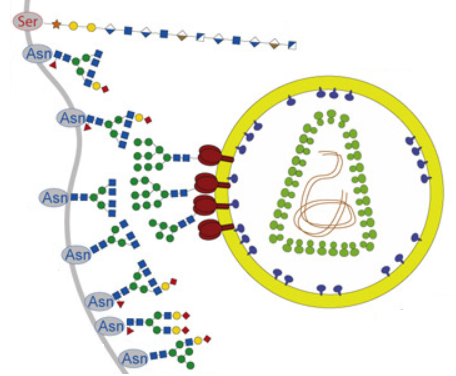
Current understanding of the roles of HIV glycans include: (1) to protect HIV from immune recognition; (2) to stabilize the trimeric envelope structure; and (3) to mediate trans-infection of T lymphocytes via electrostatic glycan-lectin (host proteinaceous lectin) interactions.

As is well know, all HIV Envelops are heavily glycosylated with variable N-linked glycans distributed across ~30 N-linked glycosylation sites, and many of these sites are primary occupied with oligomannose N-glycans, including Man5-9GlcNAc2-Asn and Man3GlcNAc2-Asn core structures.

While much is known about HIV entry, the initial interactions between virus and cell prior to HIV envelope-CD4 receptor-dependent interactions is rather unclear.

In this report, it was shown that glycan-glycan interactions could initiate HIV-cell contacts, that is, HIV- and host cell-glycan interactions via HIV oligomannose, Man5 (Manα1-3Manα1-6[Manα1-3]Man; a representative terminal HIV N-glycan structure, and host cell GlcNAc could potentiate HIV-host cell attachment.

So, it can be said that glycan-glycan interactions are emerging as a new class of high-affinity biomolecular interactions in virus infection.

Powered by WordPress |Copyright © 2020 Emukk. All rights reserved