Archive 21/2/15

A regenerative medicine approach to thin endometrium (endometrial stunting) which is one of causes of infertility

A group from the Center for Child Health and Development described a regenerative medicine approach to thin endometrium (endometrial stunting), which is one of causes of infertility.
https://stemcellres.biomedcentral.com/articles/10.1186/s13287-021-02188-x

There are various causes of infertility, but one of them is a thin endometrium (endometrial stunting). It is known that thin endometrium make ovoimplantation difficult, but little is known about the reason. Treatments for endometrial stunting include (1)estradiol replacement, mineral and vitamin administration, and from regenerative medicine approaches, (2) administration of platelet-rich plasma, (3) menstruation-derived stem cells, and (4) use of autologous transplantation of exogenously prepared endometrium cell sheets.

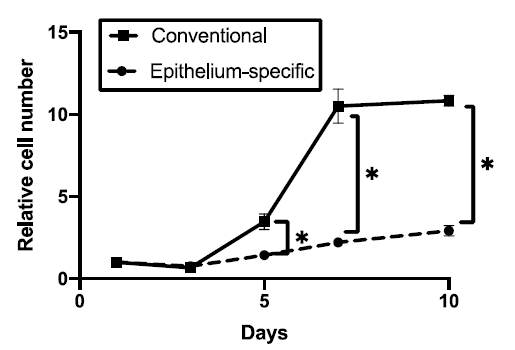
In a regenerative medicine approach, however, it would be very important how efficiently to culture the endometrium under xeno-free conditions. The endometrium is basically difficult to culture with feeder-free, and from the view point of xeno-free, the authors have developed a method of using autologous endometrial stromal cells as a feeder  instead of MEF. They also used special media (ESTEM-HE) in terms of accelerating endometrial cell growth. In the figure below, continental medium is DMEM and epithelium-specific medium is a special medium named ESTEM-HE.

IgG of the new coronavirus (SARS-CoV-2) was found in bovine whey milked in November 2018 and August 2019

A group from Juntendo University etc. has found antibodies (IgG) against the S-protein of the new coronavirus (SARS-CoV-2) from bovine milk whey.

https://www.sciencedirect.com/science/article/pii/S0958694621000303?via%3Dihub

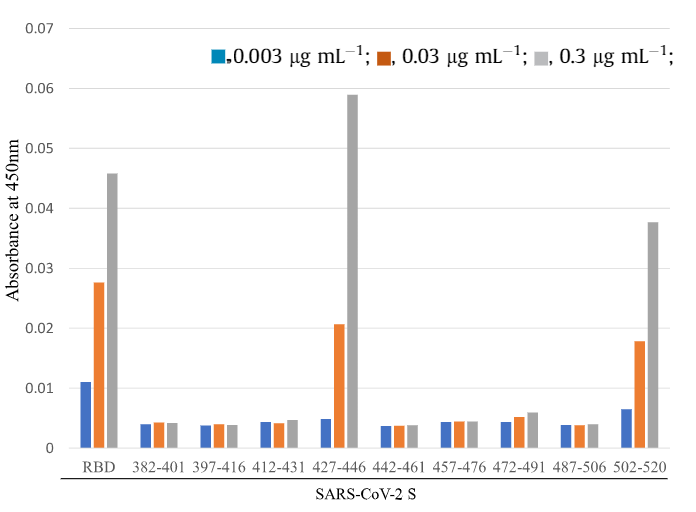
The bovine milk was prepared from New Zealand cows in November 2018 and August 2019, and they discovered the presence of IgG for RBD present in the S-protein of SARS-CoV-2 from the bovine milk whey. The genome sequence of the S-protein is shown below, and the epitope mapping of the IgG shows that RBD is the one. Therefore, IgG enriched from milk whey may show neutralize activity against SARS-CoV-2.
However, this bovine milk whey was milked before the spread of COVID-19, and it is difficult to think that the cows were infected with SARS-CoV-2, and it might have been infected with an unknown coronavirus that shares immunogenicity of SRAS-CoV-2.


Glycan modification changes in gastric epithelial cells infected with Helicobacter pylori

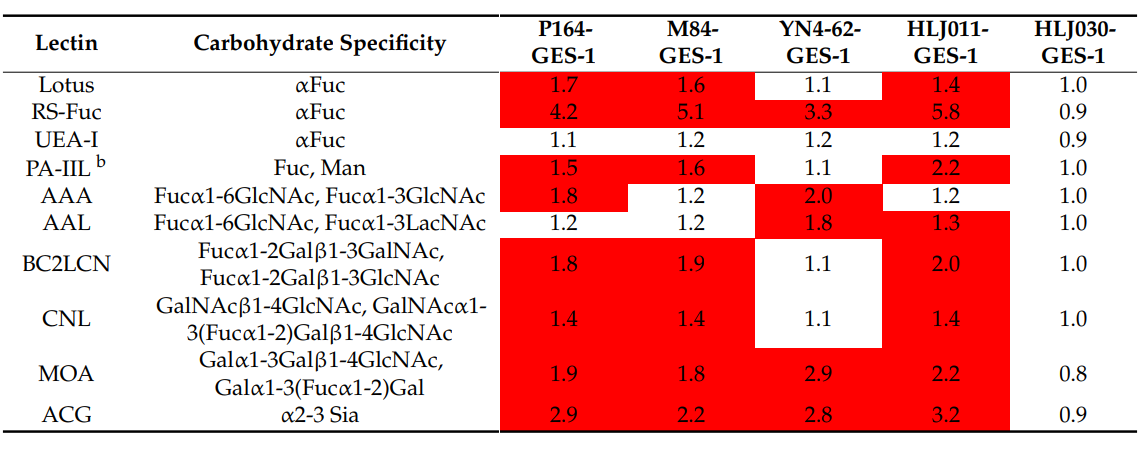
A group from Chinese Center for Disease Control and Prevention, Beijing etc. has infected gastric epithelial cells (GES-1) with Helicobacter pylori isolated from patients with different diseases, and investigated changes in glycan modification with lectin microarrays.
https://www.mdpi.com/2076-0817/10/2/168/htm

Patient’s disease states from which H. pylori bacteria were isolated were as follows:
Chronic gastritis (YN4-62),
Duodenal ulcer disease (M84, P164),
Gastric cancer (HLJ011, HLJ030),

The trend is characterized by the increase in α1-2Fuc and α2-3Sia modifications. GES-1 which was not infected with H. pylori, was used as a control, to compare changes in glycan expression levels. Red indicates increased ones.

Lactoferrin functions as an antiviral drug for the new coronavirus (SARS-CoV-2)

Lactoferrin is an iron-binding glycoprotein with a molecular weight of 80,000 contained in milk. It is found in mammalian milk (especially colostrum), including human, but is also found in tears, saliva, pancreatic fluid and other exocrine fluids and neutrophils in adults. Lactoferrin is also known to maintain and improve health, including immune regulation, antiviral function,
lactobacillus bifidus proliferation, iron absorption regulation associated with iron binding ability, anti-inflammatory action, and lipid metabolism improvement action.

A group from University of Arizona, Tucson etc. has reported that lactoferrin actually shows antiviral effects against SARS-CoV-2, and what is the mechanism behind it.
https://www.tandfonline.com/doi/full/10.1080/22221751.2021.1888660

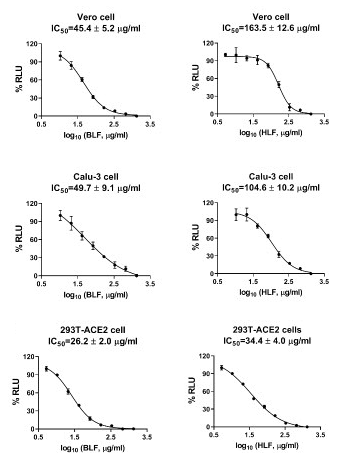
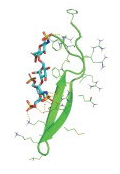
Using ACE2 overexpressed 293 T cells, Vero E6 cells, and Calu-3 cells, they show the inhibitory activity of lactoferrin on infection of SARS-CoV-2 in vitro. They have also verified using a molecular docking method that the mechanism of infection inhibition is blocking SARS-CoV-2 binding to heparan sulfate, which is a co-receptor of ACE2. Heparan sulfate has a negative charge and is thought to bind to a positively charged region (17 to 41 rest regions) present in the NTD of the SARS-CoV-2 S-protein. In the figures below, BLF=Bovine lactoferrin and HLF=Human lactoferrin. The lower right hand side figure shows a molecular docking image of heparin dp4 with bovine lactoferricin.

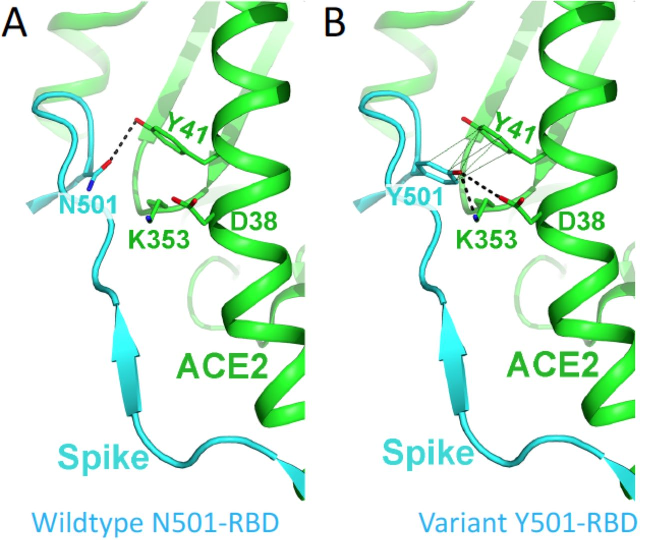
Why SARS-CoV-2 (20I/501Y. V1) UK Variant does increase its infectability?

A group from Anschutz Medical Center, University of Colorado etc. has analyzed why does the SARS-CoV-2 (20I/501Y. V1) UK variant increase its infectability? using a molecular docking method.
https://www.biorxiv.org/content/10.1101/2021.02.02.428884v1.full

Comparing with the wild type N501, RBD of the mutant Y501 binds to ACE2 about 10 times more tightly, because a new hydrogen bond is formed between RBD and ACE2 (bold dashed line in the figure below), and there is a ring-ring interaction (light dashed line in the figure below).

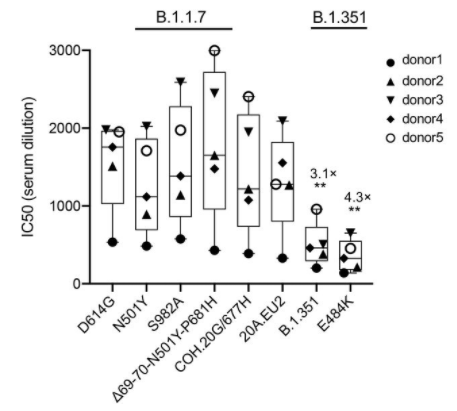
Efficacy of Pfizer Coronavirus (COVDI-19) Vaccine: Effects on B.1.1.7 (UK lineage variant) and B.1.351 (South African lineage variant)

A group from Grossman School of Medicine, New York has reported on the efficacy of Pfizer’s current new coronavirus (COVDI-19) vaccine for B.1.1.7 (UK lineage variant) and B.1.351 (South African lineage variant).
https://www.biorxiv.org/content/10.1101/2021.02.05.430003v1

This blog site also contains a similar research result from other research groups (see article on February 6, 2021).
The Group’s reporting has a similar trend. The current Pfizer vaccine is not so affected by UK variant, but it seems certain that its effectiveness is likely to be significantly lower for South African variant.

Electrochemical high sensitivity detection using RCA isothermal amplification and Redox reaction of the novel coronavirus (SARS-CoV-2)

RT-PCR is the Gold Standard for the detection of the new coronavirus (SARS-CoV-2).
A group from Mahidol University, Nakhon Pathom, Thailand etc. has reported an electrochemical detection method that has the same sensitivity and specificity as RT-PCR and do not require expensive devices.
https://www.nature.com/articles/s41467-021-21121-7

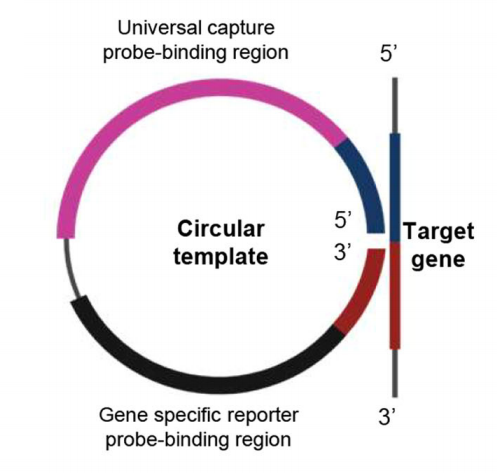
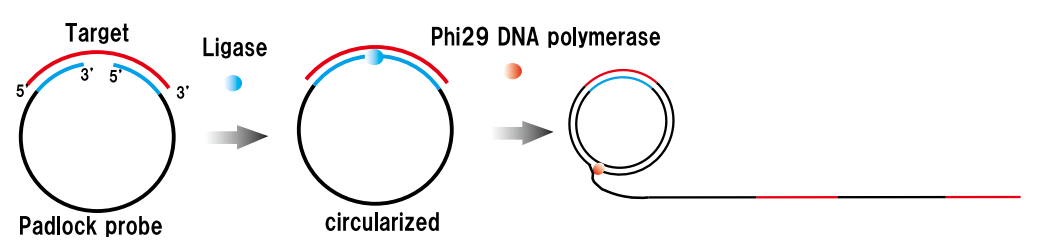
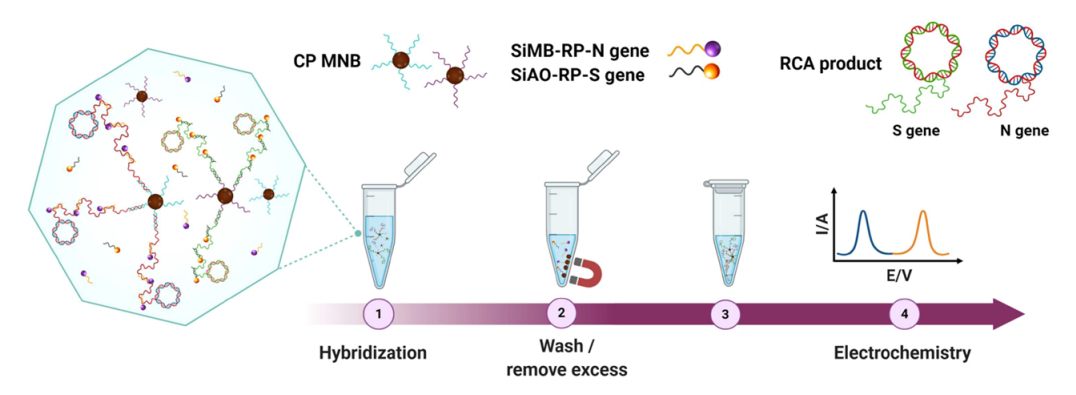
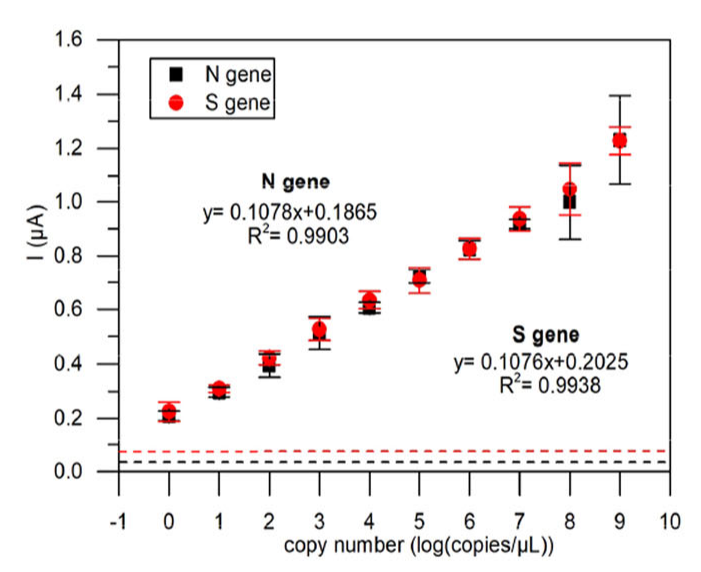
In order to detect SARS-CoV-2 with high sensitivity, of course, a gene amplification process is required. They adopted Rolling Circle Amplification (RCA). The RCA method, like the PCR and LAMP methods, has the advantage that carryover contamination has a small impact on the next amplification process and can be amplified in an isothermal bath at around room temperature (25°C to 37°C). The RCA amplicon (Padlock probe) was designed as shown below and was consist of Target gene specific to the target you want to detect (N-gene, S-gene, etc. of SARS-CoV-2), Universal capture probe-binding region, and Generic reporter probe-binding region. With this Padlock probe, RCA results in long DNA amplicons containing hundreds of tandem repeats of the Padlock DNA complementary sequence. For this RCA products, hybridize probe-conjugated magnetic bead particle (CP-MNB) and Silica methylene blue reporter probe (SiMB-RP) to obtain the final product. Methylene blue or Acridine orange was used to as a redox regent. The current obtained by the electrochemical reaction increased with copy numbers as shown below. As a result, the detection limit sensitivity reached 1 copy/uL.

Vitamin D and the new coronavirus (COVID-19)

A group from the University of Florida etc. has found that people with vitamin D deficiency were five times more likely to be infected with COVID-19 than people without deficiency after adjusting for age groups (OR = 5.155; 95%CI、3.974–6.688; P <0.001)from a statistical study using total population of 987,849 people. Healthy diets is the base of health. Sorry for the very short blog article.
https://www.ncbi.nlm.nih.gov/pmc/articles/PMC7716744/

Vitamin C and the new coronavirus (COVID-19)

A group from University of Helsinki etc. has reported on the relationship between Vitamin C and COVID-19.
https://www.ncbi.nlm.nih.gov/pmc/articles/PMC7848027/

In healthy people, a Vitamin C intake of about 0.1 g/day is enough to maintain the concentration of Vitamin C in the blood. However, when infected with COVID-19 and becomes severe, the concentration of Vitamin C in the blood decreases sharply, and it can be reduced to the same level as vitamin C deficiency and further to a level that is almost undetected.

Taking a large amount of Vitamin C (6-8 g/day) has the following effects:
Reduced ICU treatment duration by an average of 8%
Reduced fatality from 35% to 78%

Since there are no side effects of Vitamin C, this is also considered to be effective for the COVID-19 treatment.

New biomarkers for lung cancer using bronchial alveoli cleaning fluid

A group from The First Affiliated Human of Xi’an Jiaotong University, Xi’an, China etc. has reported new biomarkers from bronchial alveoli lavage to identify adenocarcinoma, squamous carcinomas, and small cell lung cancer.
https://www.ncbi.nlm.nih.gov/pmc/articles/PMC7840895/

Lectin microarrays were used for the marker screening, and bronchoalveolar lavage fluid was used as a sample. The goal was to identify lung adenocarcinomas (ADC), lung squamous carcinomas (SCC), and small cell lung cancer (SCLC) from benign pulmonary diseases (BPD). The goal was also to distinguish between early stage lung cancer (LC-ES) and advanced stage long cancer (LC-AS).

From the results of the lectin microarray, significant differences were found in 15  lectins, and a logistic regression analysis was performed by combining several lectins to identify the differences between various lung cancers.

As a result
To discriminate lung cancer from good lung disease, ECA, GSL-I, and RCA120 were used (cutoff value: 0.754, ALC: 0.961, sensitivity: 0.918, specificity: 0.939),
to discriminate ADC, DBA, STL, UEA-I, BPL were used (cutoff value: 0.569, ALC: 0.619, sensitivity: 0.706, specificity: 0.586),
to discriminate SCC, PNA was used (cutoff value: 0.578, ALC: 0.693, sensitivity: 0.800, specificity: 0.667),
to discriminate SCLC, STL, BS-I, PTL-II, SBA, PSA were used (cutoff value: 0.728, ALC: 0.718, sensitivity: 0.721, specificity: 0.684),
and also
to detect early cancer, MAL-II, LTL, GSL-I, RCA120, PTL-II, PWM were used, resulting in (cutoff value: 0.668, AOC: 0.856, sensitivity: 0.829, specificity: 0.810).

In order to distinguish various diseases, it is advantageous not to rely on one variable (one lectin), but to distinguish the characteristic profile for each disease using multiple variables (multiple lectins). In my view, I think that it will become a trend to adopt AI instead of using conventional statistical analysis to improve discrimination ability of the differences in disease profiles.

Powered by WordPress |Copyright © 2020 Emukk. All rights reserved