Inhibition of SARS-CoV-2 infection with seaweed polysaccharides and those cytotoxicity

A group from Marine Biotechnology Research Center, Korea, etc. has reported on inhibition of SARS-CoV-2 infection with seaweed polysaccharides and those cytotoxicity.
https://www.ncbi.nlm.nih.gov/pmc/articles/PMC8071526/

Seaweeds are an excellent source of bioactive compounds such as polysaccharides, dietary fibers, amino acids, essential fatty acids, carotenoids, phlorotannins, vitamins, and minerals. These compounds have been reported to have a variety of pharmacological activities such as antitumor, antiviral, antioxidant, antimicrobial, anticoagulant, and immune-inflammatory effects

Authers investigated the inhibitory activities of the following crude polysaccharides (CPs):
Undaria pinnatifida sporophyll (CPUP),
Laminaria japonica (CPLJ),
Hizikia fusiforme (CPHF),
Sargassum horneri (CPSH),
Abalone viscera (CPAV),
Codium fragile (CPCF),
Porphyra tenera (CPPT), and
Fucoidan.

Cytotoxicity Assay with the viability of HEK293/ACE2 cells was assessed. When the HEK293/ACE2 cells were treated with each CP at the final concentration range from 1 ng/mL to 1 mg/mL (serial diluted 1/10) for 96 h, most of the CPs did not show severe cytotoxicity. However, CPAV, CPCF, and CPPT were slightly cytotoxic at a concentration of 1 mg/mL. CPAV showed notable cytotoxicity when applied at a concentration of 1 mg/mL, following a degree of cytotoxicity by CPPT, CPCF, CPHF, CPLJ, CPUP, CPSH, and fucoidan. Nevertheless, the CC50 of all CPs was over 500 μg/mL.

The testing of the inhibition of viral infection by CPs was performed with a SARS-CoV-2 pseudovirus. All CPs, except CPPT, inhibited SARS-CoV-2 pseudovirus infection of HEK293/ACE2 cells at various concentrations. Among the CPs tested, CPSH showed the strongest antiviral activity with an IC50 of 12 μg/mL, followed by CPAV (33 μg/mL), CPHF (47 μg/mL), CPCF (74 μg/mL), CPLJ (105 μg/mL), fucoidan (142 μg/mL), and CPUP (289 μg/mL), respectively.

As a conclusion, Sargassum horneri (CPSH) would be the best as an anti-SARS-CoV-2 agent.
Lentil lectin has potent anti-SARS-CoV-2 activity against mutant strains and epidemic variants. 

A group from National Institutes for Food and Drug Control (NIFDC), Beijing, China, etc. has reported that lentil lectin has potent anti-SARS-CoV-2 activity against mutant strains and epidemic variants.
https://www.tandfonline.com/doi/full/10.1080/22221751.2021.1957720

A pseudovirus based neutralization assay was performed on Huh7 cells by preincubating SARS-CoV-2 pseudoviruse with lectins. WGA, lentil lectin, PHA-L and PHA-E showed most potent antiviral activity against SARS-CoV-2 pseudovirus with IC50 range from 8.5 μg/mL to 22.0 μg/mL.

Hemagglutination and cytotoxicity activity of lectins are always problematic in practical applications. PHA-L and PHA-E showed hemagglutination activity at 3.91 μg/mL, and WGA showed it at 7.81 μg/mL. The lentil lectin showed weak hemagglutination activity at the highest concentrations tested (at 1 mg/mL). Cytotoxicity was evaluated with using Huh7 or 293T cells in 96-well plates and incubated at 37°C for 24 h. These lectins showed no cytotoxicity at 500 μg/mL.

Taking these things into consideration, lentil lectin would be more suitable to be a candidate as SARS-CoV-2 inhibitor.

It is of note that elimination of individual N- or O-linked glycosylation site on SARS-CoV-2 S protein had no influence on neutralization susceptibility to lentil lectin, suggesting that lentil lectin may bind to glycans at multiple sites on S trimer. The lentil lectin has strong binding to both oligomannose-type glycans (Man-5 to Man-9), and N-glycans containing GlcNAc at the non-reducing end terminus including both the complex- and hybrid-type glycans.

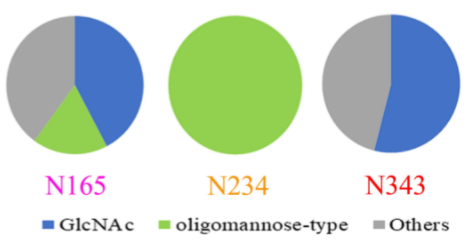
Glycosylation sites at N165, N234 and N343 were located around the RBD, and the majority of glycans at these three sites are lentil lectin binding glycans, especially the glycans at N234 are totally oligomannose-type which could be efficiently bound by lentil lectin. Interestingly, removal of any one of glycosylation sites at N165, N234 and N343 had no effect on neutralization susceptibility to lentil lectin, suggesting that the existence of two of these glycosylation sites could support neutralization by lentil lectin.

Although a number of mutations have been emerging, glycosylation sites at N165, N234 and N343 were 100% conserved so far. Therefore, the use of lentil lectin might to be a GOOD selectin because of its high tolerance for SARS-CoV-2 variants. 

The most potent neutralizing antibody developed with antibody phage display from COVID-19 convalescent patients 

A group from Technische Universität Braunschweig, Institut für Biochemie, Biotechnologie und Bioinformatik, Abteilung Biotechnologie, Germany, etc. has reported on the most potent neutralizing antibody developed with antibody phage display from COVID-19 convalescent patients.
https://www.ncbi.nlm.nih.gov/pmc/articles/PMC8260561/

Antibody phage display is now widely used as in vitro technology to select human antibody fragments for the development of therapeutic antibodies against target disease.
In this author’s work, immune phage display libraries from six COVID-19 convalescent patients were constructed and RBD-binding antibodies have been selected, to develop SARS-CoV-2-inhibiting and -neutralizing antibodies.

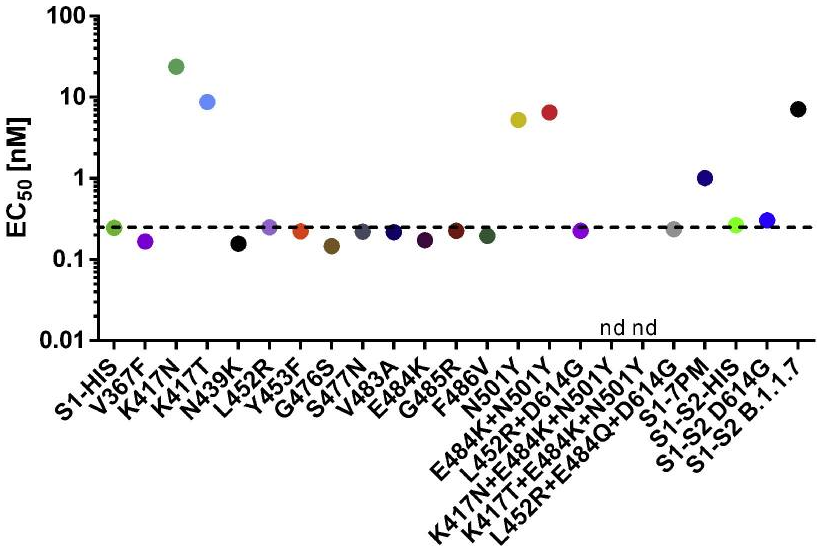
30 antibodies were screened in a cytopathic effect (CPE)-based neutralization screening assay to select antibodies for further characterization as IgG. This assay was performed with 250 plaque-forming units (pfu)/well SARS-CoV-2 and 1 μg/mL (∼10 nM) scFv-Fc. CPE is characterized by rounding and detachment clearly visible in phase contrast microscopy upon SARS-CoV-2 infection within 4 days, while uninfected cells maintained an undisturbed confluent monolayer. The best neutralizing 19 scFv-Fc were re-cloned and produced as human IgG in 50-mL culture scales. Half-maximal effective concentration (EC50) values of binding to RBD, S1, or S1-S2 were determined. Antibodies named STE90-C11, STE90-B2-D12, STE94-F6, and STE94-H2 showed EC50 values ranging between 0.2 and 0.5 nM on all of the antigens tested. As a result, STE90-C11 antibody was selected as the most potent one.

Excitingly, STE90-C11 was tolerant to most known RBD mutants as shown below, especially those of the mutants B.1.429/B.1.427, B.1.526, B1.258Δ, B.1.535, B.1.617, and B.1.1.33, which are currently emerging.

To get further insight into the neutralizing mechanism of STE90-C11, a complex of STE90-C11 Fab and SARS-CoV-2 RBD was prepared and subjected to crystallization screening. X-ray diffraction images collected from the resulting crystals yielded a dataset to an overall resolution limit of 2.0 Å. After solving the structure by molecular replacement, a model was built into the electron density. Roughly 60% of this binding area can be contributed to the VH segment, forming up to 10 hydrogen bonds at the same time. The remaining 40% are provided by the VL segment contributing 8 additional hydrogen bonds to stabilize the interaction. The superposition of the RBDs of the STE90-C11:SARS-CoV-2 RBD complex with a ACE2:SARS-CoV-2 RBD complex revealed that the neutralization mechanism of STE90-C11 is based on directly competing for the ACE2 binding side, as the interaction interfaces on the RBD of both molecules almost completely overlap. 

A gene therapy-based strategy to prevent COVID-19 using an ACE2-decoy protein encoded in an AAV vector delivered by nasal spray. 

A group from University of Pennsylvania, Philadelphia, US, has proposed a gene therapy-based strategy to prevent COVID-19 using an ACE2-decoy protein encoded in an AAV vector delivered by nasal spray.
https://journals.plos.org/plospathogens/article?id=10.1371/journal.ppat.1009544

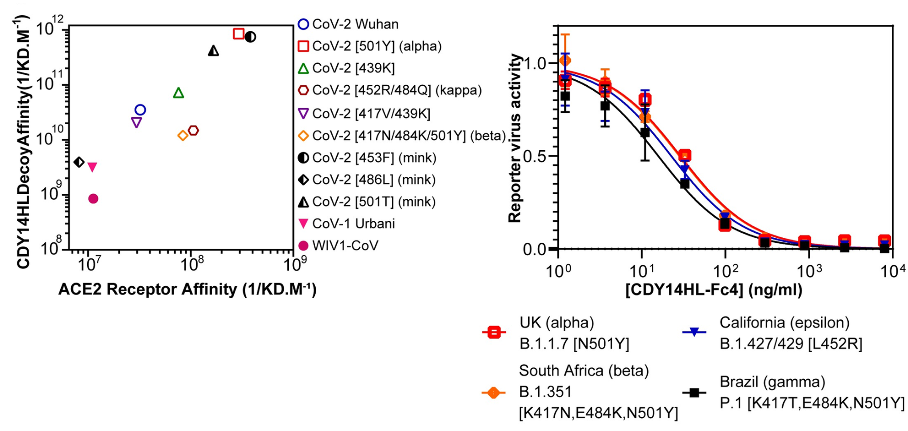
An affinity-matured ACE2 decoy achieving 1000-fold binding improvements across a wide range of SARS-CoV-2 variants has developed and fused with IgG4 Fc. The ACE-decoy as named CDY14-Fc as the most improved ACE2 decoy variant. The affinity maturation was done with using a diverse (>108 transformants) ACE2 variant libraries in a yeast-display format.

It was demonstrated that the CDY14-Fc could broadly neutralizes SARS-CoV-2 variants as follows. it seems that unlike antibodies, decoy inhibitors could achieve broader neutralization and escape mutant resistance; 501Y from B.1.1.7/alpha variant, 417N/484K/501Y from B1.351/beta variant, 452R/484Q from B.1.617.1/kappa variant, and so forth.

The goal in this strategy is to get decoy proteins expressed internasal delivering the decoy genes with AAV vectors by nasal spray. This idea was confirmed by in vivo experiments with nonhuman primates.

A bivalent protein targeting oligo-mannose in SARS-CoV-2 Spike and HR1 domain in S2 subunit to inhibit SARS-CoV-2 infection 

A group from Shanghai Institute of Infectious Disease and Biosecurity, Fudan University, Shanghai, China, has developed a bivalent protein targeting oligo-mannose in SARS-CoV-2 Spike and HR1 domain in S2 subunit to inhibit SARS-CoV-2 infection.
https://www.ncbi.nlm.nih.gov/pmc/articles/PMC8264481/

To enter target cells, SARS-CoV-2 binds to its receptor ACE2 on the host cell through the receptor-binding domain (RBD) in S1 subunit of spike (S) protein. Such binding triggers conformation changes in the S2 subunit of S protein, resulting in the formation of a six-helix bundle (6-HB) between the heptad repeat 1 and 2 (HR1 and HR2) domains, thus bringing viral and target cell membranes together for fusion. Therefore, both S1 and S2 subunits can serve as important targets for the development of SARS-CoV-2 fusion and entry inhibitors. The sequence of S2 subunit is more conserved than that of S1 subunit, making it a better target for developing broad-spectrum CoV entry inhibitors.

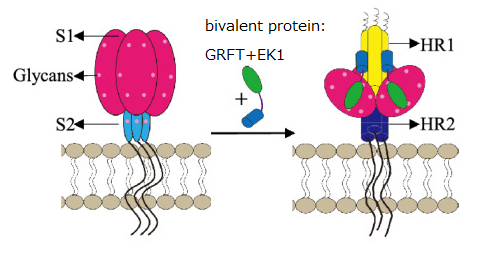
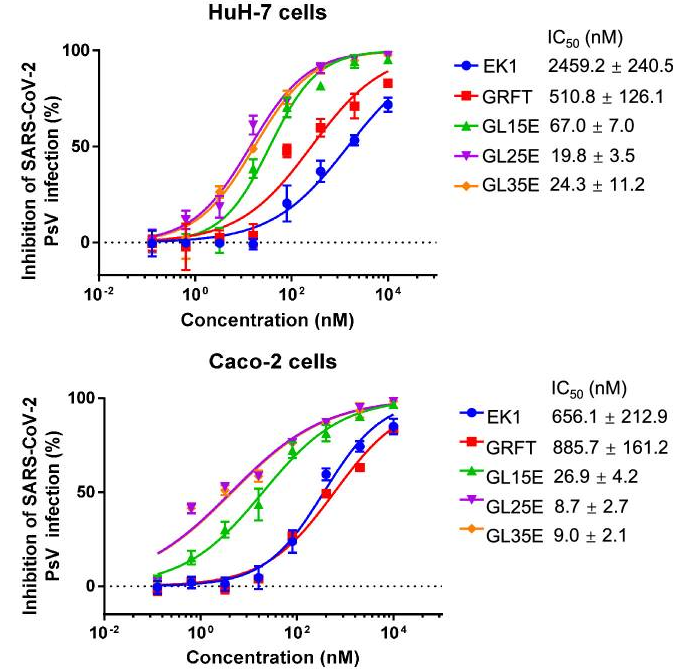
Authors aimed to design and construct a bivalent protein consisting of antiviral lectin GRFT and pan-CoV fusion inhibitory peptide EK1 and evaluate its inhibitory activity and mechanism of action against infection by SARS-CoV-2 and its mutants, as well as other human coronaviruses (HCoVs). Three types of recombinant plasmids encoding bivalent proteins (GRFT and EK1) with different linkers in the length, GRFT-L15-EK1 (GL15E), GRFT-L25-EK1 (GL25E), and GRFT-L35-EK1 (GL35E), containing linkers L15 (GGGGS)3, L25 (GGGGS)5, and L35 (GGGGS)7 between the GRFT and EK1 components.
It was found that GL25E was the best to inhibit SARS-CoV-2 infection as shown below.

Niclosamide inhibits SARS-CoV-2 infection: Inhibition of SARS-CoV-2 infection mediated by endocytosis pathway 

A group from National Centre for Biological Sciences (TIFR), Bengaluru, India, etc. has reported on SARS-CoV-2 infection mechanisms based on endocytosis.
https://journals.plos.org/plospathogens/article?id=10.1371/journal.ppat.1009706

A key step in successful virus infection is the release of viral genomic content into the host cell cytoplasm. To achieve this, viruses bind to specific cell surface receptors and subsequently undergo membrane fusion either directly at the plasma membrane or following endocytic uptake. Both alternatives of entry are feasible for SARS-CoV-2 infections depending on the availability of receptors and proteases at the host cell surface. Although angiotensin converting enzyme 2 (ACE2) is a well-studied receptor for SARS-CoV-2, other receptors and co-receptors have been discovered from a number of groups. Additionally, SARS-CoV-2 requires proteolytic processing of the viral envelope Spike protein by host cell proteases to gain entry. Therefore, these viruses can directly fuse at the cell surface if the Spike protein is cleaved by a cell surface serine protease like TMPRSS2, or utilize an endo-lysosomal route for fusion, where the Spike protein is primed by cysteine protease cathepsins. So, viral entry and infection in different host cells is dependent on the expression of these key host factors (receptors such as ACE2 and protease like furin, TMPRSS2, and cathepsin.

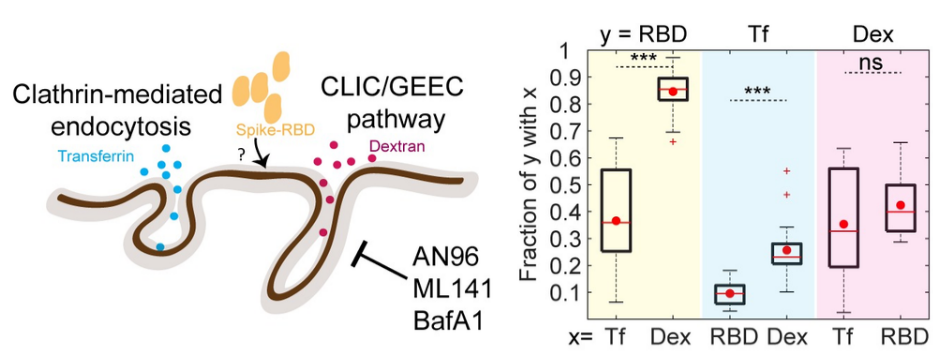
The CLIC/GEEC (CG) pathway is a clathrin-independent endocytic pathway mediated by uncoated tubulovesicular primary carriers called clathrin-independent carriers (CLICs) which arise directly from the plasma membrane and later mature into tubular early endocytic compartments called Glycosylphosphotidylinositol- anchored protein (GPI-AP) enriched compartments (GEECs).

Authors studied the endocytosis of receptor binding domain (RBD) of SARS-CoV-2 Spike protein in gastric epithelial cells (AGS) in the presence and absence of ACE2. AGS can be considered as a cell line with undetectable levels of endogenous ACE2. It was shown that RBD is endocytosed via the CG endocytic pathway (rather than clathrin-mediated endocytosis (CME) pathway) and its uptake is sensitive to pharmacological perturbations of this pathway in AGS cells.

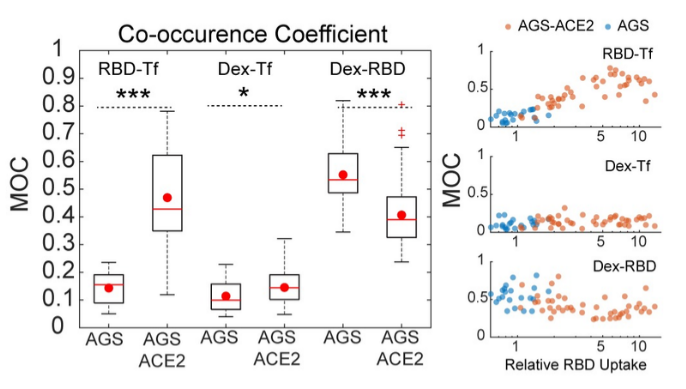
To determine the effect of ACE2 on uptake of RBD in AGS cells, a stable AGS cell line ectopically expressing ACE2 (AGS-ACE2) was generated; the expression of ACE2 was confirmed using qPCR and western blot analysis. RBD uptake in AGS-ACE2 was about 3-fold higher than AGS cells. On characterizing the RBD endocytic itinerary in AGS-ACE2 cells, an increase in the co-occurrence of RBD with transferrin was observed, and slightly reduced co-occurrence of RBD with dextran compared to AGS cells was also observed. This indicates that in addition to trafficking via the CG pathway, RBD is now trafficked via the CME in AGS-ACE2 cells.

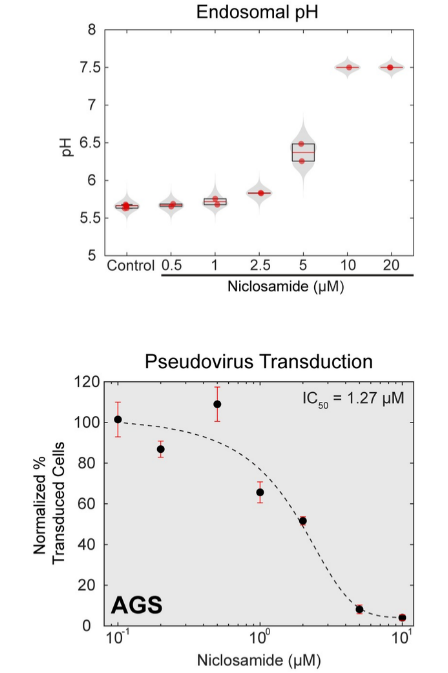
Finally, it was shown that niclosamide neutralizes endosomal pH and inhibits SARS-CoV-2 infection as follows.

Protection from kappa variant (B.1.617.1) and delta variant (B.1.617.2) by Pfizer-BioNTech or Oxford-AstraZeneca vaccine serum  

A group from University of Oxford, Oxford, UK, etc. has reported on protection from B.1.617.1 and B.1.617.2 by vaccine serum.
https://www.ncbi.nlm.nih.gov/pmc/articles/PMC8218332/

Kappa variant = B.1.617.1 is characterized by two mutations L452R and E484Q in the RBD, and delta variant = B.1.617.2 is characterized by two mutations L452R and T478K in the RBD). The L452R mutation is the common in those variants.

Authors tested neutralization of B.1.617.1 and B.1.617.2 using serum from individuals who had received 2 doses of the BNT162b2 Pfizer-BioNTech or ChAdOx1 nCoV-19 Oxford-AstraZeneca vaccine.

Geometric mean neutralization titers against B.1.617.1 were reduced 2.7-fold (p < 0.0001) relative to the Victoria virus for the Pfizer-BioNTech vaccine serum, and 2.6-fold (p < 0.0001) for the Oxford-AstraZeneca vaccine. The Victoria virus is a Wuhan-related strain isolated early in the pandemic from Australia. For B.1.617.2, titers were reduced 2.5-fold (p < 0.0001) relative to the Victoria virus for the Pfizer-BioNTech vaccine serum and 4.3-fold (p < 0.0001) for the Oxford-AstraZeneca vaccine. Although significant reductions in neutralization titers of sera collected from recipients of the Oxford-AstraZeneca and Pfizer-BioNTech vaccines were observed as such, but make sure that there is no evidence of complete escape from neutralization.  

Serum sphingosine could be a GOOD serologic biomarker for the early identification of asymptomatic versus symptomatic COVID-19 patients 

A group from Medical University of South Carolina, Charleston, USA, etc. has reported that reduced sphingosine levels provide a sensitive and selective serologic biomarker for the early identification of asymptomatic versus symptomatic COVID-19 patients.
https://www.nature.com/articles/s41598-021-93857-7

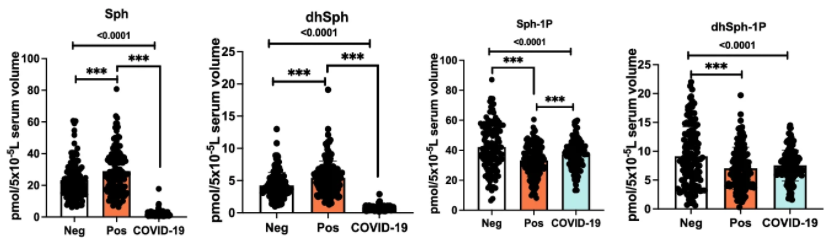
There was a slight but significant increase in the levels of sphingosine (p < 0.05) in individuals who are antibody positive (n = 134) compared to negative (n = 130), with sphingosine levels 28.96 versus 23.25 pmol/5 × 10−5 L serum, respectively. And further, COVID-19 patients’ serum sphingosine levels were around 15-fold decreased compared to that of asymptomatic donors from 28.96 to 1.88 pmol/5 × 10−5 L serum, respectively (Sphingosine (Sph), dihydro-sphingosine (dhSph), sphingosine 1-phosphate (Sph-1p)).

From the ROC analysis, a sphingosine threshold (or cut-off) value of 8.2 pmol/5 × 10−5 L resulted in 98.47% (95% CI 94.60–99.73%) sensitivity and 98.51% (95% CI 94.72–99.73%) specificity, suggesting that serum sphingosine level provides a selective and sensitive biomarker to identify symptomatic patients versus asymptomatic donors who are positive for SARS-CoV-2 antibody. It was also found that Sphingosine and dihydro-sphingosine do not appear to monitor the disease’s severity.

It was know that one of the biochemical biomarkers, lactate dehydrogenase (LDH), was highly elevated in symptomatic patients with an increased mortality rate. Interestingly, reduced sphingosine levels observed here were not associated with disease severity in COVID-19 patients. These data might suggest that increased or sustained serum sphingosine levels might prevent COVID-19 disease, while reduced sphingosine could result in enhanced inflammation and symptomatic response in some individuals.   

Epitopes in SARS-CoV-2 S2 can serve as blueprints for the design of immunogens capable of eliciting cross-neutralizing coronavirus antibodies 

A group from Fred Hutchinson Cancer Research Center, Seattle, USA, etc. has reported that epitopes in SARS-CoV-2 S2 can serve as blueprints for the design of immunogens capable of eliciting cross-neutralizing coronavirus antibodies.
https://pubmed.ncbi.nlm.nih.gov/34237283/

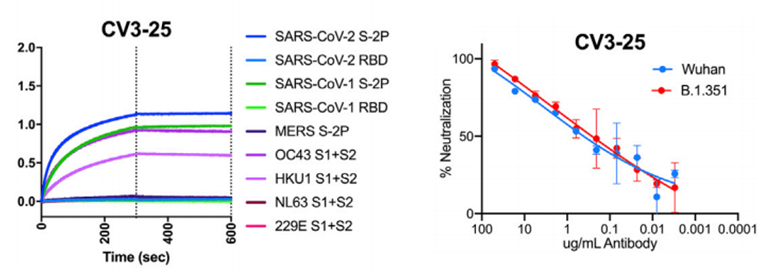
From 198 antibodies isolated from four COVID-19+ convalescent patients, 14 SARS-CoV-2 neutralizing antibodies were isolated. One targeted the N-terminal domain (NTD), one recognized an epitope in S2, and 11 bound the receptor-binding domain (RBD), and those IC50s ranged from 0.007 μg/ml to 15.1 μg/ml.

The S2 subunit contains at least one epitope that, although poorly immunogenic, is present on four of five human beta coronaviruses SARS-CoV-1, SARS-CoV-2, OC43, HKU1). That epitope, as defined by its recognition by CV3-25, is a valid candidate for the development of a global coronavirus vaccine. IC50 of C3-25 against SARS-CoV-2 was 0.34 μg/ml.

Man-specific lectins showing anti-viral properties against SARS-CoV-2, SARS-CoV, and MARS-Cov: Legume lectins for SARS-CoV-2

A group from Université Paul Sabatier, Toulouse, France, etc. has reported on Man-specific lectins showing anti-viral properties against SARS-CoV-2, SARS-CoV, and MARS-Cov.
https://www.mdpi.com/2073-4409/10/7/1619/htm

Man-specific lectins from plants, algae, fungi, and bacteria, have been largely studied with respect to their anti-viral properties against different types of enveloped viruses, including HIV-1, papilloma virus, herpes virus, hepatitis C virus, and Ebola virus. In this respect, the algal lectin griffithsin, the cyanobacteria lectins cyanovirin, actinohivin, and microvirin, and various GNA-related lectins like NPA and ASA have been particularly well documented. Most of these Man-specific lectins prevent the virus replication, at least under in vitro conditions, by interfering with the Man-containing N-glycans present on the cell surface of the virion envelope.

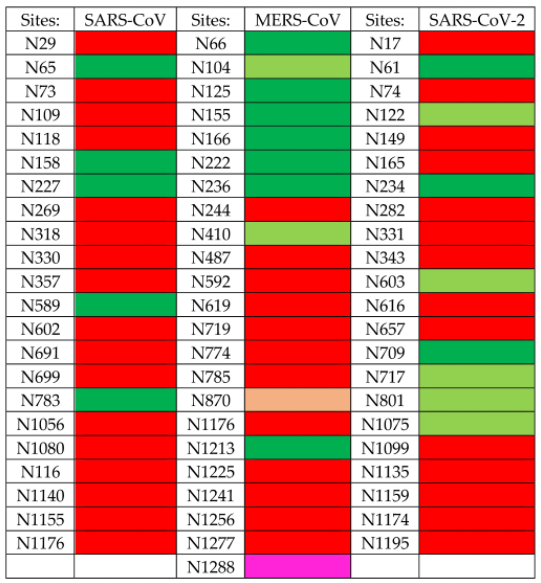
Glycans of the S-glycoproteins forming the spikes of SARS-CoV, MERS-CoV and SARSCoV-2, consist of high-mannose glycans and often sialylated N-glycans that predominantly occupy their N-glycosylation sites. However, depending on the coronaviruses, some discrepancies occur between the distribution of the two types of glycans on the surface of the virion, which introduces some diversity in the glycan shield covering the coronavirus spikes.


Figure explanation: Sites containing (almost) exclusively complex glycans (colored red), high-mannose glycans (colored green), and hybrid glycans (colored magenta). Sites harboring a mixture of complex glycans, high-mannose glycans, and a few hybrid glycans (pink), predominant high-mannose glycans (pale green) and predominant complex glycans (orange). In the case of SARS-CoV-2, high-mannose glycans consist essentially of tri-antennary glycans GlcNAc2-Man5–9, but the major high-mannose structure seems to be GlcNAc2Man5.

Accordingly, Man-specific lectins from plants, algae, fungi, and bacteria, which differ slightly due to their fine sugar-binding specificities, offer a vast panel of glycan probes more or less adapted to the specific recognition of the different coronaviruses. In this respect, GNA-related lectins together with Man-specific lectins from algae and cyanobacteria, appear as glycan probes nicely adapted to the recognition of the high-mannose shield which predominates at the top of the MERS-CoV spike. Otherwise, legume lectins with a higher affinity for N-glycans possessing the trimannoside Manα1,3Manα1,6Man core, seem better adapted to the recognition of the N-glycans distributed predominantly at the top of the glycan shield from SARS-CoV and SARS-CoV-2. 

Powered by WordPress |Copyright © 2020 Emukk. All rights reserved