Glycan profiling analysis of serum NRG1 in papillary thyroid cancer with using Lectin Microarrays

A group from Department of Head and Neck Surgery, Fudan University Shanghai Cancer Center, Shanghai, China, etc. has reported on glycan profiling analysis of serum NRG1 in papillary thyroid cancer with using Lectin Microarrays.
https://www.ncbi.nlm.nih.gov/pmc/articles/PMC8798758/

This study is evaluating if BRAF V600E mutant status in papillary thyroid cancer (PTC) patients could be detected by analyzing multiple glycan profiles of serum NRG1 through lectin microarray assays.

It has been reported that NRG1 overexpression was related in various cancers. NRG1 protein can bind to ERBB3 or ERBB4 protein, activating ERBB receptor tyrosine kinases, followed by the initiation of signal cascades, including PI3K/AKT pathways. NRG1 can be secreted to serum as reported.

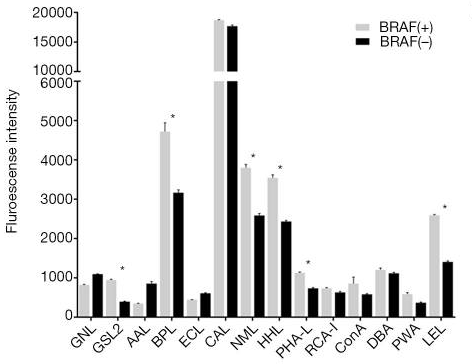
lectin microarrays were used to analyze the different glycan profiles of NRG1 from sera of BRAF(+) PTC and BRAF wild type(-) PTC patients. Lectin microarray is a rapid and sensitive high-throughput technique to get glycan profiles, allowing researchers to directly analyze glycoproteins without liberation of glycans from the core substrate.

It was found that LEL, BPL and NML tended to have bound to NRG1 in BRAF(+) PTC patients compared to BRAF(-) controls.
Anti-Chitinase 3-like-1(CHI3L1) could be a potential therapeutic agent for SARS-CoV-2 Infection

A group from Molecular Microbiology and Immunology, Brown University, RI. 02912, USA, etc. has reported anti-Chitinase 3-like-1(CHI3L1) and the small molecule CHI3L1 inhibitor kasugamycin both inhibited lung epithelial infection with SARS-CoV-2.
https://www.biorxiv.org/content/10.1101/2022.01.21.477274v1

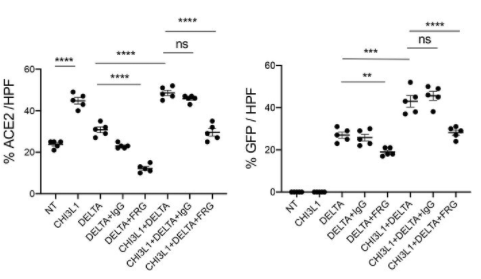
It was thought that therapies that target the host factors involved in SARS-CoV-2 infection like CHI3L1 can contribute to the control of COVID 19 induced by all viral variants that use ACE2. To test this hypothesis, pseudoviruses that expressed Spike proteins from the α, β, γ, δ and o variants were prepared, and the ability of CHI3L1-based interventions to modify their ability to infect human lung epithelial cells were assessed. These studies demonstrate that CHI3L1 augments the expression and accumulation of ACE2 and Spike priming proteases (SPP) and augments epithelial infection by the α, β, γ, δ and o pseudovirus variants. They also demonstrate that anti-CHI3L1 and the small molecule CHI3L1 inhibitor kasugamycin both inhibit the expression and accumulation of epithelial ACE2 and SPP and, in turn, inhibit epithelial infection by pseudoviruses that contain the α, β, γ, δ and o Spike proteins.


It was demonstrated that CHI3L1 augmented Calu-3 cell ACE2 accumulation and delta pseudovirus infection, and also that FRG(anti-CHI3L1) abrogated the expression of ACE2 and delta pseudovirus infection.

The similar anti-virus activity was observed also in the case of Kasugamycin. It effectively inhibited the uptake of pseudovirus with the alpha, beta, gamma or delta Spike protein mutations.

H84T BanLec shows broad-spectrum antviral activities against Herpesvirus

A group from Department of Microbiology and Immunology, SUNY Upstate Medical University, Syracuse, NY USA, etc. has reported that H84T BanLec shows broad-spectrum antviral activities against Herpesvirus.
https://www.ncbi.nlm.nih.gov/pmc/articles/PMC8803833/

As antivirals, one emerging strategy is the use of lectins to bind glycoproteins on the viral envelope. Naturally occurring lectins have been explored as broad-spectrum antimicrobials to inhibit viruses, bacteria, and other microbes. One promising lectin, BanLec, was derived from a banana lectin and shows high affinity to mannose N-glycans, and proved an effective strategy to combat HIV. Unfortunately, wild-type BanLec was a T-cell mitogen and activated basophils and mast cells. To address these issues, we developed H84T BanLec, replacing histidine at position 84 with threonine, which markedly reduced mitogenicity while maintaining the antiviral properties of the lectin.

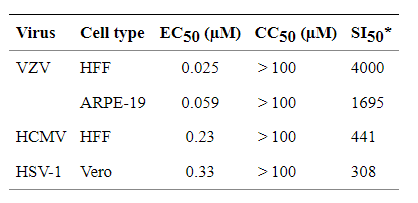
High-mannose N-linked glycans are present on the envelope proteins of many viruses, including human herpesviruses. Human herpesviruses (HHVs) are enveloped DNA viruses that cause a variety of diseases, ranging from cold sores to skin rashes and infectious mononucleosis. HHVs cause lifelong infection, and after the initial infection, remain latent until reactivation. HHVs are prevalent worldwide, with up to 95% of the population infected with multiple types. Three of the most common HHVs are herpes simplex virus 1 (HSV-1), varicella-zoster virus (VZV), and human cytomegalovirus (HCMV).

The mechanism of action for H84T BanLec is virus dependent, and authors have found the following differences.
For VZV, H84T BanLec does not block attachment or entry. Instead, H84T BanLec interferes with post-entry steps in the viral replication process to prevent VZV spread, suggesting that H84T BanLec likely interacts with VZV-infected cells by inhibiting glycoprotein maturation, trafficking, virion assembly, or cell fusion.
For HCMV, H84T BanLec does not interfere with virion synthesis, but that the mechanism of action is through prevention of virus attachment and entry.
For HSV-1, H84T BanLec is also acting post-entry.

SI (selectivity index) calculated as CC50/EC50
Remdesivir, Molnupiravir and Nirmatrelvir remain active against SARS-CoV-2 Omicron

A group from KU Leuven, Department of Microbiology, Immunology and Transplantation, Rega Institute, Laboratory of Virology and Chemotherapy, Leuven, Belgium, etc. has reported that Remdesivir, Molnupiravir and Nirmatrelvir remain active against SARS-CoV-2 Omicron.
https://www.ncbi.nlm.nih.gov/pmc/articles/PMC8785409/

Several direct-acting antivirals against SARS-CoV-2 have been developed. They can be divided in two classes, monoclonal antibodies (mAbs) directed against the Spike protein and small molecules interfering with the viral replication machinery.

The direct-acting small-molecule SARS-CoV-2 antivirals that have received approval or emergency use authorization do not target the variable spike-protein but target either the conserved viral RNA-dependent RNA polymerase (RdRp) or the conserved viral main protease (Mpro or 3CL protease).

Remdesivir, a monophosphoramidate prodrug of the nucleoside GS-441524, originally developed to treat Ebola virus infections, inhibits the RdRp of SARS-CoV-2.

Molnupiravir (MK-4482 or EIDD-2801), a prodrug of the nucleoside analogue EIDD-1931 (β-D-N4-hydroxycytidine), is another inhibitor of the viral RdRp and was originally developed against different RNA viruses such as influenza

Nirmatrelvir (PF-07321332), is an irreversible inhibitor of SARS-CoV-2 Mpro that is co-formulated with ritonavir allowing an oral route of administration (known as Paxlovid)

This study showed that GS-441524, remdesivir, EIDD-1931, molnupiravir and nirmatrelvir retain their activity against all current VOCs including Omicron. The fact that these antivirals retain their activity on the different SARS-CoV-2 VOCs is in accordance with the observation that the target proteins of these antivirals are highly conserved.

Neutralizing antibody responses against SARS-CoV-2 Omicron

A group from Wellcome Centre for Human Genetics, Nuffield Department of Medicine, University of Oxford, Oxford, UK, etc. has reported on neutralizing antibody responses against SARS-CoV-2 Omicron.
https://www.ncbi.nlm.nih.gov/pmc/articles/PMC8723827/

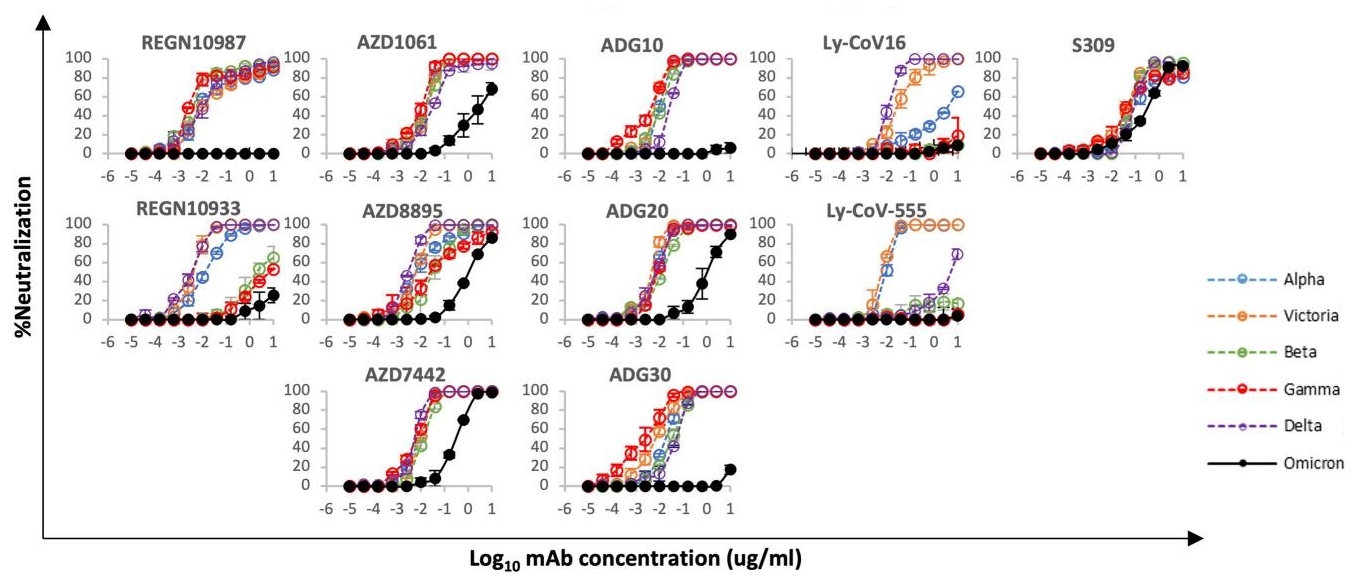
Here is some presented data showing that the huge number of mutational changes present in Omicron lead to a substantial knockdown of neutralizing capacity of commercially available mAb.
“Commercial neutralizing antibody responses against SARS-CoV-2”

Degradation of neutralization titers of Omicron by sera from vaccines might be ineludible, but it is unlikely that vaccines will completely fail and it is hoped that although vaccine breakthroughs will occur, protection from severe disease will be maintained, perhaps by T cells. It is likely that the vaccine-induced T cell response to SARS-CoV-2 will be less affected than the antibody response.

In SARS-CoV-2 unvaccinated cases, Omicron infection shows limited cross-reactive neutralization against other variants

A group from Gladstone Institutes, San Francisco, CA, USA, etc. has reported that infection with Omicron variant in unvaccinated individuals may not elicit effective cross-neutralizing antibodies against other variants. In vaccinated individuals, however, Omicron infection effectively induces immunity against itself and enhances protection against other variants.
https://www.medrxiv.org/content/10.1101/2022.01.13.22269243v1.full-text

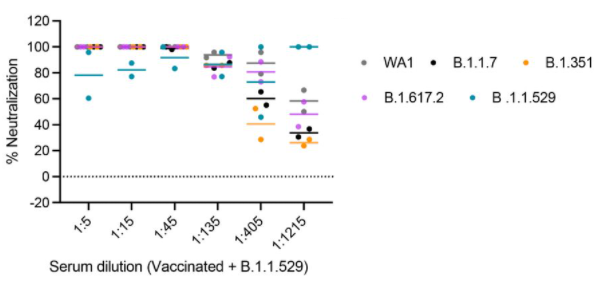
To determine humoral immune responses induced by infection with the three different strains, sera from infected mice and tested their neutralization efficiency against SARS-CoV-2 strains were collected: WA1, Alpha, Beta, Delta, and Omicron. Efficient virus neutralization was defined by more than 50% reduction in plaque forming units at the lowest serum dilutions. Sera from Delta-infected mice showed the broadest cross-variant neutralization, effectively neutralizing all the strains except Beta. By contrast, while Omicron infection effectively neutralized Omicron itself, it exhibited limited (<50%) cross-neutralization of other strains. Sera from WA1-infected mice conferred effective protection against WA1, Alpha, and Delta, but not against Beta and Omicron. These results indicate limited immunity induced by Omicron relative to other strains, which may be due to its highly mutated spike protein or its lower replicative capacity. In human cases, interestingly, sera from vaccinated individuals with confirmed Omicron breakthrough infection showed the highest level of protection (>80%) against all strains, including Omicron as shown below.

Metal oxide nano-particles could control soil-borne disease tomato bacterial wilt

A group from Key Laboratory of Biology of Crop Pathogens and Insects of Zhejiang Province, Institute of Biotechnology, Zhejiang University, Hangzhou 310058, China, etc. has reported on strategies for preventing and controlling soil-borne disease tomato bacterial wilt (TBW) with metal oxide Nano-particles (NPs).
https://pubmed.ncbi.nlm.nih.gov/35008839/

Tomato bacterial wilt (TBW) is the most infectious soil-borne bacterial disease in the world. Ralstonia solanacearum is the causal agent of TBW and is recognized as a serious phytopathogen.

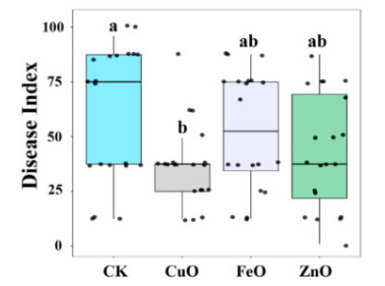
The application of CuONPs, FeONPs, and ZnONPs caused 24.3%, 54.6%, and 30.8% increases, respectively, in tomato plant length, compared to the corresponding diseased control. Similarly, TBW infected plants treated with three metal oxide NPs (CuO, FeO, and ZnO) resulted in 32.8%, 78.3%, and 30.6% increases in fresh weight, and 41.0%, 54.1%, and 40.0% increase in dry weight, respectively, compared to the control.

The application of the CuONPs, FeONPs, and ZnONPs treatments decreased the disease incidence significantly to 36.9%, 52.8%, and 42.8%, respectively, compared to the control plants.

From a study of rhizosphere biota, it was found that NPs could affect the abundance of bacteria in the rhizosphere soil to regulate the composition of the bacterial community. Therefore, it would be likely that changes in interaction between bacteria in the rhizosphere microbial community reduced the occurrence of TBW.

A method using glyco-antigen expressing nanoparticles (NPs) as vaccines

A group from Koch Institute for Integrative Cancer Research, Massachusetts Institute of Technology, Cambridge, MA 02139, USA, etc. has reported on a method using glyco-antigen expressing nanoparticles (NPs) as vaccines.
https://pubmed.ncbi.nlm.nih.gov/35021101/

Authors recently reported that glycosylated HIV-immunogen-bearing nanoparticles accumulate within follicles in a process mediated by mannose-binding lectin (MBL), which triggers complement deposition on the nanoparticle surface, transport to follicular dendritic cells (FDCs), and enhanced germinal center (GC) and serum antibody responses relative to non-accumulating nanoparticles.

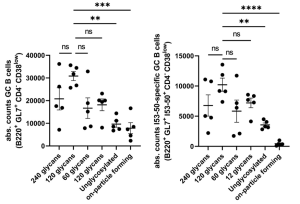
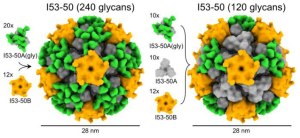
Titrating the mean glycosylation of these particles from zero to 240 high-mannose glycans per NP resulted in steady increases in in vitro MBL binding as well as in vivo FDC localization. However, it starts to decrease with increasing the glycan density further (as shown below). These experiments provide an estimate of the minimal glycan patch density required to initiate MBL binding, which for the model ∼25 nm particles studied here was 2.1 × 10⁻³ mannose patches/nm2, corresponding to a mean separation of ∼21 nm between patches.
< a href="https://www.emukk.com/WP/wp-content/uploads/2022/01/glycosylated-NP_immunization.png">

Wheat rhizosphere: Bacillus velezensis improved salinity stress

A group from Key Laboratory of Biochemistry and Molecular Biology in University of Shandong Province, Weifang University, Weifang, China, etc. has reported Bacillus velezensis JC-K3 inoculation in wheat rhizosphere to improve salinity stress.
https://pubmed.ncbi.nlm.nih.gov/34987493/

Soil salinity is one of the main manifestations of global land degradation. At present, at least 20% of the cultivated land in the world is threatened by salinization to varying degrees.

In this study, a strain of endophytic Bacillus velezensis JC-K3 was isolated from wheat grown on saline soils. This strain not only showed strong salt tolerance and alkali resistance, but also produced IAA, siderophore, proline, soluble sugar, protease, cellulase, and glucanase, which have the potential to improve plant salt tolerance and induce systemic tolerance. Actually, comparing with the control group, inoculation with endophytic Bacillus velezensis JC-K3 increased the accumulation of wheat biomass (the plant height increased by 12.69%, the root length increased by 27.59%, the fresh weight of wheat shoot increased by 13.55%) under the tested salinity stress (Salt tolerance (12% NaCl, w/v) was tested on DF agar medium supplemented with 1-aminocyclopropane-1-carboxylate).

There was no significant difference in the content of endophytic bacteria in wheat roots after JC-K3 inoculation when compared with the control. The contents of Cyanobacteria in the shoots of wheat were significantly decreased after inoculation with JC-K3 (p ≤ 0.001), while the contents of Proteobacteria, Actinobacteria, Chloroflexi, Bacteroidetes, Firmicutes, Gemmatimonadetes, Nitrospirae, Saccharibacteria, and Parcubacteria were significantly increased (p ≤ 0.001). The contents of Actinobacteria, Chloroflexi, Acidobacteria, Gemmatimonadetes, and Nitrospirae in wheat leaves were significantly increased after inoculation with JC-K3 (p ≤ 0.001). The content of Parcubacteria in rhizosphere soil decreased significantly (p ≤ 0.05).

After inoculation with JC-K3, there was no significant difference in the content of endophytic fungi in wheat roots and leaves. The content of Glomeromycota in wheat shoots decreased significantly (p ≤ 0.05), the content of Ascomycota in rhizosphere soil of wheat decreased significantly, and the content of Basidiomycota and Rozellomycota increased significantly (p ≤ 0.05).

A novel approach using glycoprotein targeted chimeric antigen receptor (CAR)-NK Cells for the treatment of SARS-CoV-2 infection

A group from The Sidney Kimmel Comprehensive Cancer Center, Johns Hopkins University School of Medicine, Baltimore, MD, USA, etc. has reported a novel approach using glycoprotein targeted chimeric antigen receptor (CAR)-NK Cells for the treatment of SARS-CoV-2 infection.
https://www.ncbi.nlm.nih.gov/pmc/articles/PMC8732772/

NK cells are innate lymphocytes of the immune system with an important role in the control of viral infections, and CAR-T and CAR-NK cells are emerging immunotherapies against cancer and infectious disease with great promise.

Typically, the expressed synthetic receptors on NK cells are designed to bind target surface protein. In this study, authors designed a CAR making use of a unique extracellular moiety (i.e., lectin) with binding properties dependent on target glycosylation. Targeting of glycoprotein, and specifically N-glycosylation products, with a CAR is rare. This is the first CAR targeting the N-glycans dispersed on SARS-CoV-2 Spike protein, and also, this would be the first lectin-based CAR designed and functionally tested in pre-clinical study.

As lectins have evolved over millions of years to be highly potent and selective to glycans, the H84T-BanLec CAR represents an entirely new approach in that it targets aberrant glycosylation patterns (high mannose, in this case) in SARS-CoV-2 viral proteins. Here, Banlec is a lectin which is known to have binding specificity to high mannose which exists in proximity to the receptor binding domain of the envelope SARS-CoV-2 Spike protein.

There is a strong need for the development of CARs with receptor targeting patterns that are less likely to be impacted by genomic point mutations observed in RNA virus such as SARS-CoV-2.

Powered by WordPress |Copyright © 2020 Emukk. All rights reserved