Sialidase activity of intestinal bacterial is related to severity of acute colitis in mice

A group from Institute of Physiology, University of Zurich, Zurich, Switzerland, etc. has reported that increase of intestinal bacterial sialidase activity exacerbates acute colitis in mice.
https://www.ncbi.nlm.nih.gov/pmc/articles/PMC9780602/

The gut microbiota mainly consists of the phyla Bacteroidetes and Firmicutes, while members of Actinobacteria, Verrucomicrobia, Fusobacteria and Proteobacteria represent a minor fraction. The gut microbiota plays a vital role in human health, supplying essential nutrients, training the immune system, and helping to protect against pathogens. The gut microbiota is also involved in the host metabolism and has been linked to a variety of chronic diseases.

Gut microbes express a multitude of genes, including a vast group of carbohydrate-active enzymes, which are required to digest complex oligo- and polysaccharides. In addition to digesting dietary carbohydrates, these enzymes are also active on the thick mucus layer lining intestinal surfaces. The cleavage of host glycans by bacterial GHs may also alter carbohydrate structures involved in cell adhesion, trafficking and activation. Especially fucosylated and sialylated epitopes are recognized by endogenous lectins, such as selectins and siglec, which regulate leukocyte trafficking and activation, respectively.

To investigate the impact of bacterial glycoside hydrolase activities on the gut microbial composition and on host glycans during colon inflammation, local glycoside hydrolase activity was promoted by supplementing mice developed acute colitis with recombinant E. coli expressing specific sialidase, fucosidase and rhamnosidase enzymes. Interestingly, whereas increased fucosidase and rhamnosidase activity did not alter the course of colitis, increased sialidase activity exacerbated disease severity.

Of note, the microbial composition of mice gavaged with recombinant E. coli expressing specific sialidase, fucosidase and rhamnosidase enzymes had little changes in the gut microbiota composition.

On the other hand, it was found that the sialic acid on mucosal glycans and also on resident leukocytes in the colon mucosa was cleaved from PNA stainning and siglec ligand staining experiments.
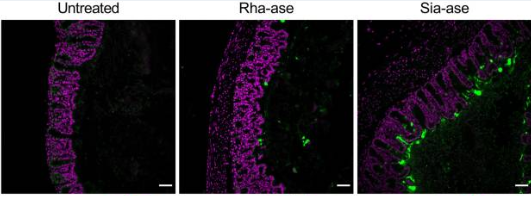
PNA staining in proximal colon

As a conclusion, the remodeling of surface sialylation caused by increased sialidase activity could account for the observed exacerbation of acute colitis in mice due to down-regulate activation of immune cells.
Changes in glycan patterns in the medial prefrontal cortex of autism spectrum disorders (ASD) rats

A group from College of Life Sciences, Shaanxi Normal University, Xi’an, Shaanxi, China, etc, has reported about changes in glycan patterns and glycan-related genes in the medial prefrontal cortex of autism spectrum disorders (ASD) rats.
https://www.ncbi.nlm.nih.gov/pmc/articles/PMC9772556/

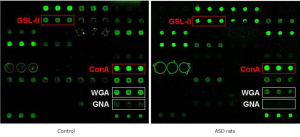
With using lectin microarrays, the following changes in glycosylation were found in ASD rats.
(1) Branched high-mannose (recognized by ConA) was upregurated in ASD rats,
(2) complex-type antennary agalacto N-glycan (recognized by GSL-II and PHA-E) was up-regulated in ASD rats, and
(3) Siaα2-3 Gal/GalNAc (recognized by WGA and MAL-I) and terminal GalNAc structure (recognized by BPL and VVA) were down-regulated in ASD rats.

Two diazotrophic beneficial bacteria isolated from the rhizosphere of a wild wheat ancestor (Pseudomonas and Enterobacter)

A group from UMR IPSiM, Université de Montpellier, Institut Agro, CNRS, Montpellier, France, etc. has reported about two diazotrophic PGPR strains, isolated from the rhizosphere of a wild wheat ancestor as beneficial bacteria.
https://www.ncbi.nlm.nih.gov/pmc/articles/PMC9740669/

Two bacterial strains, Pseudomonas BPMP-PU-28 and Enterobacter BPMP-EL-40, were isolated from the rhizosphere of a wild wheat ancestor. These strains have been shown to stimulate plant growth when the availability of nitrogen in the soil is limiting for the growth.

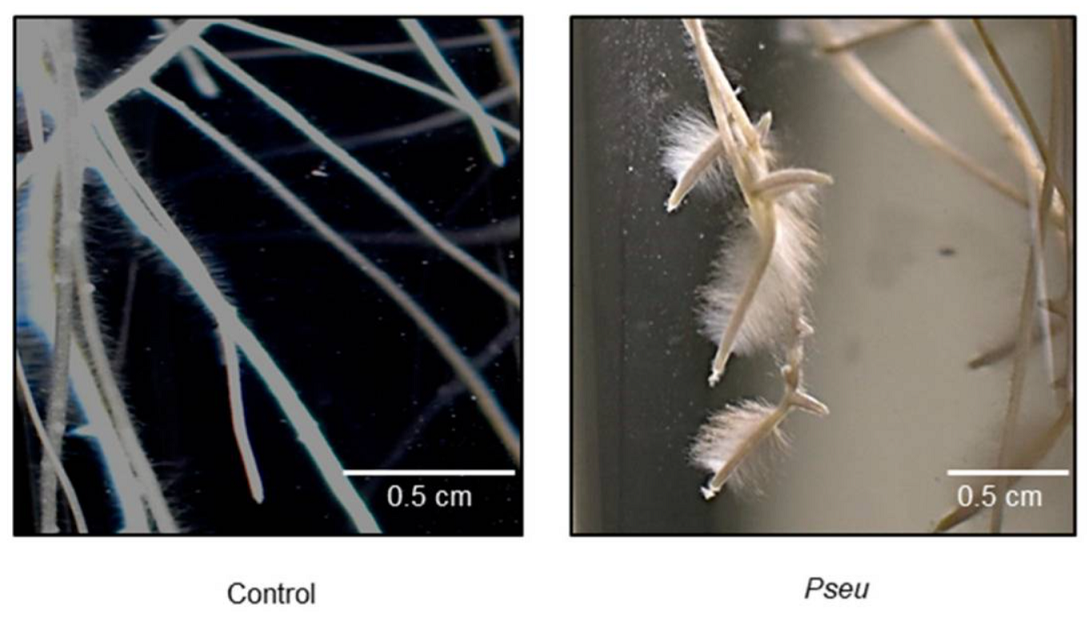
A striking effect of culture supernatant obtained from these beneficial bacteria was observed on root hair density and length in root apical regions as shown below (left-hand side is a control and right-hand side shows that of Pseudomonas).

The following features were seen in exudates from these bacteria.

The AHL N-tetradecenoyl-L-homoserine lactone (TDHL) has been found in BPMP-PU-28 and BPMP-EL-40 exudates. AHLs play a role in bacterial quorum sensing and in bacterial communication networks. They have positive effects on plant growth, and could be recognized by plant receptors and lead to modifications of plant gene expression.

It should also be noted that while no amino acids were detected in the bacterial exudates, some cyclopeptides were present. Together with AHLs, cyclic peptides have been shown to play a role in quorum sensing. In addition to playing a role in quorum sensing, cyclic peptides can act as mimetics of phytohormones which upregulate salicylic acid, ethylene and jasmonic acid signaling.

In addition to AHLs and cyclopeptides, many of the metabolites identified in exudates may play a role in plant growth promotion, for example by behaving as antibiotics (about 18% of the identified metabolites can be expected to have antibiotic effects), or by improving nutrient ion acquisition.

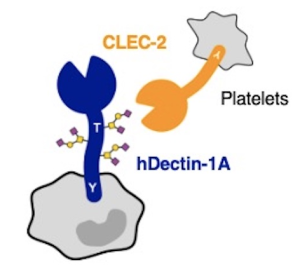
Dectin-1 is O-glycosylated and serves as a ligand for C-type lectin receptor CLEC-2

A group from Department of Medicine and Bioregulatory Science, Graduate School of Medical Sciences, Kyushu University, Fukuoka, Japan, etc. has reported that Human Dectin-1 is O-glycosylated and serves as a ligand for C-type lectin receptor CLEC-2.
https://pubmed.ncbi.nlm.nih.gov/36479973/

Dectin-1 is known as the best-characterized C-type lectin receptors (CLRs) recognizing β-glucan on pathogens. Here, it was first found that Dectin-1 could be a ligand for CLEC-2, another CLR expressed on platelets. It was also known that CLEC-2 recognizes its endogenous ligand podoplanin in an O-glycosylation-dependent manner.

Dectin-1 is a mucin-like protein and its stalk region is highly O-glycosylated with sialylated core 1 (Galβ1-3GalNAc) and/or sialylated core 3 (GlcNAcβ1-3GalNAc) glycans. This finding will be the first example of an innate immune receptor also functioning as a physiological ligand to regulate ontogeny upon glycosylation.

Wheat rhizospheric microbiome: from Phylum level analysis and Genus level analysis

A group from ICAR-Indian Institute of Wheat and Barley Research, Karnal, Haryana, India, etc. has reported about wheat microbiome under varied agricultural field conditions.
https://pubmed.ncbi.nlm.nih.gov/36445165/

This report presents wheat microbiome analysis under six different farm practices,
organic (Org),
timely sown (TS),
wheat after pulse crop (WAPC),
temperature-controlled phenotyping facility (TCPF),
maize-wheat cropping system (MW), and
residue burnt field (Bur).

The analysis based on phylum level revealed abundances of Proteobacteria, followed by Actinobacteria, Acidobacteria, Gemmatimonadetes, and Bacteroidetes, in all conditions, while the relative abundances varied at the genus level. The highest relative abundances of the genera Bacillus and Flavobacterium were observed in TCPF and Org, respectively, and the genus Nitrospira had the highest relative abundance in TS, MW, and WAPC.

Foliar pathogen infection recruits beneficial bacteria through root exudates

A group from State Key Laboratory for Conservation and Utilization of Bio-Resources in Yunnan, Yunnan Agricultural University, Kunming, China, etc. has reported that foliar pathogen infection recruits beneficial bacteria through root exudates.
https://pubmed.ncbi.nlm.nih.gov/36445116/

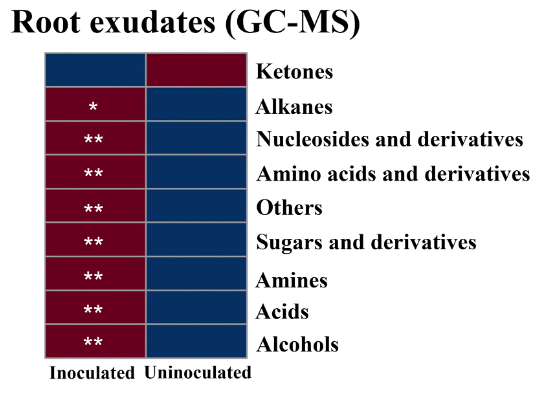
It was found that foliar infection of Panax notoginseng by Alternaria panax modified the rhizosphere soil microbial community and reversed the direction of the buildup of the soilborne pathogen Ilyonectria destructans and beneficial microbes, including Trichoderma, Bacillus, and Streptomyces, in rhizosphere soil. These beneficial microbes not only showed antagonistic ability against the pathogen I. destructans but also enhanced the resistance of plants to A. panax.


Foliar infection changes the metabolite profiles of root exudates determined by GC-MS analyses. Inoculated means foliar infection.

This is similar to the human immune response, in which cytokines and chemokines are secreted from the inflammatory site, and immune cells such as leukocytes are attracted to the inflammatory site. Changes in the secretion from the root correspond to the secretion of cytokines and chemokines, and beneficial bacteria are immune cells derived from bone marrow cells.

Lectin analysis of SARS-CoV-2-positive nasopharyngeal samples

A group from GLYcoDiag, 2 Rue du Cristal, Orléans, France, etc. has reported about lectin analysis of SARS-CoV-2-positive nasopharyngeal samples.
https://www.mdpi.com/2075-4418/12/11/2860

I have decided to stop blogging about SARS-CoV-2 related issues, but oh well!

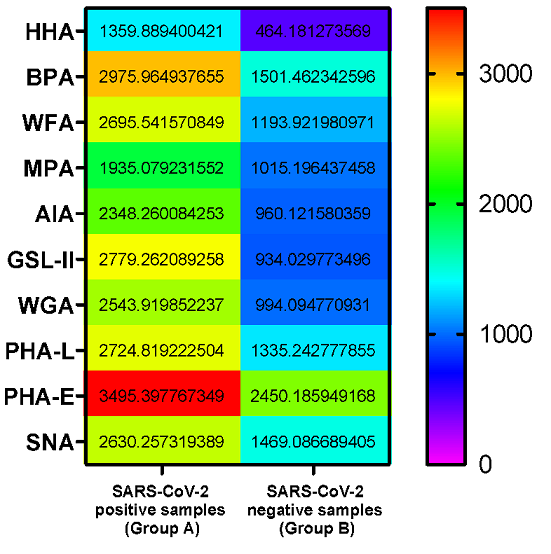
GlycoDIAG’s GLYcoPROFILE® technology clearly indicated the glycan differences between SARS-CoV-2-positive and -negative samples.
BPA and PHA-E were able to discriminate the control group from SARS-CoV-2-positive samples, with values around or higher than 3000. The BPA recognizes GalNAc-containing glycans, while PHA-E binds to bi-antennary complex N-glycans. In addition, another group of lectins, including WFA (binds to LacdiNAc), GSL-II (binds to agalacto) and PHA-L (binds to tri/tetra antennary complex N-glycan), were also distinguishing for SARS-CoV-2-positive samples. The HHA lectin was confirmed as a negative reference lectin.

Interactions between thrombopoietin (TPO) receptor MPL and a marine sponge-derived lectin

A group from Graduate School of Fisheries Sciences, Hokkaido University, Hakodate, Japan, etc. has reported about interactions between thrombopoietin (TPO) receptor MPL and a marine sponge-derived lectin, thrombocorticin (ThC).
https://www.nature.com/articles/s41467-022-34921-2

It has been reported that a marine sponge-derived 14-kDa protein, ThC, as a potent agonist of MPL.
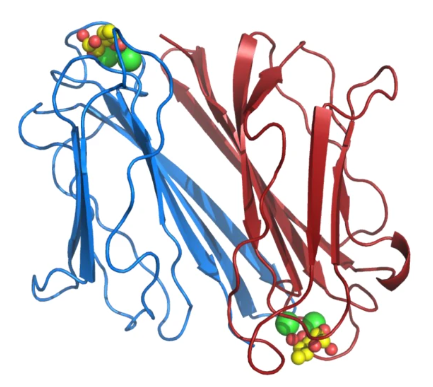
In this study, the three-dimensional structure of ThC was elucidated as a fucose-binding lectin, and also it was shown that the MPL activation was induced by its binding to a fucosylated glycan on MPL.


Dimer structure of rThC in complex with Ca2+ (green ball) and fucose (ball-and-stick model, yellow: carbon, red: oxygen)

Changes in cell surface glycans after viral infection by lectin microarrays: Porcine infectious diseases caused by highly pathogenic porcine reproductive and respiratory syndrome virus

A group from Beijing Key Laboratory of Traditional Chinese Veterinary Medicine, Animal Science and Technology College, Beijing University of Agriculture, Beijing, China has reported about changes in glycosylation of porcine pulmonary microvascular endothelial cells due to highly pathogenic porcine reproductive and respiratory syndrome virus infection.
https://www.ncbi.nlm.nih.gov/pmc/articles/PMC9695484/

Porcine reproductive and respiratory syndrome virus (PRRSV) has been widespread around the world and has seriously jeopardized the pig industry for decades, mainly causing severe reproductive disorders in sows and respiratory symptoms in piglets. However, its pathogenesis has not been fully clarified so far, causing its prevention and control to remain a great challenge.

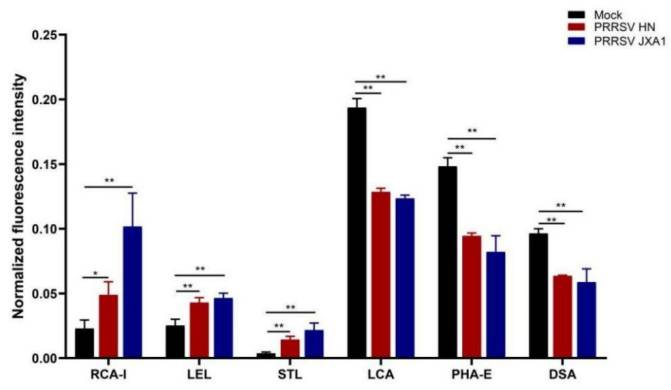
To understand the effects of highly pathogenic porcine reproductive and respiratory syndrome virus (HP-PRRSV) infection on the surface carbohydrate chains of PPMVECs, they were infected with HP-PRRSV HN and JXA1 strains in this study. Then, their cell surface glycan profiling was analyzed by lectin microarrays.

It was found that HP-PRRSV infection of PPMVECs significantly damages the cell surface structures, especially causing the decrease in complex N-glycans and the increase in poly-N-acetyllactosamine. This finding suggest that changes in cell surface carbohydrate chains may be an important factor causing the dysfunction of HP-PRRSV-infected PPMVECs.

Human Dectin-1 deficiency impairs macrophage-mediated defense against phaeohyphomycosis

A group from Fungal Pathogenesis Section and Immunopathogenesis Section, Laboratory of Clinical Immunology and Microbiology (LCIM), National Institute of Allergy and Infectious Diseases (NIAID), NIH, Bethesda, Maryland, USA, etc. has reported that human Dectin-1 deficiency impairs macrophage-mediated defense against phaeohyphomycosis.
https://www.ncbi.nlm.nih.gov/pmc/articles/PMC9663159/

Phaeohyphomycosis is an invasive fungal infection caused by dematiaceous fungi, which are characterized by melanin production and filamentous growth. Phaeohyphomycosis typically affects the subcutaneous tissues following traumatic inoculation and is treatable with antifungal therapy and/or surgical resection.

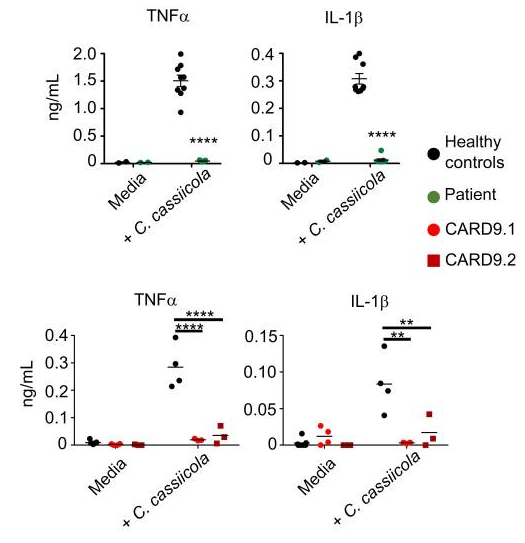
In this study, an index patient with severe phaeohyphomycosis caused by Corynespora cassiicola, a dematiaceous fungus of plants known to cause life-threatening infections in CARD9 deficiency is highlighted. This patient had biallelic deleterious mutations in CLEC7A, which encodes the CARD9-coupled receptor, Dectin-1. It was shown that Dectin-1 is critical for IL-1β and TNF-α production against this fungus by human immune cells, which enhances macrophage fungal killing. CARD9 is an immune adapter protein in myeloid cells involved in C-type lectin signaling and antifungal immunity.

17 additional unrelated patients with severe phaeohyphomycosis were also evaluated, and t was found that 12 out of 17 had deleterious CLEC7A mutations, which were associated with an altered Dectin-1 extracellular, β-glucan–binding, C-terminal domain, and impaired Dectin-1–dependent cytokine production.


showing proinflammatory cytokine responses to this fungus from the Dectin-1–deficient patient and from CARD9-deficient patients.

Powered by WordPress |Copyright © 2020 Emukk. All rights reserved