blog

Disease severity of the new coronavirus (COVID-19)and its relationship with balance of humoral immunity and cellular immunity

In the new coronavirus (COVID-19), there is a broad spectrum of disease severity from asymptomatic to severe. How the immune reaction is different in the disease spectrum? There are so many studies are ongoing in the world to uncover this problem. A group from Third Military Medical University, Chongqing, China, etc. has reported there is a clear difference in the balance of humoral immunity and cellular immunity between asymptomatic/mild and moderate/severe.
https://www.nature.com/articles/s41392-021-00525-3

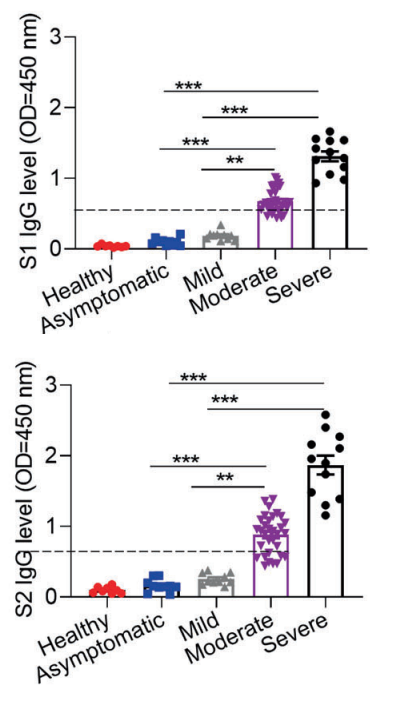
Let’s classify disease severity into two categories, asymptomatic/mild and moderate/severe. In the case of asymptomatic/mild, the expression of SARS-CoV-2 specific IgG is weak and transiently terminated without developing germinal center. In contrast, in the case of moderate/sever, the expression of SARS-CoV-2 specific IgG increases greatly and circulating cTFH cells and chemokine CXCL13, which indicate the magnitude of ongoing germinal center, are upregulated, suggesting that the humoral immunity is strongly activated.
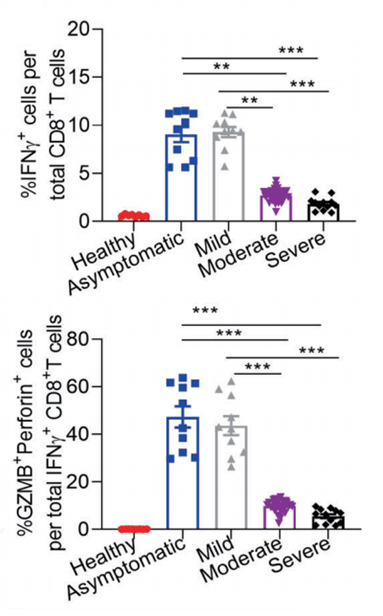
On the other hand, in the case of asymptomatic/mild, IFN-γ producing CD8+ T cells、SARS-CoV-2 specific TH1 cells, Granzyme B(GZMB)are greatly upregulated, suggesting that cellular immunity is strongly activated. (Granzyme B(GZMB)is a Serine Protease expressed on cytoplasmic granules of activated cytotoxic T cells and NK cells, and induce apoptosis of target cells)

That is, asymptomatic/mild is a result of SARS-CoV-2 infection suppression with activate cytotoxic T-cells and NK cells (not mentioned here), and if the viruses are not cleared with this process, the humoral immunity comes to the front to combat viruses, or we can say that it is a result of the balance between humoral immunity and cellular immunity.
Further, recent studies found there exists cross-reactive T cell recognition between circulating “common cold” coronaviruses and SARS-CoV-2I. So, it is of great interest to examine whether the history of “common cold” coronavirus infection with pre-existing SARS-CoV-2 cross-reactive T cells could account for the clinically asymptomatic state in COVID-19 patients.
Monochronal Antibody Cocktails would be effective in rapidly mutating RNA viruses such as SARS-CoV-2 

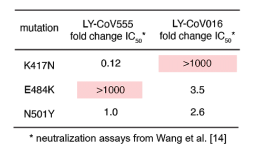
A group from Fred Hutchinson Cancer Research Center, etc. has investigated the effect of genomic mutations onto two types of monochronal antibodies (LY-CoV555 and LY-CoV016) against RBD of SARS-CoV-2.
https://www.biorxiv.org/content/10.1101/2021.02.17.431683v1

It was found that LY-CoV016 is very weak for K417N mutation, and LY-CoV555 is so weak for E484K mutation. In both cases, IC50 increased more than 1,000 times with these mutations. Therefore, a strategy using antibody cocktails with different monochronal antibodies with different target epitopes would be quite effective in developing therapeutic drugs for rapidly mutating RNA viruses such as SARS-CoV-2.

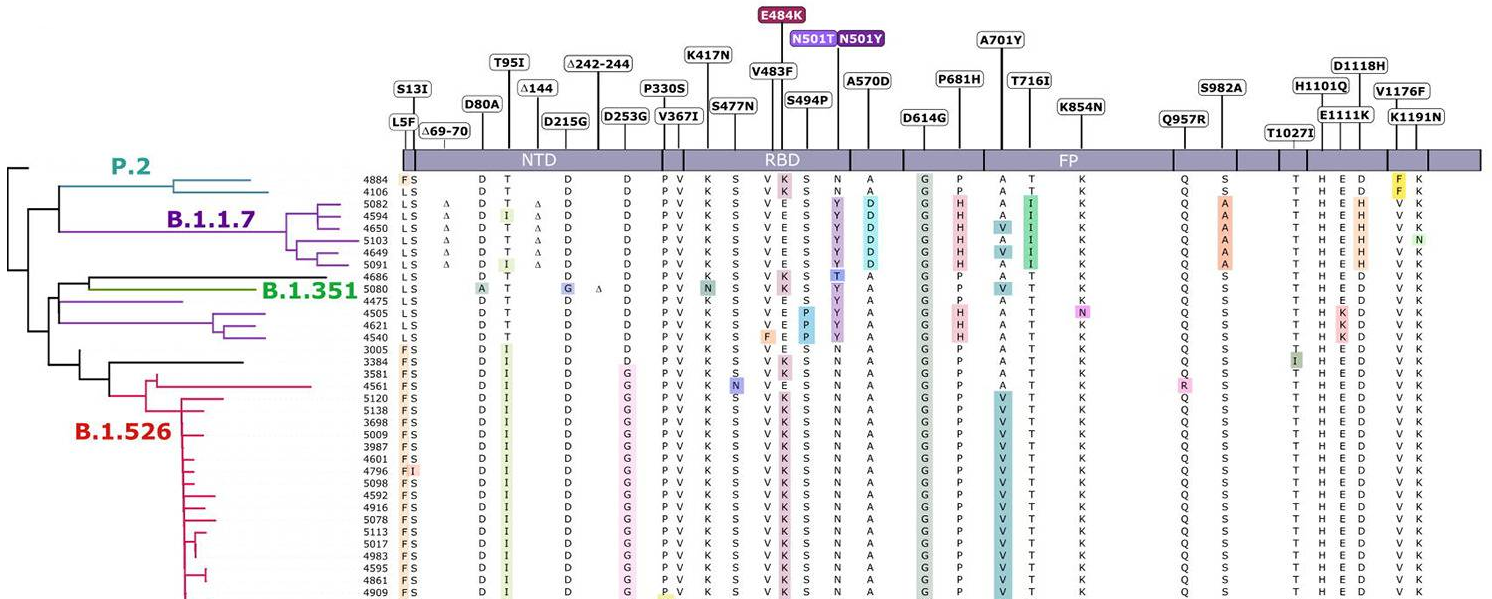
SARS-CoV-2 UK variant (B.1.1.7) and South African variant (B.1.351) have stronger affinity to ACE2

Two types of recently appeared SARS-CoV-2 variants named UK variant (B.1.1.7) and South African variant (B.1.351) are very famous. And, there have been several reports on the efficacy of Pfizer’s and Moderna’s vaccines for those variants. On Feb. 6th, 2021, a short report was introduced in this blog that the current vaccines are not so affected by UK variant, but are greatly affected by South African variant.

A group from School of Medicine, Stanford University has reported that these variants have higher affinity to ACE2, in concrete, about two times with B.1.1.7 and about five times with B.1.351.
https://www.ncbi.nlm.nih.gov/pmc/articles/PMC7924271/ 

Aberrant glycosylation in Breast Cancer and its relationship with Macrophages: Functions of Lectins such as SIGLEC-9, SIGLEC-10, SIGLEC-15, and MGL 

There was a review on aberrant glycosylation in breast cancer and its relationship with macrophages. Important points from this revie was summarized here.
https://www.mdpi.com/1422-0067/22/4/1972/htm

The following things have been reported about aberrant glycosylation observed in breast cancer,
increase in Lewisa Lewisx,
increase in Core Fucose,
increase in branched N-glycans,
truncation of O-glycans,
and, increase in sialo-glycans for both N-glycans and O-glycans.

The breast cancer microenvironment is composed of mainly by stromal cells and immune cells infiltrated. It would be so important to understand interactions between breast cancer cells and immune cells (typically macrophages) from a view point of cancer therapy.
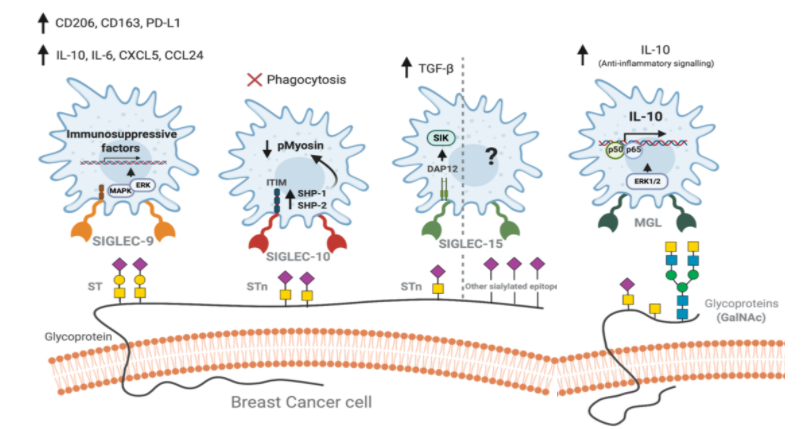
From this point, SIGLEC-9, SIGLEC-10, SIGLEC-15, and MGL would be hot spots. SIGLEC-9 binds to Sialyl-T enriched MUC1, and activate MAPK-ERK signal path leading to increase in immune checkpoint PD-L1 expression and and IL-10 secretion. SIGLEC-10 binds to Sialyl-T and Sialyl-Tn antigens, and suppress macrophage’s phagocytosis. SIGLEC-15 binds to Sialyl-Tn antigens, and seems to activate SYK/MAPK signal path, rather than stimulating TGF-ベータecretion, although the functions are not clearly identified. On the other hand, MGL bids to GalNAc, and is related to activation of ERK signal path and secretion of IL-10. These points would be drug development targets for the breast cancer.

The role of neuclear chromatin protein HMBG1 released from cells in Sepsis and a relationship with blood pH and serum Zn concentration

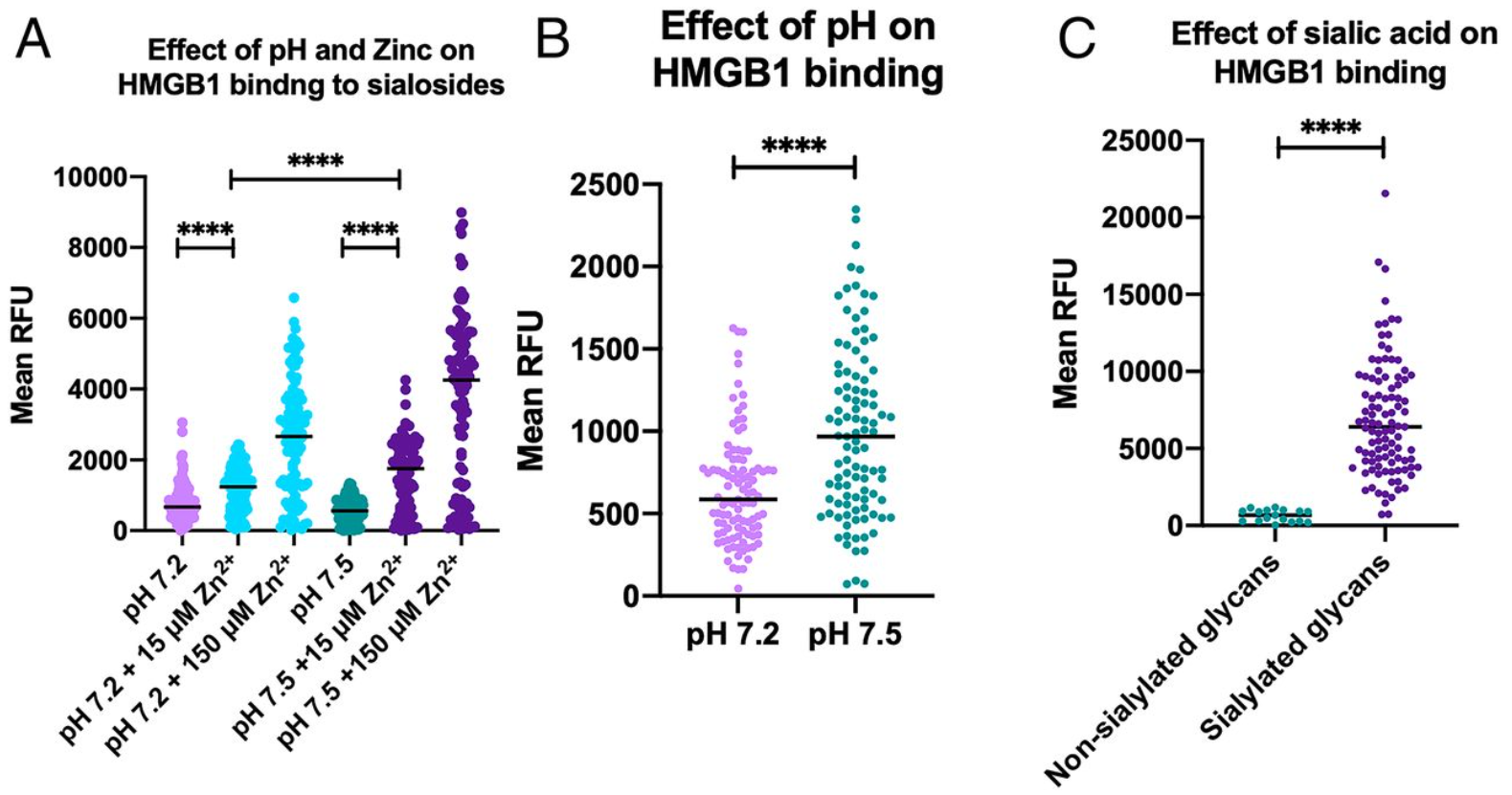
A group from UC San Diego has reported that blood pH, serum Zn concentration, existence of plasma sialoglycoproteins are deeply related to binding formation of High mobility group box 1(HMGB1), which is released from cells into blood with developing sepsis, to leukocyte receptors.
https://www.pnas.org/content/118/10/e2018090118

It was know that HMBG1 works as a chaperone protein controlling gene expression through the interaction with chromatin in healthy cells, and further is passively or actively released from cells into blood in conditions like sepsis, leading to activation of innate immunity, migrating neutrophils to necrotic tissues, and removing such tissues.
http://www.med.osaka-u.ac.jp/introduction/research/endowed/therapy

Authors has shown that the binding of HMBG1 to neutrophils is greatly inhibited by the decrease in blood pH and serum Zn concentration, and also the binding is inhibited by preferential binding of HMBG1 to plasma sialoglycoproteins like a lectin binding to sialic acids.
Blood pH is tightly maintained between 7.35 and 7.45 in healthy people. However, it goes down below 7.3 with developing sepsis, and also serum Zn concentration decreases to a level of few µM. In a healthy condition, even if HMGB1 was released from cells into blood, it’s binding to neutrophil receptors could be inhibited by preferential binding to sialoglycoproteins, and thereby no extra inflammation would not be induced. However, with decreasing blood pH and Zn concentration, sialoglycoproteins lose its function as inhibitors, and HMGB1 is able to bind to neutrophil receptors inducing inflammation. That means, a treatment targeting inhibition of HMGB1 with controlling blood pH and the Zn concentration might be also effective in sepsis-related Sequential Organ Failure happening in COVID-19.

Inhibition of C2GnT (O-glycan Core2 acetylglucosaminyltransferase)would be effective for the treatment of Choriocarcinoma

A group from Medical School, Nagoya University has reported that the inhibition of C2GnT (O-glycan Core2 acetylglucosaminyltransferase)would be effective for the treatment of choriocarcinoma.
https://www.ncbi.nlm.nih.gov/pmc/articles/PMC7895715/

Choriocarcinoma is a disease specific to women and a malignant tumor produced in placental trophoblasts.

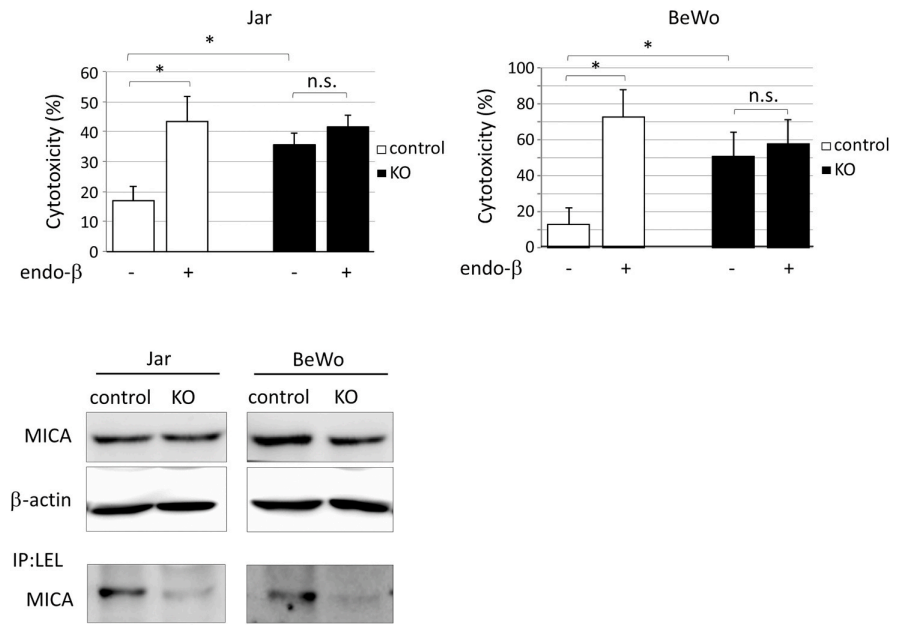
It was thought that cytotoxicity of NK cells is activated through interraction between NKG2D, which is a receptor expressed and on NK cells, and MHC class I-related chain A (MICA), which is often expressed on tumor cells.

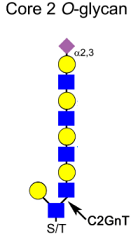
As shown in the figures below, it is obvious that MICA is O-glycosylated with a core 2 poly lactosamine elongated structure, because glyco-catched MICA with LEL lectin decreases with C2GnT KO. By knocking out C2GnT, the elongation of core 2 structures with poly lactosamine is prohibited, of course. Jar and BeWo are choriocarcinoma cell lines, and the comparison between control and C2GnT KO cells shows that NK cell cytotoxicity increases with C2GnT KO. And it is also clear that NK cell cytotoxicity is activated by endo-β-galactosidase treatment, because it cut out poly lactosamine structures from core 2 O-glycans.
So, these results indicate that poly lactosamine elongation of core2 O-glycan is inhibiting NK cell cytotoxicity, and therefore, with increasing C2GnT, choriocarcinoma cells could escape from NK cell attacks eventually. This also means that inhibition of C2GnT would be effective for the treatment of choriocarcinoma.

Afucosylation of SARS-CoV-2 S-protein specific IgG correlates with the new coronavirus (COVID-19) severity

On a blog article posted on May 1st, 2021, it was introduced that the fucosylation of HIV gp120-specific IgG is decreased in some HIV patients.

A group from University of Amsterdam, etc. has indicated that the fucosylation of SARS-CoV-2 S-protein-specific IgG is also decreased in some COVID-19 patients.
https://science.sciencemag.org/content/371/6532/eabc8378.long

It is well known that the effector functions such as ADCC and ADCP are reinforced with afucosylation of IgG Fc. If this moves in a positive direction, it can accelerate virus clearance. This would be exactly true in the case of HIV infection. However, immunity potentially behave as double-edged swords, and in the case of COVID-19, it was thought that afucosylation of IgG might promote the production of pro-inflammatory cytokine IL-6 resulting in cytokine storm and tissue damages.

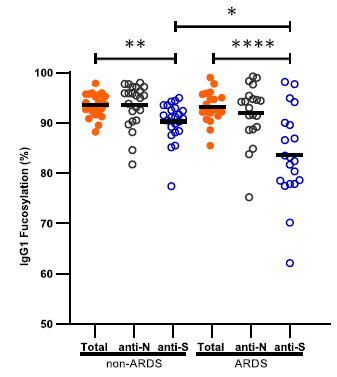
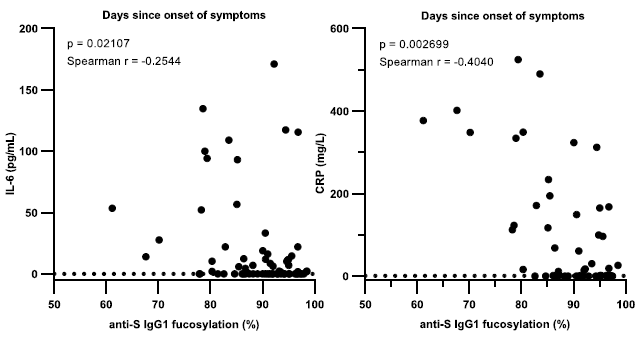
In the figures below, it is shown that when Acute Respiratory Distress Syndrome (ARDS) is developed, fucosylation of S-protein specific IgG is decreased, although there is no change in fucosylation of total IgG. This means that the effector functions of antibodies are enforced. And further, when afucosylation of IgG proceeds, IL-6 production is accelerated and CRP as an Inflammatory marker gets higher.


How long the neutralizing antibody titer could be maintained in the case of SARS-CoV-2

A group from Medical School University of Tokyo, etc. has reported on changes in neutralizing antibody titers from sequential blood samples collected from Jan. 2020 to Apr. 2020 in Japan.
https://www.thelancet.com/journals/eclinm/article/PIIS2589-5370(21)00014-6/fulltext

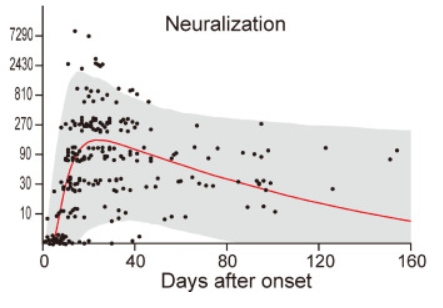
After the infection onset, it seems that the neutralization titer is maintained for a several months. In the figure below, 95% CI is shown in gray color, and the red line shows the median value. As for the pathogenicity of SARS-CoV-2 via antibody-dependent enhancement (ADE) activity, numerous studies are ongoing in the world. But, no studies describing an increase in pathogenicity due to ADE have been reported yet, so that authors are thinking that the possibility of ADE would be limited.

Lactoferrin is to be a quite GOOD nutrient to inhibit SARS-CoV-2 infection

A blog article about Lactoferrin was already uploaded on Feb. 12th, 2021, focusing on the antiviral function of Lactoferrin. It is know that Heparan sulfate is a co-receptor for SARS-CoV-2 positioning ACE2 as the primary receptor. The antiviral function of lactoferrin is considered to inhibit SARS-CoV-2 binding to heparan sulfate.

A group from Kagawa Nutrition University is recommending to take 2 capsules of enteric lactoferrin (1 capsule = 30mg) purchasable without doctor’s prescription everyday. You could purchase it easily even from Amazon. Actually, Mongolia shows the world lowest fatality rate, and the group pointed out that Mongolians are taking larger amount of lactoferrin than any other nations in the world.
https://www.eiyo.ac.jp/ions/?p=4407  

Powered by WordPress |Copyright © 2020 Emukk. All rights reserved