Archive 21/10/2

A highly potent and broad neutralization antibody against SARS-CoV-2 was screened

A group from Vanderbilt University Medical Center, Nashville, USA, etc. has reported that a highly potent and broad neutralization antibody against SARS-CoV-2 was screened using a LIBRA-seq technology.
https://pubmed.ncbi.nlm.nih.gov/34592170/

To identify SARS-CoV-2 S-directed antibodies, authors utilized LIBRA-seq, a technology that enables high-throughput simultaneous determination of B cell receptor sequence and antigen reactivity at the single-cell level, expediting the process of lead candidate selection and characterization. Antigen-specific B cells were isolated from a donor with potently neutralizing antibodies in serum 3 months after infection confirmed by nasal swab RT-PCR testing for SARS-CoV-2.

Of the 73 IgG+ B cells with high LIBRA-seq scores for SARS-CoV-2 Spike, nine lead candidates were selected for characterization as recombinant monoclonal antibodies.
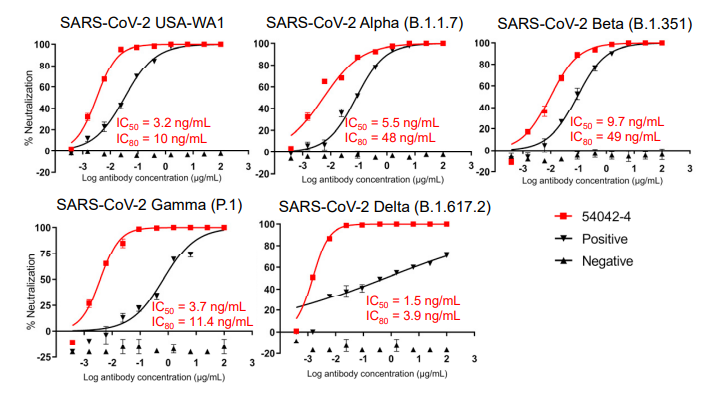
From VSV assays, antibody named 54042-4 showed the best potency, at a IC50 of 9 ng/mL, and broad neutralization against existing SARS-CoV-2 variants.
It was al so found that the 54042-4 heavy chain binds to RBD residues 443–447 and the 54042-4 light chain contacts RBD residues 498–500 from cryo-EM structure analysis.

Antibody-Dependent Enhancement of SARS-CVoV-2 infection is real

A group from The Institute of Medical Science, The University of Tokyo, etc. has reported that Antibody-Dependent Enhancement of SARS-CVoV-2 infection to immune cells is real.
https://journals.asm.org/doi/10.1128/mBio.01987-21

Viruses infect cells mainly via specific receptors at the cell surface. Antibody-dependent enhancement (ADE) of infection is an alternative mechanism of infection for viruses to infect immune cells that is mediated by antibodies and IgG receptors (FcγRs).

Authors generated BHK cells stably expressing human FcγRs (FcγRIA, FcγRIIA, or FcγRIIIA) or human angiotensin-converting enzyme 2 (hACE2) (the entry receptor for SARS-CoV-2). Wild-type BHK cells lack human ACE2 expression and are not susceptible to SARS-CoV-2.

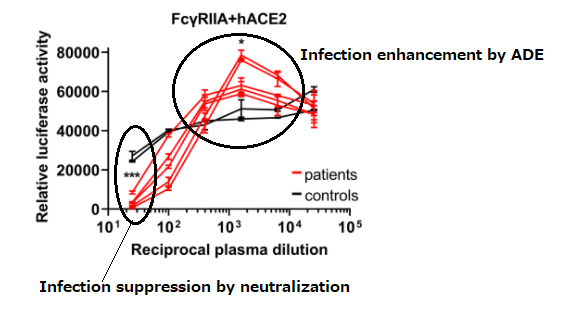
BHK cells were infected with a firefly luciferase-expressing vesicular stomatitis virus (VSV) lacking the VSV-G gene and pseudotyped with SARS-CoV-2 spike (VSV-SARS2-S). Although BHK-hACE2 cells were susceptible to VSV-SARS2-S, the BHK-FcγRIA, BHK-FcγRIIA, and BHK-FcγRIIIA cells were not susceptible due to the lack of hACE2. However, using convalescent-phase plasma from COVID-19 patients and incubated with VSV-SARS2-S, it was found that two types of FcγRs, FcγRIIA and FcγRIIIA, mediate ADE of SARS-CoV-2 infection in the presence of ACE2.

It was also confirmed that SARS-CoV-2 infection is enhanced by convalescent-phase plasma in primary macrophages.

HPA is not only a good tool as cancer marker, but also could be used for therapeutic applications

A group from Faculté de Pharmacie, Université Paul, Sabatier, Toulouse, France, etc has reported that Helix pomatia lectin (HPA) is not only a good tool as cancer marker, but could also be used for therapeutic applications.
https://www.ncbi.nlm.nih.gov/pmc/articles/PMC8431231/

Morniga G lectin and HPA lectin are know to have binding specificity to Tn-antigen. Authors demonstrated in the past that Morniga G can interact with Tn antigen present on Jurkat human leukemia, inducing tumor cell death but not death of Tn-negative healthy peripheral blood lymphocytes. However, very little information was known about the putative functional role of HPA-binding glycoproteins on tumor cells.

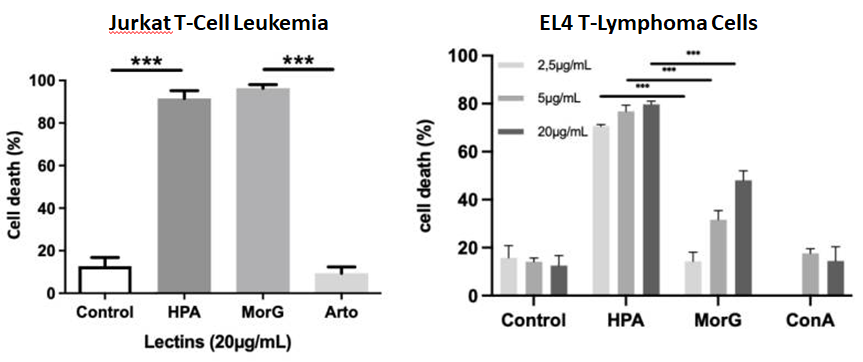
In this paper, authors have demonstrated for the first time that HPA induces cell death in human Jurkat T-cell leukemia and mouse EL4 T-cell lymphoma. In the mouse, HPA is clearly more toxic than Morniga G for EL4 cells. In addition, HPA appears to be non-toxic for healthy lymphocytes, suggesting that HPA could be used for therapeutic applications.

The celery/tomato rotation is preferable: the effects of different vegetable rotations on the tomato’s rhizobacteria

A group from Gansu Agricultural University, Lanzhou, China, etc. has reported on the effects of different vegetable rotations on the tomato’s rhizobacteria.
https://www.ncbi.nlm.nih.gov/pmc/articles/PMC8459948/

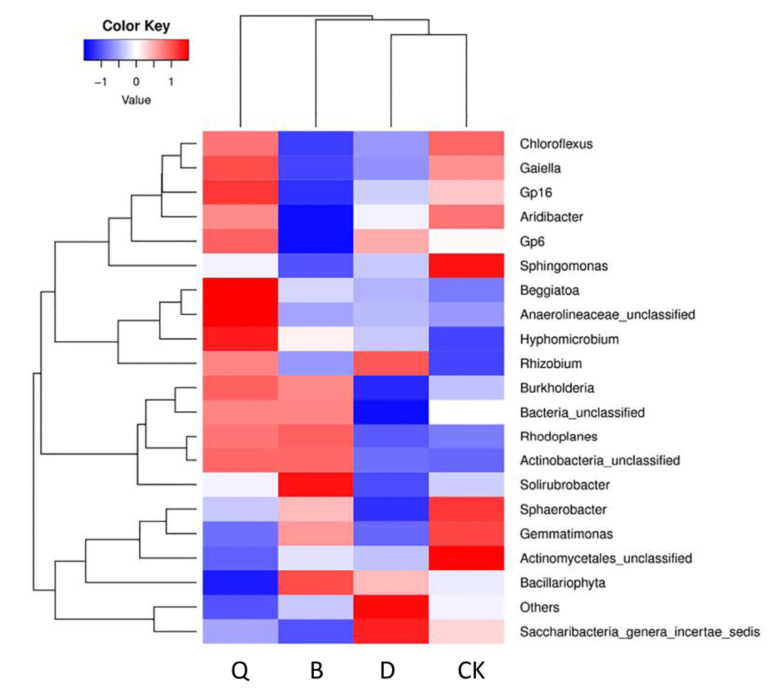
The vegetable rotations, cabbage/tomato (B), kidney bean/tomato (D), and celery/tomato (Q), were compared with the continuous tomato cropping (CK) as a control from view points of changes in tomato’s rhizobacteria and effects on tomato plants growth.

The light and photosynthetic parameters of the leaves (intercellular CO2 concentration, transpiration rate, stomatal conductance, net photosynthetic rate) were higher in the celery/tomato rotation that the continuous tomato cropping. As for the changes in tomato’s rhizobacteria, Actinomycetaies decreased, and Actinobacteria, Anaerolineaceae, Hyphomicrobium increased in the celery/tomato rotation significantly compared with the continuous tomato cropping.

About O-glycosylation of SARS-CoV-2 Spike proteins

A group from West China Hospital, Sichuan University, Chengdu, China, etc. has reported O-glycosylation of SARS-CoV-2 Spike proteins.
https://www.frontiersin.org/articles/10.3389/fchem.2021.689521/full

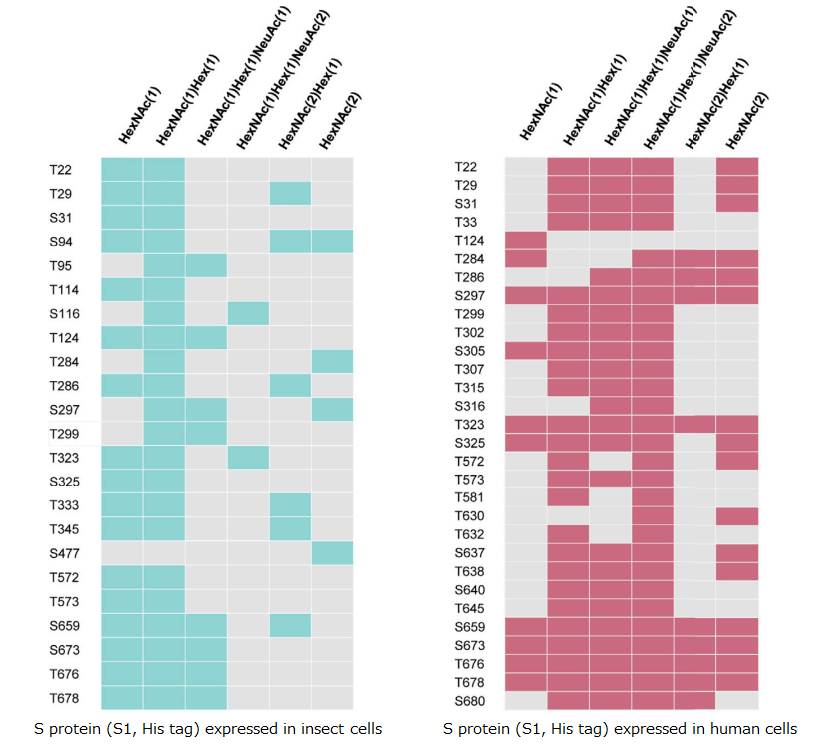
Authors have analyzed O-glycosylation of SARS-CoV-2 Spike protein expressed in insect cells and human cells. The numbers of glycosylation sites were different between insect and human ells (23 in insect cells, 30 in human cells), and also most of O-glycans expressed in human cells were sialylated. It is so clear that glycosylation of SARS-CoV-2 Spike changes with host cell types.

FIB-4 (Liver Fibrosis score) would be a good independent predictor of COVID-19 mortality

A group from Brigham and Women’s Hospital, Harvard Medical School, Boston, MA, USA, etc. has reported that FIB-4 would be a good independent predictor of COVID-19 mortality.
https://aasldpubs.onlinelibrary.wiley.com/doi/10.1002/hep4.1650

A total of 202 participants were selected from the two cohorts (n = 87 from the MassCPR cohort and n = 115 from the BWH cohort).
FIB-4 is defined by the following formula:
FIB-4=(Age(year)xAST(U/L)/(PLT(100/uL)x√ALT(U/L))

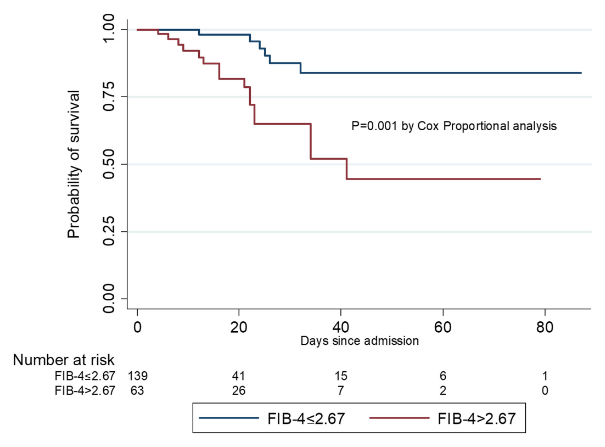
In logistic regression analysis, higher FIB-4 was associated with mortality and an unadjusted OR = 1.75 (95% CI, 1.37, 2.23; P < 0.001), and after adjusting for sex, BMI, ethnicity, hypertension, diabetes, remdesivir use, and liver diseases, FIB-4 remained to be associated with mortality (adjusted OR = 1.79; 95% CI, 1.36, 2.35; P < 0.001) In conclusion, it was shown that FIB-4 at admission would be a good independent index in predicting COVID-19 death, with an AUC of 0.79.

Bacillus cabrialesii BH5 protects Tomato against Botrytis cinerea and assists Tomato growth

A group from Department of Molecular Genetics, University of Groningen, Groningen, Netherlands, etc. has reported that Bacillus cabrialesii BH5 Protects Tomato Plants Against Botrytis cinerea.
https://www.ncbi.nlm.nih.gov/pmc/articles/PMC8441496/

To date, more and more reports show that applying plant growth-promoting rhizobacteria (PGPR) into agriculture as biological control agents is a successful strategy for plant disease control. PGPR can influence plant growth by either facilitating resource acquisition or modulating plant hormone levels. Moreover, PGPR can decrease the various pathogenic effects, either by evoking immunity of plants or by producing antimicrobial compounds.

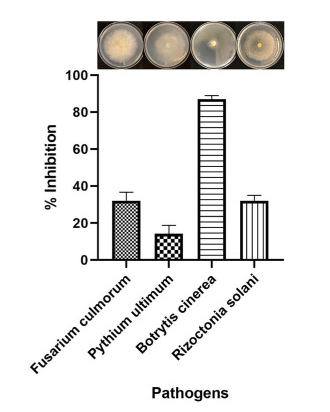
It was shown that Bacillus cabrialesii BH5 isolated from the rhizosphere soil of a healthy tomato plant shows potent biocontrol activity against fungal pathogens via producing an antifungal compound named fengycin H (see below).

(The antifungal activity of volatile organic compounds (fengycin H) produced by BH5, strong inhibition against botrytis cinerea)

It was also found that B. cabrialesii BH5 is able to promote tomato plant resistance to B. cinerea by activating the jasmonic acid (JA) signaling pathway, which is own mechanism to deal with pathogens and to coordinate the appropriate defense responses. Actually, the expression of the JA signaling pathway-related gene SlLoxD in fengycin H or BH5 treatment was always significantly higher than that in control from 48 to 96 h.

The effect of BH5 on the growth of tomato seedlings was monitored by measuring the shoot/root length, shoot/root fresh weight, and dry weight. B. cabrialesii BH5 showed a significantly increase of fresh and dry weight both of the shoot and root.

Fusarium wilt disease causes great changes in Chili pepper rhizosphere attracting beneficial bacteria for the survival

A group from Institute of Microbiology, Chinese Academy of Sciences, Beijing, China, has studies bacterial and fungal communities of chili pepper rhizosphere using amplicons (16S and ITS) and investigated how Fusarium wilt disease (FWD) affects its microbiomes.
https://www.ncbi.nlm.nih.gov/pmc/articles/PMC8444440/

Fusarium wilt disease (FWD) is often caused by the Fusarium oxysporum species complex, a classical soil-borne disease that attacks a wide variety of economically important crops, including banana, watermelon, and Solanaceae plants (e.g., tomato, eggplant, and chili pepper).

The relative abundance of several potential pathogenic fungi from the genera Diaporthe, Fusarium, Phomopsis, Plectosphaerella, Stemphylium, and Cryptococcus was also significantly higher in the diseased plant root, and several potential beneficial bacteria from the genera Pseudomonas, Streptomyces, Klebsiella, Enterobacter, Microbacterium, Bacillus, Chitinophaga, and Citrobacter were significantly enriched in the diseased plants.

Several functional genes involved in plant-microbiome signaling pathways were more abundant in the microbiome of the diseased root endosphere than in the healthy. For instance, the relative abundance of genes associated with methyl-accepting chemotaxis proteins (MCPs) was increased by 33.2–218.2% in the microbiome of the diseased root endosphere, compared with the healthy plant. The relative abundance of the functional genes associated with the downstream of MCPs, such as histidine kinase CheA and purine-binding chemotaxis protein CheW, also increased by 15.0–40.3% in the microbiome of the diseased root endosphere, compared with the healthy plant.

Several genes encoding MCPs associated with plant-microbiome signaling pathways were enriched in the microbiome of diseased root endosphere. MCPs are the predominant chemoreceptors in motile bacteria that alter the activity of CheA histidine kinase and the bacterial swimming behavior upon detection of specific chemicals . MCPs have been identified in typically beneficial bacteria, e.g., Bacillus subtilis and Pseudomonas spp. , which were also significantly enriched in diseased plant in the current study. Under stress conditions, such as pathogen invasion, a plant can attract distant beneficial microbes by actively releasing nonvolatile root exudates, such as amino acids, nucleotides, and long-chain organic acids, or by actively emitting blends of volatile organic compounds. The findings of the current study suggest that the MCP gene enrichment in diseased plants may be related to the response of MCP-producing bacteria to plant-released signal molecules. These bacteria would use MCPs to detect specific concentrations of these signaling molecules in the extracellular matrix, enabling directional accumulation of the bacteria to the plant. Further research will be required.

This study provides evidence on the critical role of bacterial taxa in the “cry for help” strategy of the host plant, in which the plant actively involves its microbial partners to maximize its or its offspring survival and growth under external stress.
By reducing Siglec-7 expression on NK cells, NK effector functions for better antitumor therapeutics are enhanced

A group from Department of Chemical Biology, School of Pharmaceutical Sciences, Peking University, Beijing 100191, China, etc. has reported about enzymatic modulation of Siglec-7 expression on NK cells to enhance NK effector functions for better antitumor therapeutics.
https://www.ncbi.nlm.nih.gov/pmc/articles/PMC8393205/

The sialic acid-binding immunoglobulin-like lectins (Siglecs) found on immune cells (such as natural killer (NK) and T cells) have been designated as glyco-immune checkpoints.

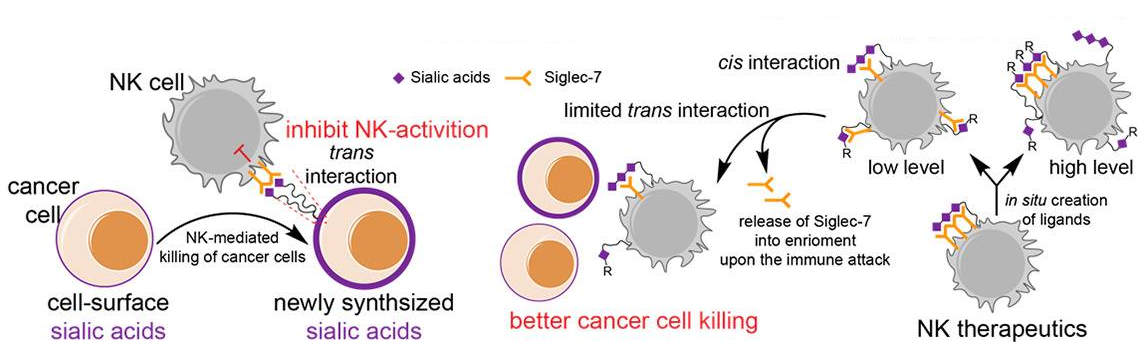
However, the mechanism of this interaction-dependent suppression of antitumor immunity is not well understood. Authors found that an encounter with NK cells triggered the accumulation of Siglec-7 ligands (sialoglycans) on tumor cells. During the course of monitoring interactions between tumor cells and NK cells, we observed a rapid increase of sialoglycans on tumor cell surface within 2 hours. This remodeling occurs through both the transfer of sialoglycans from NK cells to target tumor cells and the accumulation of de novo synthesized sialoglycans on the tumor cells.

A transplantation of expanded allogeneic NK cells has emerged as a promising strategy for cancer treatment.
By enzymatically creating cis high-affinity sialo glycans on NK cell surfaces with cytidine-5′-monophospho (CMP)-FTMCNeu5Ac and ST6Gal1, significant release of Siglec-7 from NK cell surface to the medium was observed during an immune activation by target cancer cells resulting in the enhancement of the NK effector functions for a better antitumor immunity.

Understanding the relationship between plant roots and rhizosphere bacteria flora from the perspective of a Rhizosphere Marker

Rhizobacteria coexist around the roots of plants, and the diverse and complex population of bacteria is called rhizosphere bacteria flora. This symbiotic relationship between the roots and the rhizosphere bacteria flora is often compared to the relationship between the intestines of animals and the gut microbiota. However, biologically speaking, plants do not have an organ called the intestine. Rather, if we consider the roots, rhizosphere bacteria, and soil as a whole, it would be better to think that this corresponds to the organ called the intestine.

Various organ-specific and disease-specific biomarkers are used in health and pathological diagnoses in human to see whether a person is healthy or unhealthy.
If this idea is applied to the roots and rhizobacteria of plants as it is, there might be markers that indicate the degree of intestinal health of plants, that is, rhizosphere markers . By using this idea, isn’t it possible to build a new plant soil monitoring system?

That is, in addition to the conventional indicators used in soil diagnosis, chemical indicators such as pH and water content, and physical indicators such as soil density, biological indicators, called rhizosphere markers is added.

Recent advances in gene analysis technology have made it possible to analyze the composition of rhizosphere bacterial flora without isolating and culturing rhizobacteria from soil. The interactions between individual bacteria have begun to be understand, for instance from a view point of helper bacteria that help Arbuscular mycorrhizal fungi. However, blog admin considers that there will be a limit in understanding such complex systems by reducing methods, and the composition of rhizosphere bacterial flora showing similar characteristics from a macro perspective will not be unique, but various.

Therefore, finding a rhizosphere marker from a macroscopic perspective that accurately represents the intestinal health of a plant and finding a way to control it could be the best way to manage plants. I think.

Powered by WordPress |Copyright © 2020 Emukk. All rights reserved