“lectibody”, bispecific molecule of a lectin and an antibody scFv, for cancer therapy

A group from Faculty of Biology, University of Freiburg, Freiburg, Germany, etc. has reported about a lectibody recruiting cytotoxic T lymphocytes while simultaneously binding to tumor-associated antigen on cancer cells as a new modality for cancer therapy.
https://www.ncbi.nlm.nih.gov/pmc/articles/PMC9733292/

The lectibody was realized by conjugating an anti-CD3 single-chain antibody fragment to the B-subunit of Shiga toxin. The tumor-related glycosphingolipid globotriaosylceramide (Gb3) expressed on malignant cancer cells can be selectively recognized by the B-subunit of Shiga toxin (which is a kind of lectin), and the CD3 receptor on T cells can be targeted by the single chain variable fragment (scFv) OKT3 as the anti-CD3-binding molecule.

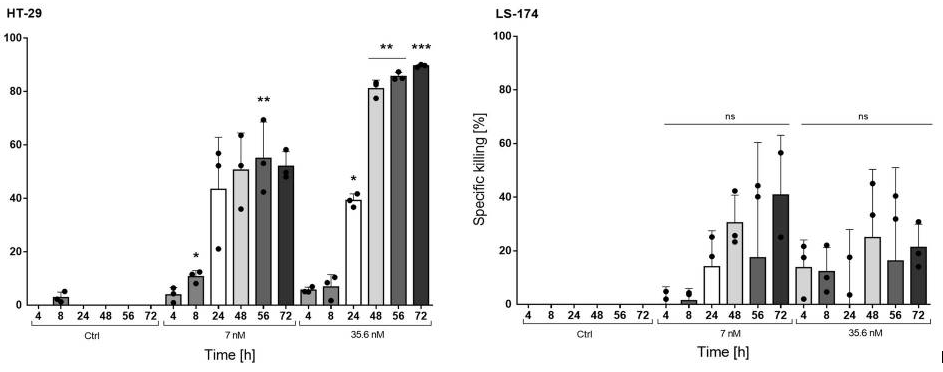
To show the proof of the concept, two human colon adenocarcinoma cell lines HT-29 and LS-174 which express different abundance of Gb3 antigen were targeted with the lectibody. The HT-29 cell line expresses a high amount of Gb3, in contrast, the LS-174 cell line expresses very low or no amounts of Gb3. As shown below, it was demonstrated that the killing activity strongly correlates to the abundance of the Gb3 antigen at the surface of the target cells.

Two diazotrophic beneficial bacteria isolated from the rhizosphere of a wild wheat ancestor (Pseudomonas and Enterobacter)

A group from UMR IPSiM, Université de Montpellier, Institut Agro, CNRS, Montpellier, France, etc. has reported about two diazotrophic PGPR strains, isolated from the rhizosphere of a wild wheat ancestor as beneficial bacteria.
https://www.ncbi.nlm.nih.gov/pmc/articles/PMC9740669/

Two bacterial strains, Pseudomonas BPMP-PU-28 and Enterobacter BPMP-EL-40, were isolated from the rhizosphere of a wild wheat ancestor. These strains have been shown to stimulate plant growth when the availability of nitrogen in the soil is limiting for the growth.

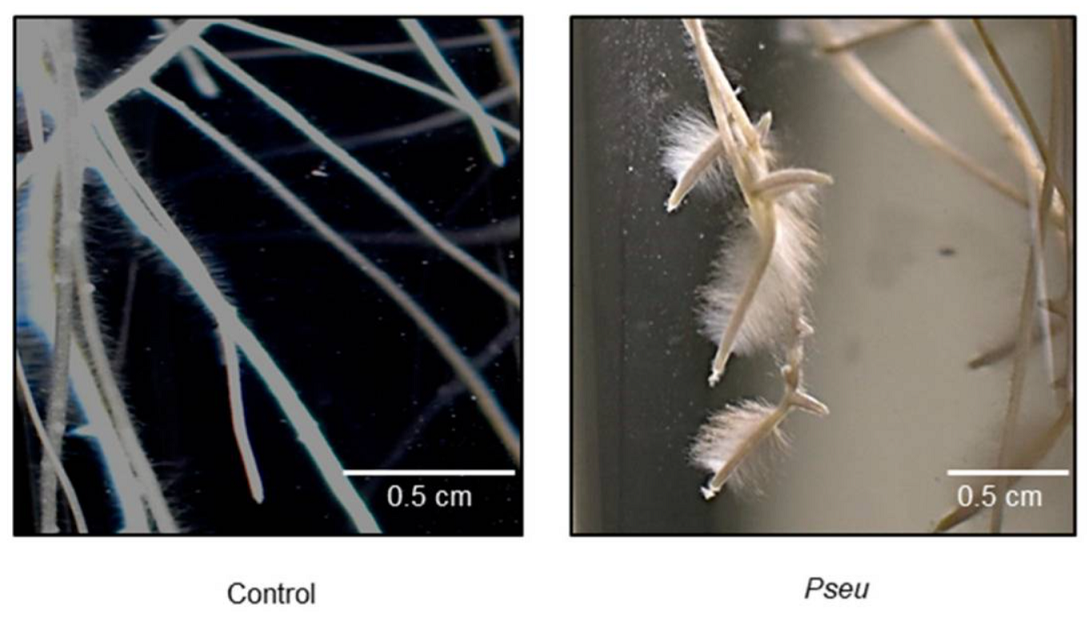
A striking effect of culture supernatant obtained from these beneficial bacteria was observed on root hair density and length in root apical regions as shown below (left-hand side is a control and right-hand side shows that of Pseudomonas).

The following features were seen in exudates from these bacteria.

The AHL N-tetradecenoyl-L-homoserine lactone (TDHL) has been found in BPMP-PU-28 and BPMP-EL-40 exudates. AHLs play a role in bacterial quorum sensing and in bacterial communication networks. They have positive effects on plant growth, and could be recognized by plant receptors and lead to modifications of plant gene expression.

It should also be noted that while no amino acids were detected in the bacterial exudates, some cyclopeptides were present. Together with AHLs, cyclic peptides have been shown to play a role in quorum sensing. In addition to playing a role in quorum sensing, cyclic peptides can act as mimetics of phytohormones which upregulate salicylic acid, ethylene and jasmonic acid signaling.

In addition to AHLs and cyclopeptides, many of the metabolites identified in exudates may play a role in plant growth promotion, for example by behaving as antibiotics (about 18% of the identified metabolites can be expected to have antibiotic effects), or by improving nutrient ion acquisition.

Changes in rhizospheric microbiota due to chitin addition into soybean soils

A group from Key Laboratory of Mollisols Agroecology, Northeast Institute of Geography and Agroecology, Chinese Academy of Sciences, Harbin, China, etch. has reported about changes in dominant bacterial and fungal taxa due to chitin addition into soybean soils.
https://www.ncbi.nlm.nih.gov/pmc/articles/PMC9730418/#SM1

Chitin addition is considered promising methods for alleviating soybean continuous cropping obstacles, however, the underlying mechanisms of soil sickness reduction remain unclear.

In this study, changes in dominant bacterial and fungal taxa due to chitin addition were evaluated.
At the bacterial OTU level, chitin distinctly increased the relative abundance of Streptomyces, Sphingomonas, Bacillus, Mesorhizobium and Nitrospira. At the fungal phylum level, chitin addition markedly increased the relative abundance of Zygomycota, and conversely drastically reduced the relative abundance of potential pathogens affiliated with Fusarium, Paraphoma, Cylindrocarpon and Septoria.

Glycosylation engineering of the extracellular loop of CD63 on the surface of exosomes to improve the targeting performance of its DDS

A group from Biomolecular Medicine, Division of Biomolecular and Cellular Medicine, Department of Laboratory Medicine, Karolinska Institute, Huddinge Sweden, etc. has reported about cell‐specific targeting of extracellular vesicles (EVs) though engineering of glycan expression on EVs.
https://www.ncbi.nlm.nih.gov/pmc/articles/PMC9719568/

Extracellular vesicles are thought to be promising carriers for the delivery of a variety of chemical and biological drugs. In order to improve the targeting performance of EVs, EVs were engineered to display the glycan of interest.
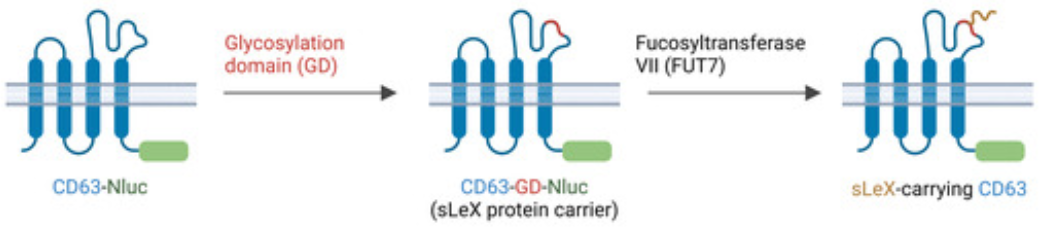
EV producer cells were genetically engineered to co‐express a glycosylation domain (GD) inserted into the large extracellular loop of CD63 and fucosyltransferase VII (FUT7) or IX (FUT9). P19 (19‐mer, derived from PSGL‐1) and CTP (28‐mer, from beta‐chorionic gonadotropin) were selected as potential sLeX peptide carriers (i.e., as the glycosylation domain). The combination of FUT7 and PSGL-1 resulted in the highest expression of sLeX, and also the combination of FUT9 and PSGL‐1 resulted in the highest expression of Lewis X (LeX) but not sLeX.

Through this strategy, surface display of two types of glycan ligands, sLeX and LeX, on EVs was demonstrated, and achieved high specificity towards activated endothelial cells and dendritic cells, respectively.

Seed priming of entomopathogenic fungi to increase maize crop growth and tolerance against herbivores

A group from State Key Laboratory for Biology of Plant Diseases and Insect Pest, Institute of Plant Protection, Chinese Academy of Agricultural Sciences, Beijing, China, etc. has reported seed priming of entomopathogenic fungi to increase crop growth and tolerance against herbivores.
https://bmcplantbiol.biomedcentral.com/articles/10.1186/s12870-022-03949-3

Ostrinia furnacalis is the most destructive pest of maize causing an annual yield loss of about 6 to 9 million tons in East and Southeast Asia.

Seed priming is nowadays considered one the most promising techniques in enhancing abiotic and biotic stress tolerance, yield, and growth in crop plants. In this study, seed priming using Beauveria bassiana (BB) and Trichoderma asperellum (TA) were evaluated.

From the experimental results, the additional yield and gross return were calculated to estimate the increase in corn yield and economic return by the seed priming of entomopathogenic fungi. The highest additional yield of 6811.62 KG/ha and 8117.45 KG/ha in year 2018 and 2019 respectively was recorded in consortium treatment (BT), which is an increase of 82 – 96% over control. Treatment by BB and TA resulted in additional yield of 4518.06 (52.2%) and 2930.19 (35.4%) respectively in 2018 year and 4688.58 (55.8%) and 3982.40 (47.5%) in 2019 over control.

The effect of seed priming of entomopathogenic fungi was seen in O. furnacalis larval development, especially in consortium inoculated plants (BT). The growth speed was greatly reduced and larval survival rate was also reduced. It was seen that more then 50% larvae cannot even reached at 3rd instar stage and died. The lowest survival rate of 13% was recorded in consortium (BT) treated plants followed by 28% in B. bassiana (BB) and 36% in T. asperellum (TA) was recorded whereas the survival rate in control group was 94%.

Leaf samples of seed primed and non-primed maize under O. furnacalis stress were analyzed for antioxidants, proline, and chlorophyll content. Seed priming with fungal strains significantly increased the enzyme activities at 24-h by the consortium treatment (BT) compared to non-primed control (IC). The seed priming with BT significantly enhanced the SOD, POD, Protease, PPO, and Proline activities up to 80.29-, 336-, 302-, 141-, and 65.8-fold respectively. And further, O. furnacalis infestation significantly increased cis-OPDA, JA, and JA-Ile in all fungal inoculated treatments (BB, TA, BT) but the highest phytohormone content was observed in consortium treated plants (BT), suggesting that the entomopathogenic fungal inoculation., especially consortium (BT) induced the enhanced production of JA metabolites in maize.
Lectin analysis of SARS-CoV-2-positive nasopharyngeal samples

A group from GLYcoDiag, 2 Rue du Cristal, Orléans, France, etc. has reported about lectin analysis of SARS-CoV-2-positive nasopharyngeal samples.
https://www.mdpi.com/2075-4418/12/11/2860

I have decided to stop blogging about SARS-CoV-2 related issues, but oh well!

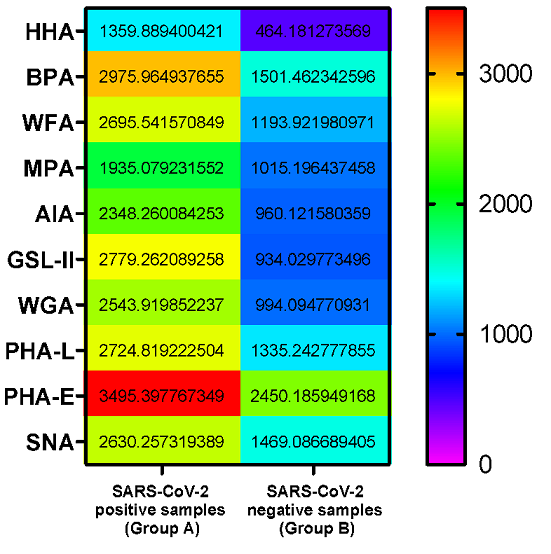
GlycoDIAG’s GLYcoPROFILE® technology clearly indicated the glycan differences between SARS-CoV-2-positive and -negative samples.
BPA and PHA-E were able to discriminate the control group from SARS-CoV-2-positive samples, with values around or higher than 3000. The BPA recognizes GalNAc-containing glycans, while PHA-E binds to bi-antennary complex N-glycans. In addition, another group of lectins, including WFA (binds to LacdiNAc), GSL-II (binds to agalacto) and PHA-L (binds to tri/tetra antennary complex N-glycan), were also distinguishing for SARS-CoV-2-positive samples. The HHA lectin was confirmed as a negative reference lectin.

Diagnosis of Hepatocellular carcinoma (HCC) with using AFP and changes in IgG/IgM glycosylation

A group from Department of Laboratory Medicine, Shengjing Hospital of China Medical University, Shenyang, China, etc. has reported about diagnosis of Hepatocellular carcinoma (HCC) with using Lectin Microarrays.
https://www.ncbi.nlm.nih.gov/pmc/articles/PMC9634732/

A model combining changes in IgG glycosylaion detected by three lectins (EEL, MPL, and TC) and Alpha-fetoprotein (AFP) showed good diagnostic accuracy for HCC, an area under the ROC curve of 0.96 (P < 0.05), the sensitivity of 82.54%, and the specificity of 100%.

Another model combining changes in IgM glycosylaion detected by one lectin (DSL) and AFP showed an area under the curve of 0.90 (P < 0.05), sensitivity of 75.41%, and specificity of 100%.

A new therapeutic method focusing on inhibition of PD-L1 against Candida albicans

A group from Clinical Medicine Scientific and Technical Innovation Center, Shanghai Tenth People’s Hospital, Tongji University School of Medicine, China, etc. has reported about a negative role of PD-L1 expression on the host immune response, which inhibits neutrophil migration from the bone marrow into the infected sites for favoring immune escape of fungi infections.
https://www.ncbi.nlm.nih.gov/pmc/articles/PMC9652346/

Candida albicans is both a commensal and opportunistic fungal pathogen of humans. During systemic infection, C. albicans enters the bloodstream and disseminates throughout the body, causing the disease known as invasive candidiasis. The successful clearance of C. albicans from the host mainly relies on neutrophils by releasing proinflammatory cytokines, producing reactive oxygen species and anti-microbial peptides, and forming neutrophil extracellular traps.

PD-L1 is found to be expressed on the plasma membrane of immune cells, including neutrophils, B cells, dendritic cells, and macrophages. During C. albicans infection, β-glucans exposed on the cell wall of C. albicans play an important role in modulation of the host response. The C-type lectin receptor Dectin-1 (encoded by Clec7a gene) is the most important neutrophil pattern recognition receptor for the recognition of β-glucans.

In this study, it was demonstrated that activation of Dectin-1 by fungal β-glucans induced PD-L1 expression in murine and human neutrophils, and the upregulated PD-L1 inhibits neutrophil migration from the bone marrow into the infected sites through regulating their autocrine secretion of chemokines CXCL1 and CXCL2. This finding provides new insights that PD-L1 would function as a potent therapeutic target of neutrophil-based immunotherapy against fungal infections through regulating neutrophil release from the bone marrow. That is, either PD-L1 blockade or pharmacological inhibition of PD-L1 expression significantly increased neutrophil release from bone marrow to enhance host antifungal immunity.

Antifungal activity of bacterial isolates from healthy ginseng for the control of ginseng root rot disease (Fusarium oxysporum)

A group from Jilin Ginseng Academy, Changchun University of Chinese Medicine, Changchun, China, has reported about antifungal activity of bacterial isolates from healthy ginseng for the control of ginseng root rot disease (Fusarium oxysporum).
https://journals.plos.org/plosone/article/authors?id=10.1371/journal.pone.0277191

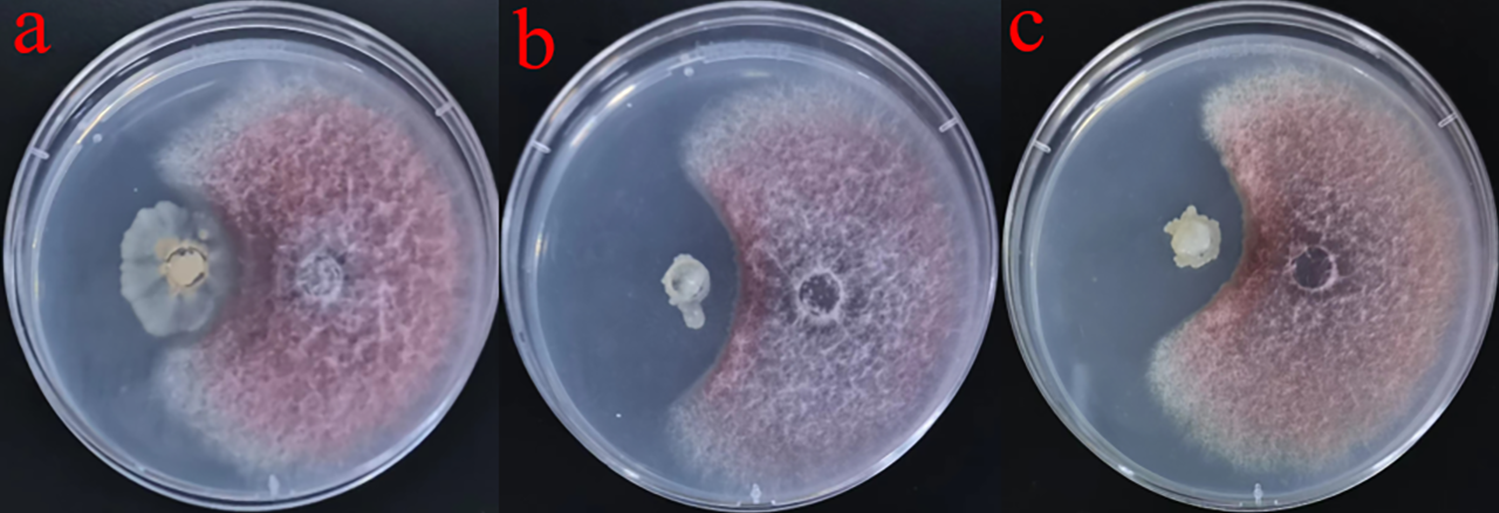
In total, 145 isolates were isolated from rhizosphere soil of Panax ginseng. Among these, three isolates, designated YN-42(L), YN-43(L) and YN-59(L) exhibited inhibitory activity against Fusarium oxysporum in vitro.


where,
a: Bacillus subtilis [YN-42(L)],
b: Delftia acidovorans [YN-43(L)], and
c: Bacillus polymyxae [YN-59(L)].

Plant growth promoting effects in Wheat and Maize biofertilized with PGPM and Biochar

A group from Interdepartmental Center SITEIA.PARMA, University of Parma, Italy, etc. has reported about plant growth promoting effects in Wheat and Maize biofertilized with PGPM and Biochar.
https://www.ncbi.nlm.nih.gov/pmc/articles/PMC9499264/

Biostimulants are classified into biofertilizers, bacteria, and/or fungi, defined as plant growth-promoting microbes (PGPM), which establish a positive relationship with the plant by increasing the bioavailability of nutrients present in the soil and have a positive impact on plant yield and health. To improve the performance of biofertilizers, it is possible to combine them with soil amendments which can stimulate microbial growth and survival. Biochar is such a good candidate, because its structural porosity makes it ideal to provide a niche in which microorganisms can survive environmental stress.

This study investigated the effect of the combination of biochar (as a carrier of PGPM), two types of microbial consortia (MC-B and MC-C), and/or arbuscular mycorrhizal fungi (AMF) on wheat and maize when grown in greenhouses.

  • MC-B was made up of A. vinelandii DSM 2289, R. aquatilis BB23/T4d, Bacillus sp. BV84, B. amyloliquefaciens LMG 9814, and P. fluorescens DR54.
  • MC-C was made up of A. chroococcum LS132, B. amyloliquefaciens LMG 9814, P. fluorescens DR54, B. ambifaria MCI 7, and R. aquatilis BB23/T4d.

The results demonstrated that wheat and maize supplemented with different combinations of selected microbial consortia and biochar have a positive effect on plant growth in terms of shoot and root biomass.

In wheat, the treatments with the largest contribution to the cultures were Char_MC-C, either with or without AMF, followed by Char_MC-B, either with or without AMF. On the other hand, in maize, the best growing conditions were for Char_MC-C, either with or without AMF, followed by Char_MC-B_AMF or AMF alone.

Powered by WordPress |Copyright © 2020 Emukk. All rights reserved