Archive 22/8/14

Streptococcal Pharyngitis detection using H-1 antigen (glycan probe) conjugated Gold Nanoparticles

A group from Faculty of Pharmacy, Tehran University of Medical Sciences, Tehran, Iran, etc. has reported about a Nanobiosensor based on H-1 antigen-Gold NanoParticles (AuNPs) aggregation detecting M1 Streptococcal Pharyngitis.
https://www.ncbi.nlm.nih.gov/pmc/articles/PMC9354983/

Streptococcus pyogenes (GAS) is a Gram positive bacterium that causes a wide variety of clinical conditions, ranging from acute pharyngitis to severe invasive diseases. A common method for the diagnosis of streptococcal pharyngitis is a physical examination by a physician and then a bacterial culture of throat swab. Until now, various types of biosensors were developed to diagnose GAS for clinical use. Those are based on antibody-antigen interactions, or on an isothermal nucleic acid amplification technology. Nevertheless, they are not widely used by clinicians worldwide, which may be related to the high cost.

The nanobiosensors based on the aggregation of AuNPs are well-known, and have been studied as an easy-to-use diagnosis of pathogens, where the presence of a specific antigen in a colloidal medium containing bioreceptor–AuNPs conjugates results in the aggregation of nanoparticles. Since it is known that M1 GAS binds to H-1 antigen, in this study, a sugar code present on oral epithelial cells, Lacto-N-fucopentaose I-biotin (H-1-biotin) was conjugated on avidin-AuNPs as an antigen to detect M1 GAS.
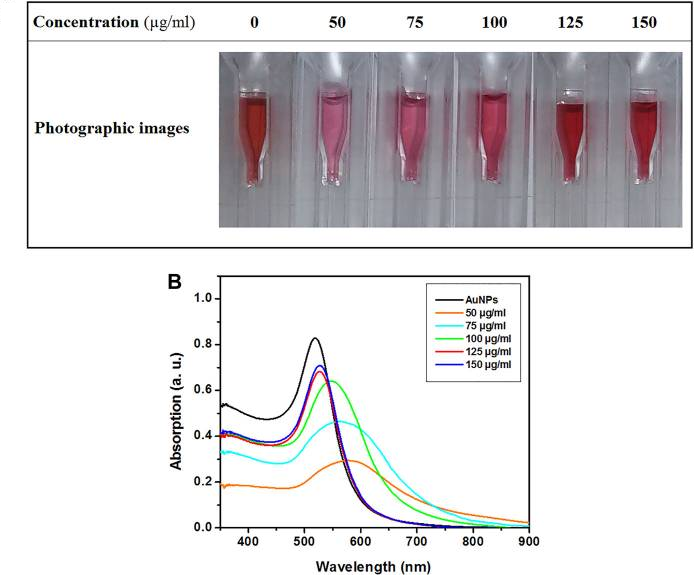
Based on the value of red-shift in SPR position, a calibration curve for detection of M1 GAS was plotted at a concentration range from 1 × 10² up to 1 × 10⁷ CFU/ml. It was found that M1 GAS was detected in a wide concentration range (1 × 10³ – 1×10⁶ CFU/ml) with a linear response and a short detection time of 20 min.
Lectins specific to bisecting GlcNAc

A group from Department of Chemistry, Georgia State University, Atlanta GA USA, etc. has reported about lectins specific to bisecting GlcNAc.
https://www.ncbi.nlm.nih.gov/pmc/articles/PMC9241959/

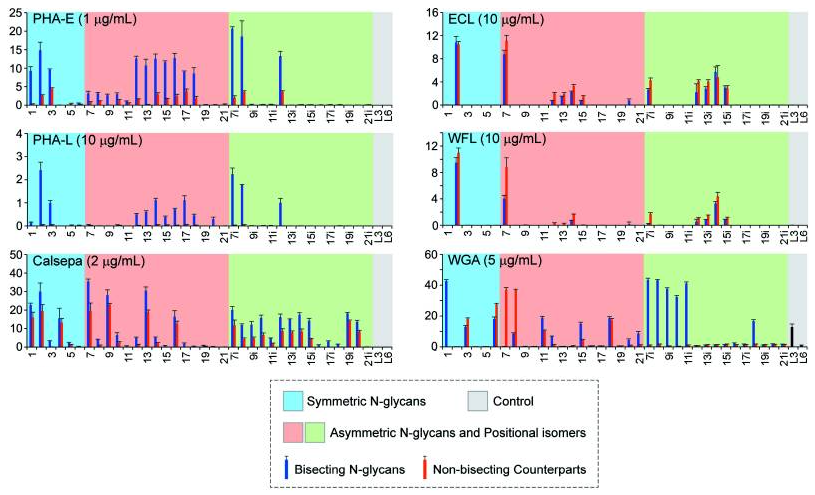
Many plant lectins could tolerate the bisecting GlcNAc, among which the bindings of PHA-E and Calsepa were enhanced. It was observed that even at a low concentration (1 μg mL−1), PHA-E and Calsepa showed bindings to non-bisected N-glycans, which would pose a significant problem in their wide applications of bisected glycan identification and cancer biomarker discovery. Surprisingly, PHA-L exhibited specific recognition of bisected biantennary N-glycans, which could find promising implementation in probing such structures, e.g., in antibodies, where β1-6-branched glycans are absent.
However, it should be noted that PHA-L has a strong specificity for tri/tetra antennary N-glycans.

O-Glycosylation changes in serum IgG3 could be a marker for inflammation development in advanced endometriosis

A group from Division of Laboratory Diagnostics, Faculty of Pharmacy, Wroclaw Medical University, Poland, etc. has reported that O-Glycosylation changes in serum IgG3 could be a marker for inflammation development in advanced endometriosis.
https://www.mdpi.com/1422-0067/23/15/8087/htm

Structurally, human IgG N-linked glycans are typically biantennary complexes. The second N-glycosylation site is found in the VH and VL (heavy and light chain of variable regions, respectively) and has been observed in 15–25% of all serum IgG. The presence of glycans in the IgG Fab region may contribute to higher antibody stability and modulate antigen binding. For IgG3, apart from N-glycans present in the Fab and Fc regions, the presence of O-linked glycans in the hinge region is also observed.

In blood serum, about 10% of IgG3 polyclonal antibodies and about 13% of IgG3 monoclonal antibodies are considered to contain O-glycans. Each IgG3 molecule can contain up to three O-glycans linked to threonine residues in the triple repeat regions within the hinge region. Although the function of IgG O-glycosylation is still not fully understood, the structure of the hinge region is hypothesized to be able to protect the immunoglobulin from proteolytic cleavage, and may also help maintain the extended conformation and flexibility of IgG3.

In this study, it was examined whether O-glycans are expressed in serum IgG in advanced endometriosis, and also whether, additionally to the presence of biantennary N-glycans, there are also highly branched N-glycans in IgG, and if so, whether the degree of their expression is characteristic of advanced endometriosis.

For the analysis of serum IgG O-glycosylation and the expression of multi-antennary N-glycans, lectin-ELISA with lectins specific to O-glycans (MPL, VVL, and Jacalin) and highly branched N-glycans (PHA-L) was used. And also, isolated serum IgG, i-IgG, and native serum IgG, s-IgG, were examined as samples.

The results were striking. In the case of s-IgG, the clinical value was limited. In the case of i-IgG, however, a maximum high clinical value (AUC = 1) was obtained with all four lectins used, both when comparing women with advanced endometriosis to healthy women and healthy women to a non-endometriosis group.
While this research has shown that both the expression of O-glycans and highly branched N-glycans in IgG may have a potential application in the diagnostics of advanced endometriosis, at the present stage of research, these conclusions mainly concern IgG isolated from serum. This makes it difficult to apply this type of determination in routine diagnostics due to the laborious and time-consuming procedure of protein isolation and purification. Nevertheless, this direction of research seems to be promising, and the development of a simple and fast protein isolation procedure is required.

Fumigation treatment was better than bioagent treatment in continuous cropping fields: Why is that happened?

A group from School of Minerals Processing and Bioengineering, Central South University, Changsha, China, etc. has reported that fumigation treatment was better than bioagent treatment in continuous cropping fields.
https://www.ncbi.nlm.nih.gov/pmc/articles/PMC9354655/

Continuous cropping alters soil physiochemical properties and microbial community, causes soil salinization and acidification, accumulates harmful microbes, reduces fertilizer efficiency, and leads to severe soil-borne diseases, resulting in yield reduction and huge economic losses in agriculture production.

In this study, fumigation and biological agent treatments were evaluated to alleviate continuous cropping barriers. Three fumigation treatments, namely, chloropicrin (FM1), dazomet (FM2), and untreated control (CK_FM), and three biological treatments, namely, two biological agents (AG1 and AG2) offered by Prof. Jian Ye from the Institute of Microbiology, CAS, and untreated control (CK_AG) were compared.

Compared with the biological agent treatment, fumigation treatment had stronger disease inhibition effects. Furthermore, not only did the fumigation treatment increase pH, but it also increased nutrient availability in soil and stimulated crop growth.

The bacterial diversity was significantly reduced by the application of fumigants, compared with the biological agents, which caused a significant increase in bacterial diversity. This could be explained by the fact that fumigation chemicals are often toxicants to organisms. Fumigants are well-known poisonous substances used in killing insects, nematodes, and other animals or plants that cause damage to foods, seeds, or human dwelling. Although it is widely accepted that the diverse soil microbial community would benefit above-ground crops against disease infection and promote plant growth, this was in contrast to the results obtained in this study for fumigation treatment.

This can be explained as follows: fumigation treatment disrupted the entire soil microbial ecosystem and also leaded to changes in soil characteristics and plant performance, and thereby the crop benefitted from the reassembled rhizosphere microbiome resulting in the effective alleviation of continuous cropping barriers.

Stratifin (SFN) and Presepsin (P-SEP) could be used as prognostic biomarkers for severe COVID-19 progression

A group from Division of Medical Safety Science, National Institute of Health Sciences, Japan, etc. has reported that stratifin (SFN) and presepsin (P-SEP) could be used as prognostic biomarkers for severe COVID-19 progression.
https://www.ncbi.nlm.nih.gov/pmc/articles/PMC9188980/

COVID-19 is a respiratory disease with a wide range of manifestations, from asymptomatic to severe cases with ARDS.18 Although about 80% of patients with COVID-19 experience only mild or moderate symptoms and have a favorable prognosis, the remaining patients worsen to severe or critical stage, and their prognosis, largely driven by severe ARDS, is poor. Therefore, early detection of the severe COVID-19 cases is important.

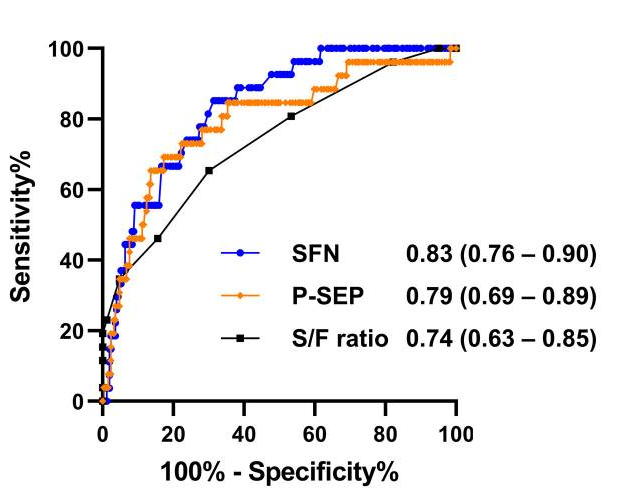
In the present study, five biomarkers for lung injury, SP-D, KL-6, P-SEP, KAL and SFN were analyzed, all of which have been suggested to be related with ARDS or its typical histological pattern diffuse alveolar damage (DAD), in serum samples collected serially from patients with COVID-19. It was found for the first time that serum SFN was significantly elevated in patients with severe COVID-19 compared to patients with mild or moderate symptoms. SFN, as well as P-SEP which has been suggested as a biomarker for severe COVID-19.

Both serum SFN and P-SEP were obviously elevated at the pre-severe stage. The AUC values [95% CI] of these proteins in diagnosing the pre-severe stage were 0.83 [0.76–0.90] for SFN and 0.79 [0.69–0.89] for P-SEP. When the cutoff values of SFN and P-SEP for discriminating the pre-severe condition from the mild/moderate condition on COVID-19 patients were set at 0.81 ng/mL and 374 pg/mL, the diagnostic sensitivity and specificity were 81.5% and 70.1% for SFN, and 76.9% and 71.9% for P-SEP, respectively.

Membrane-anchored mucins restrict infection of multiple SARS-CoV-2 variants

A group from Division of Infectious Diseases and Vaccinology, School of Public Health, University of California, Berkeley, CA, USA, etc. has reported about key antiviral pathways in SARS-CoV-2 infection.
https://www.nature.com/articles/s41588-022-01131-x

Recent loss-of-function (LOF) screens have begun defining host factor requirements for SARS-CoV-2 infection, these studies employed host gene knockout (KO) approaches either in nonepithelial cell lines or in cell lines that do not endogenously express ACE2 and TMPRSS2. Although LOF screens can be powerful for the identification of proviral genes, gain-of-function (GOF) screens can identify antiviral factors that mediate viral restriction upon upregulation. Performing screens in a bidirectional manner can therefore illuminate host pathways with bimodal roles and provide a more comprehensive view of viral dependencies and potential targets for host-directed therapeutic development.

From these screening results, it was found that G-protein-coupled receptor (GPCR) signaling, transcriptional regulation (TAF7L, FOXE1, ZNF275, TEAD3, SPDEF, JDP2), cell-cycle regulation (CCNE1) and mucin glycosylation (MUC1, MUC4, MUC13, MUC21, B3GNT8) are key antiviral pathways in SARS-CoV-2 infection.

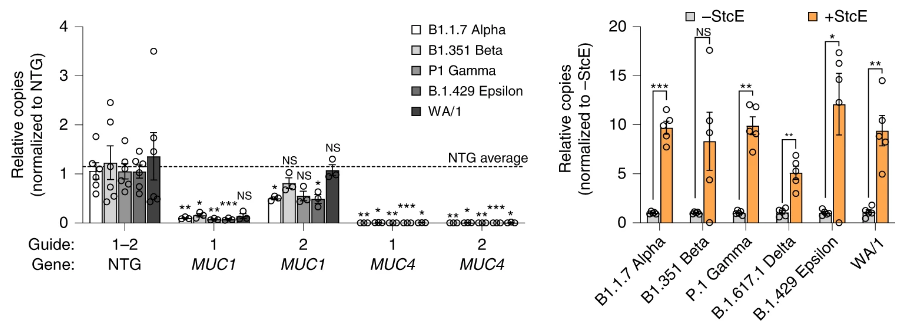
To determine the impact of membrane-anchored mucins on infection of diverse SARS-CoV-2 clinical isolates, we infected our MUC1 and MUC4 GOF Calu-3 lines with alpha, beta, gamma, epsilon, delta, and WA/1 variants. It was found that overexpression of either MUC1 or MUC4 restricted viral replication of diverse SARS-CoV-2 variants relative to NTG controls. Next, mucin-selective protease (StcE) treatment followed by infection with these same variants rendered Calu-3 cells significantly more permissive to viral infection. These data suggest that membrane-anchored mucins restrict infection of multiple SARS-CoV-2 variants.

Plant growth promoting ability of rhizobacteria strains isolated from Polyporus umbellatus

A group from School of Pharmaceutical Sciences, Peking University, Beijing, China, etc. has reported about mycorrhizal bacteria strains isolated from Polyporus umbellatus.
https://www.ncbi.nlm.nih.gov/pmc/articles/PMC9340266/

Fungal pathogens cause a range of serious plant diseases, such as Fusarium wilt, and are responsible for most of the diseases in agricultural ecosystems.
There are two main ways to deal with the effects of these diseases:
One is to develop disease-resistant plants, and
the other is to use chemical fungicide to control the spread of pathogens.
However, these two methods have the disadvantages of long cycle and drug resistance of pathogens. A practical and sustainable strategy for dealing with phytopathogenic fungal diseases is therefore the application of biological control agents (BCAs).

Several bacteria have been isolated from plants and fungi, most of which belong to the genera Bacillus and Pseudomonas, and it has been demonstrated that those genera exhibit satisfactory biological activity and marked biocontrol potential.

In this paper, 21 rhizobacteria strains were isolated from mycorrhizal samples of Polyporus umbellatus, and evaluated from viewpoints of agricultural sustainability without requiring the overuse of hazardous fungicide and plant growth promoting ability such as producing IAA, siderophore, etc. and dissolving phosphate.

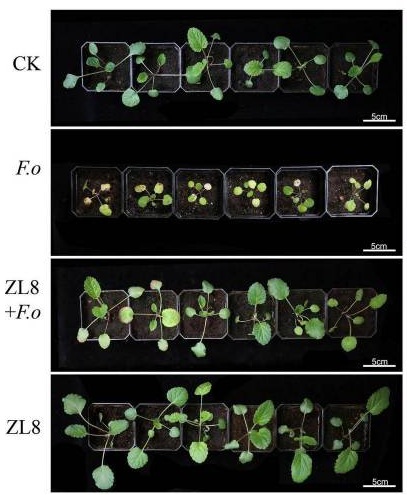
Among those isolated strains, it was found that the Pseudomonas strain ZL8 shows the highest performance as plant growth-promoting bacteria (PGPB). Nineteen compounds were identified from the fermentation broth of the strain ZL8, of which 2,4-diacetylphloroglucinol (DAPG) showed a significant inhibitory effect on phytopathogenic fungi with a minimum inhibitory concentration of 3.12–25 μg/mL. The plant growth promoting ability was evaluated with using Salvia miltiorrhiza, and the effect was so significant as shown below.

where, Fo. means Fusarium oxysporum

Green tea catechin, epigallocatechin gallate (EGCG), could be a pan-coronavirus attachment inhibitor

A group from Department of Biomedical and Molecular Sciences, Queen’s University, Kingston, ON, Canada has reported that green tea catechin, epigallocatechin gallate (EGCG), could be a pan-coronavirus attachment inhibitor.
https://www.nature.com/articles/s41598-022-17088-0

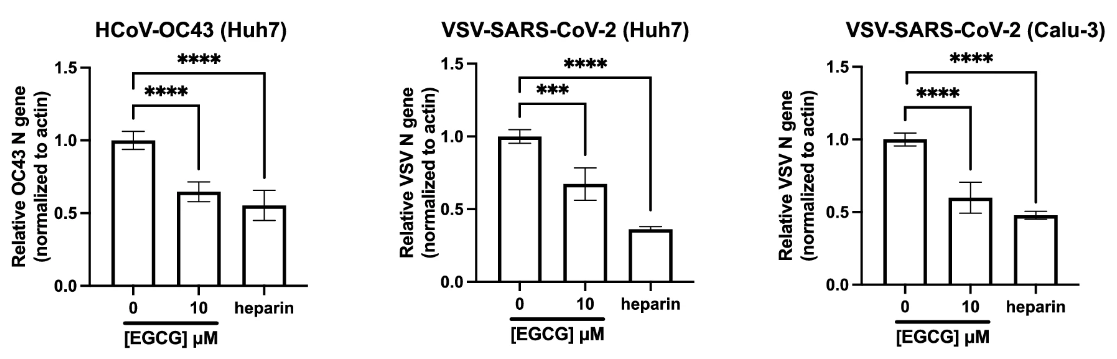
Here, it was evaluated and characterized the inhibitory activity of EGCG against entry of human seasonal and highly pathogenic coronavirus (CoVs). Then, it was demonstrated that EGCG inhibits entry of a broad range of CoVs into physiologically relevant human lung epithelial cells. And, furthermore, EGCG inhibited binding of multiple human CoVs to cell surfaces, suggesting that this natural product inhibits a highly conserved step in CoV attachment, such as primary attachment to cell-surface heparan sulfate.
Focusing on SARS-CoV-2, it was shown that EGCG competitively inhibits virion attachment to heparin, a structural analog of Heparan Sulfate. These findings further support understanding of the antiviral mechanisms of EGCG against CoVs, and identify a highly conserved antiviral target for the development of improved antiviral molecules to prevent infection with diverse CoVs, including potential future emerging CoVs.

Plant growth-promoting and biocontrol bacteria in the rhizosphere of wild rice

A group from Key Laboratory of Mollisols Agroecology, Northeast Institute of Geography and Agroecology, Chinese Academy of Sciences, Changchun, China, etc. has reported about plant growth-promoting and biocontrol bacteria in the rhizosphere of wild rice.
https://www.ncbi.nlm.nih.gov/pmc/articles/PMC9324538/

Rice occupies an important position in the world’s food crops, and about 50% of the populations live on rice as the staple food. Wild rice is an important improved resource for cultivated rice and its unique ability to resist biotic and abiotic stress has attracted the attention of many scholars.

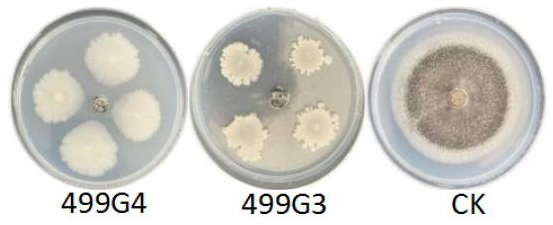
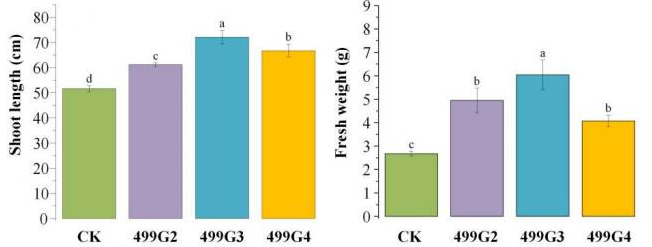
The results of functions of the screened strains showed that 18 strains had a good inhibitory effect on rice blast, and 33 strains had the ability to dissolve phosphorus, potassium, or fix nitrogen. Through potted experiment, the three bacterial strains, 499G2 (Peribacillus simplex), 499G3 (Bacillus velezensis), and 499G4 (Nacillus megaterium) have a positive effect on the growth of cultivated rice in addition to the resistance to rice blast.

, where CK is a control

A lectin-Fc fusion protein (i.e., lectibody) recognizing cancer specific high mannose glycans would be a useful drug in cancer therapy

A group from Department of Pharmacology and Toxicology, University of Louisville School of Medicine, KY, USA, etc. has reported that a lectin-Fc fusion protein (i.e., lectibody) recognizing cancer specific high mannose glycans would be a useful drug in cancer therapy.
https://onlinelibrary.wiley.com/doi/10.1111/pbi.13902

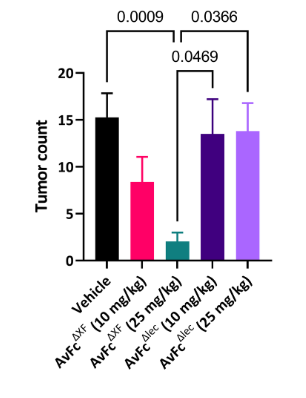
Avaren-Fc (AvFc) is a lectin-Fc fusion protein (i.e., lectibody) produced in Nicotiana benthamiana, which selectively recognizes cancer-associated high-mannose glycans. A glycovariant of AvFc (AvFcΔXF) was developed by eliminating plant glycans, including the coreα1,3-fucoseand β1,2-xylose residues. The successful removal of these glycans was confirmed by glycan analysis using HPLC.

This study has demonstrated that AvFcΔXF induces more a potent ADCC response in vitro and delays the growth of murine B16F10 melanoma in both a flank tumor model as well as a model of metastasisin vivo, suggesting that high mannose glycans may be a useful druggable biomarker in cancer therapy.

where, AvFcΔlec means a variant lacking sugar-binding activity

Powered by WordPress |Copyright © 2020 Emukk. All rights reserved