Archive 22/4/10

Gal-9 enhances SARS-CoV-2 replication and inflammation

A group from Department of Laboratory Medicine, University of California, San Francisco, CA, USA. etc. has reported that Gal-9 enhanced SARS-CoV-2 infection.
https://pubmed.ncbi.nlm.nih.gov/35378763/

It was found that Gal-9 enhances SARS-CoV-2 replication in human airway epithelial cells (AECs), mediated by facilitating cellular entry in an ACE2-dependent manner, by enhancing the attachment of SARS-CoV-2 virions to the cell surface by bridging the pathogen surface and receptors on host tissues in a glycosylation-dependent manner.

Clinically speaking, small molecules and anti-Gal-9 monoclonal antibodies (e.g. LYT-200) that antagonize Gal-9 activity may have utility in COVID-19.

CD169/Siglec-1 (I-type Lectin) facilitated ACE2-independent SARS-CoV-2 fusion and entry in macrophages

A group from Department of Microbiology, Boston University School of Medicine, Boston, MA, USA, etc. has reported CD169/Siglec-1, a myeloid cell specific I-type lectin, facilitated ACE2-independent SARS-CoV-2 fusion and entry in macrophages.
https://pubmed.ncbi.nlm.nih.gov/35378756/

Circulating monocytes, macrophages, and tissue-resident alveolar macrophages are not known to express ACE2, infection receptor of SARS-CoV-2. These cells have been shown to express low levels of TMPRSS2, and moderate levels of endosomal cathepsins which are necessary proteases for SARS-CoV-2 infection. CD169/Siglec-1 (I-type lectin) is highly expressed by splenic red pulp and perifollicular macrophages, subcapsular sinus macrophages and alveolar macrophages. It is also known that CD169/Siglec-1 expression can be upregulated on peripheral blood monocytes under inflammatory conditions, especially in response to type I interferons (IFNs).

In this study, it was examined the mechanisms by which macrophages potentially contribute to inflammation during SARS-CoV-2 infection, using two different human macrophage models, PMA-differentiated THP1 cells (THP1/PMA) and primary monocyte-derived macrophages (MDMs) expressing a myeloid cell-specific receptor, CD169/Siglec-1, in the presence or absence of ACE2.

Pre-treatment with antibodies targeting SARS-CoV-2 S NTD and inhibition of endosomal cathepsins by E64D markedly attenuated S-pseudotyped lentiviral infection in CD169+ macrophages, but a TMPRSS2 inhibitor (Camostat) had no effect, suggesting that SARS-CoV-2 S facilitates endosomal viral entry into ACE2-deficient monocyte-derived macrophages (MDMs).
Also, THP1 cells expressing CD169 displayed robust SARS-CoV-2 S binding comparable to levels observed with THP1/ACE2 cells.

Interestingly, CD169-expressing THP1/PMA cells showed low levels of virus dsRNA production that did not significantly increase over the course of infection. However, significant expression of pro-inflammatory cytokines, IL-6, TNFα, IL-1β, and IL-18, was induced in infected CD169+ THP1/PMA macrophages compared to the parental THP1/PMA cells, indicating that early viral RNA production is the key trigger of innate immune activation, in other words, SARS-CoV-2 infection of macrophages could induce pro-inflammatory responses finally resulting in cytokine storms.

SARS-CoV-2 adherance is primarily mediated by sialylated glycans with α-(2,6)-sialic acids: Human milk oligosaccharides can block RBD

A group from Department of Chemistry, University of California, Davis, Davis, CA, USA, etc. has reported that the binding of SARS-CoV-2 to the cell membrane is primarily mediated by sialylated glycans with α-(2,6)-sialic acids on the termini positions.
https://www.ncbi.nlm.nih.gov/pmc/articles/PMC8964299/

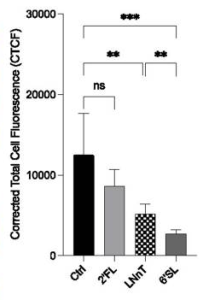
It was tested whether the Human milk oligosaccharides (HMOs) could block the RBD of SARS-CoV-2 by preincubating the RBD and the HMOs before introduction to HepG2 cells. Fluorescently labelled RBD was preincubated with 2′-FL, LNnT and 6′-SL separately, then allowed to interact with host cells HepG2. Quantitation of fluorescent signal intensity showed that HMOs blocked binding of RBD to cells presumably reflecting the behavior of the intact virus. The RBD was blocked only slightly by 2′FL (not statistically significant), more by LNnT (significant), and the most by 6′SL . Comparison of LNnT and 6′SL showed that latter one is more effective (significant).

The data suggest that HMOs can potentially function as “decoys” to affect SARS-CoV-2 adherence.

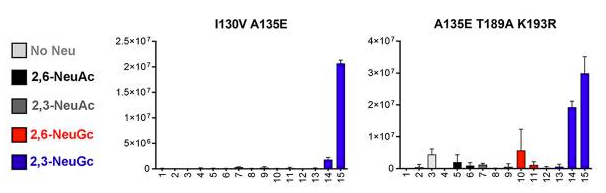
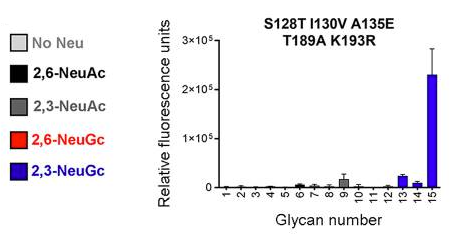
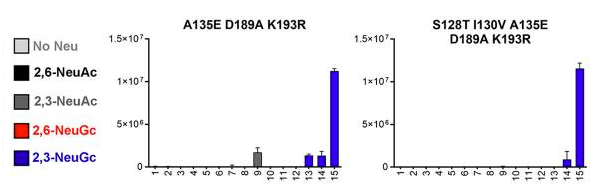
NeuGc specific hemagglutinins on Influenza A virus were engineered by introducing some mutations

A group from Department of Chemical Biology & Drug Discovery, Utrecht Institute for Pharmaceutical Sciences, Utrecht University, Utrecht, the Netherlands, etc. has reported that the binding specificity of hemagglutinin on influenza A virus can be switched from NeuAc to NeuGc by introducing several mutations.
https://pubmed.ncbi.nlm.nih.gov/35044215/

Influenza A viruses (IAV) initiate infection by binding to glycans with terminal sialic acids on the cell surface. Hosts of IAV variably express two major forms of sialic acid, N-acetylneuraminic acid (NeuAc) and N-glycolylneuraminic acid (NeuGc). NeuGc is present only in species that express an active form of the enzyme CMP-N-acetyl neuraminic acid hydroxylase (CMAH), which facilitates the hydroxylation of NeuAc to convert it to NeuGc. The gene encoding CMAH, mainly expressed in mammalian species, has been partially or completely lost at several distinct events during evolution, causing NeuGc to be absent in, among others, humans, ferrets, European dogs, and avian species.

NeuGc binding specificity on hemagglutinin was achevied by the following methods,
(1) combining mutation A135E with mutations I130V or T189A+K193R in A/Chicken/Jalisco/12283/2012 H7N3 HA,

(2) combining five mutations S128T, I130V, A135E, T189A, and K193R in A/Turkey/Italy/214845/02 H7N3 HA, and

(3) combining three mutations A135E, D189A, and K193R or five mutations S128T, I130V, A135E, D189A, and K193R in A/Duck/Australia/341/1983 H15N8 HA.

urine Galectin-3 binding protein (uG3BP) is a potential biomarker of Lupus nephritis (LN)

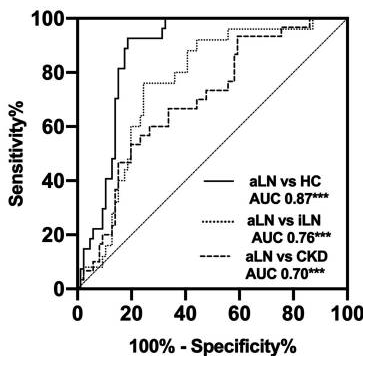
A group from Department of Rheumatology, Shanghai Institute of Rheumatology, Renji Hospital, School of Medicine, Shanghai Jiao Tong University School of Medicine, China, etc. has reported that urine Galectin-3 binding protein (uG3BP) is a potential biomarker of Lupus nephritis (LN).
https://www.ncbi.nlm.nih.gov/pmc/articles/PMC8962213/

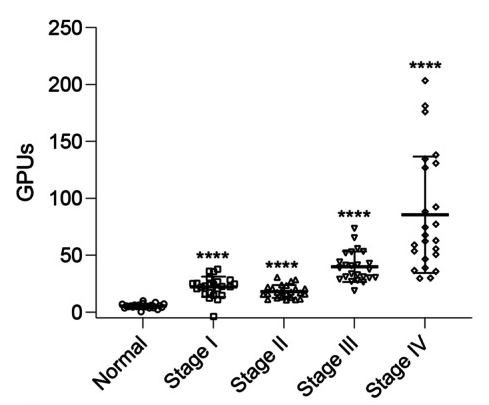
The levels of uG3BP were significantly increased in active LN patients compared to those in inactive LN (p<0.001), CKD patients (p=0.01), and healthy controls (p<0.001). ROC analysis indicated a good discrimination ability of uG3BP to differentiate active LN from chronic kidney diseases (CKD) patients (AUC=0.7), inactive LN (AUC=0.76), or healthy controls (AUC=0.87). The uG3BP levels were measured in urine samples by ELISA assay using human Galectin-3BP/MAC-2BP ELISA kit (DY2226) from R&D Systems (Minneapolis, MN, USA) according to the manufacturer’s instructions. All urine samples were diluted 1:30. uG3BP levels were normalized by urine creatinine levels. Urine creatinine levels were measured by Creatinine Parameter Assay Kit (KGE005, R&D Systems, Minneapolis, MN) using the same samples.

Neu5Gc serum biomarkers could be a promising new tool for early detection of breast cancer

A group from Institute for Glycomics, Griffith University, Gold Coast campus, Southport, QLD 4222 Australia, etc. has reported that Neu5Gc serum biomarkers are a promising new tool for early detection and disease monitoring for breast cancer.
https://www.ncbi.nlm.nih.gov/pmc/articles/PMC8962556/

A new lectin is derived from the B-subunit of the Shiga toxigenic Escherichia coli (STEC) Subtilase cytotoxin (SubAB), which recognizes α2–3 linked Neu5Gc. This lectin was engineered to to expand the recognition from only α2–3-linked Neu5Gc to include both α2–3 and α2–6 Neu5Gc linkages, and named as SubB2M. A non-sialic acid binding version named as SubBA12 was also enginnered by replacing Ser12 with Ala12. Mutation of this Ser residue abolishes interactions with the C1 carboxylate group of sialic acid and thus the SubBA12 mutant cannot bind any sialylated glycans.

SPR biosensor was used to detect serum Neu5Gc levels of breast cancer patients and healthy persons.
In order to eliminate non-specific bindings, SPR signal of SubBA12 immobilized sensor chip was subtracted from that of SubB2M immobilized one.
As a result, it was shown that serum Neu5Gc levels can discriminate breast cancer patients clearly from cancer-free individuals with high specificity (100%) and sensitivity (98.96%).

Effects of Wheat Straw Return: Plant pathogen-associated fungal genera (e.g., fusarium) decreased

A group from Key Laboratory of Plant Immunity, Department of Plant Pathology, Nanjing Agricultural University, Nanjing 210095, China, etc. has reported that wheat straw return affects rhizo-microbiome.
https://www.ncbi.nlm.nih.gov/pmc/articles/PMC8951542/

Wheat straw return (WSR), i.e., wheat stalk, was crushed into pieces and added directly to the soil surface in a Wheat–Soybean Rotation System. Little is known about how WSR affects crop-root-associated microbiomes, which are more intimately linked to plant health than field soil.

In this report, there was no significant changes in relative abundance of bacterial genera with WSR, however, it was not true in fungal genera, interestingly.
In detail, the relative abundance of some plant pathogen-associated fungal genera, e.g., Fusarium, and Alternaria, decreased after WSR, while the relative abundance of Acremonium, Mycosphaerella, Pyrenochaetopsis, Pyrenophora, Trichoderma, and Phaeosphaeria increased. These latter fungal genera are known to be associated with cellulose degrading activity.


Where, “U” and “D” mean that the relative abundance significantly increased and decreased, respectively. Rhizosphere (soil close to the root surface (RS)), rhizoplane (root surface (RP)), and endosphere (root interior (ES)).

Monoclonal antibody reference standard with extensive glycan characterization: NISTmAb

Global Biologics, Science Division, United States Pharmacopeia, Rockville, MD 20852, USA has disclosed a monoclonal antibody reference standard, with extensive glycan characterization.
https://www.mdpi.com/1424-8247/15/3/315

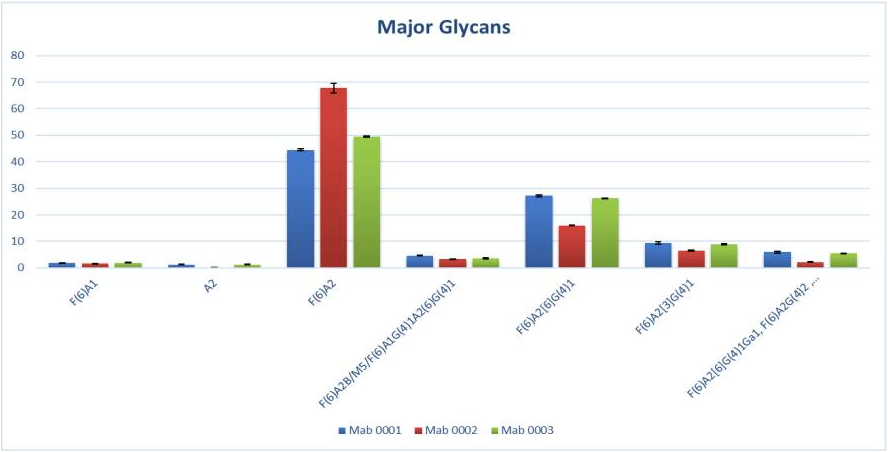
A monoclonal antibody reference standard, with extensive glycan characterization is available from the National Institute of Standards and Technology designated as NIST Reference Material 8671, NISTmAb.
The United States Pharmacopeia (USP) developed three monoclonal antibody reference standards (i.e., USP mAb 001 RS, USP mAb 002 RS, and USP mAb 003 RS) that may be used as control materials to demonstrate whether glycan characterization procedures provide an accurate result.
The USP mAb reference standards are different proteins of the same IgG type 1 subclass yet provide sufficient variability to examine a broad spectrum of glycan structures. Glycan characterization is commonly performed by analysis of glycans released from the protein backbone.


where,
F(6)A2: core fucosylated biantennary,
F(6)A2B: core fucosylated biantennary with bisecting GlcNAc,
M5: five mannose on core GlcNAc,
F(6)A1G(4)1: core fucosylated monoantennary with β1-4 linked Galactose,
A2[6]G(4)1: biantennary with β1-4 linked Galactose attached to α1-6 linked core mannose,
F(6)A2[6]G(4)1: core fucosylated biantennary with β1-4 linked Galactose attached to α1-6 linked core mannose,
F(6)A2[3]G(4)1: core fucosylated biantennary with β1-4 linked Galactose attached to α1-3 linked core mannose,
F(6)A2[6]G(4)1Ga1: fucosylated bianntennary with a β1,4-linked galactose directly attached to the α1,6-linked core mannose, and an α1,3-linked galactose attached to the β1,4-linked galactose,
F(6)A2G(4)2: equal to G2F,

Targeting TGF-β1 pathway might be a promising approach to enhance immune checkpoint blockade PD-1/PD-L1 in nasopharyngeal carcinoma

A group from Department of Otolaryngology-Head and Neck Surgery, Nanfang Hospital, Southern Medical University, Guangzhou, China, etc. has reported that targeting TGF-β1 pathway might be a promising approach to enhance immune checkpoint blockade PD-1/PD-L1 in nasopharyngeal carcinoma (NPC).
https://pubmed.ncbi.nlm.nih.gov/35311117/

It is well known that PD-L1, programmed death ligand-1, is a transmembrane glycoprotein expressed by tumor cells and PD-L1 inhibits T cells activity and promotes immune evasion through binding to its receptor PD-1 on T cells.

TGF-β is a multifunctional cytokine with an important role in both physiologic and pathologic processes, including cancer. The aberrantly upregulated production of TGF-β has been strongly implicated in tumor progression, angiogenesis, and metastasis, as well as immune escape. TGF-β has been regarded as a critical immunosuppressive cytokine, which suppresses the antitumor activity of effector cells, including CD8+ T cells, natural killer (NK) cells, and macrophages.

In this study, it was confirmed that PD-L1 was heavily glycosylated in NPC, and found that TGF-β1 played an important role in N-glycosylation of PD-L1.
Inhibition of TGF-β1 by a TGF-β type I receptor inhibitor (SB431542) reduced not only PD-L1 expression but also PD-L1 glycosylation. The reduction of PD-L1 glycosylation was confirmed by loss of PD-L1 binding ability to ConA lectin.

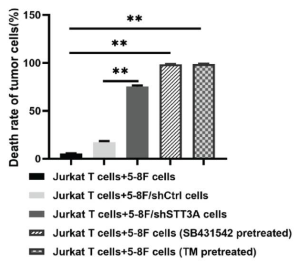
Authors found that the glycosylation of PD-L1 was affected by TGF-β1 through c-Jun/STT3A signaling pathway, suggesting that targeting TGF-β1 pathway might be a promising approach to enhance immune checkpoint blockade in NPC avoiding deglycosylatin of PD-L1.

Co-culture of NPC cells (5-8F cells) and Jurkat T cells, conducted with STT3A-knockdown (shSTT3Acells), SB431542 and tunicamycin (TM) pretreatments on T cells.

Alleviation of salinity stress in eggplants by using a biofertilizer (Bacillus subtilis, Pseudomonas sp., Trichoderma harzianum etc.)

A group from Department of Botany and Microbiology, Faculty of Science, Alexandria University, Alexandria 21511, Egypt, etc. has reported about alleviation of salinity stress in eggplants by using a biofertilizer.
https://www.ncbi.nlm.nih.gov/pmc/articles/PMC8912713/

Chemical fertilizers have been widely used to achieve maximum crop productivity in conventional agricultural systems. Nevertheless, when chemical fertilizers exceed the threshold level, they accelerate soil acidification, pollute groundwater, and harm the environment overall. It is recommended to apply biofertilizers as eco-friendly alternatives as they play a pivotal role in phosphate solubilization, nitrogen fixation, production of ammonia, enzymes, siderophores, and secretion of variable phytohormones. Furthermore, they exhibit biocontrol activity against a wide variety of phytopathogenic agents.

In this study, the effect of selected bioinoculum (plant growth promoting rhizobcteria and rhizo fungi) on salinity stress in eggplants (Solanum melongena L.) was investigated as a biofertilizer.

Comparative experimental conditions were as follows:
(C): one irrigated with distilled water as a control,
(I): the second one inoculated with the selected inoculum and irrigated with distilled water,
(S): the third one irrigated with 200 mM NaCl, and
(S + I): the fourth one irrigated with 200 mM NaCl and inoculated with selected inoculum.
Two strains of rhizobacteria (Bacillus subtilis and Pseudomonas sp.) and three strains of rhizofungi (Trichoderma harzianum, Aspergillus terrus, and Penicillium citrinum) were used as the inoculum (as a biofertilizer).

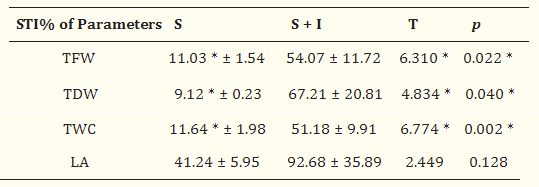
Salinity stress significantly decreased leaf area, root fresh and dry weights, in addition to root water content by (59.14, 95.87, 96.30, and 95.66%, respectively) compared to control, but the inoculating the soil of salt-stressed eggplants showed a significant increase in leaf area (LA), total fresh weight (TFW), total dry weight (TDW), and total water content(TWC) as shown below.
The gene expression of photosystem II D2, glutathione reductase, and glutathione S transferase was upregulated in inoculated salt-stressed eggplants with respect to stressed ones, that of protease I and protease II (cell-wall degrading enzymes to suppress pathogen growth) was also upregulated in inoculated salt-stressed eggplants with respect to stressed ones, and that of lipase was downregulated conversely in inoculated salt-stressed eggplants with respect to stressed ones.
These changes suggest that defense mechanism related genes are upregulated in inoculated eggplants.

Powered by WordPress |Copyright © 2020 Emukk. All rights reserved