blog

A new therapy for the new coronavirus (COVID-19): Topoisomerase 1 inhibitors suppress gene transcription induced by SARS-CoV-2 infection “in one go”

It is well known that when the new coronavirus (COVID-19) becomes severe, it causes acute respiratory prompt syndrome and multiple organ failure, resulting in cytokine storms.
To mitigate lung inflammation, the use of inhibitors against certain cytokines, such as IL-6 and GM-CSF, is limited. This is because there are many signaling molecules and pathways are involved in the triggering of cytokine storms.
Therefore, the following group focused on inhibitors of DNA Topoisomerase-1 in order to inhibit the transcription process of genes induced by viral infection “in one go”
https://pubmed.ncbi.nlm.nih.gov/33299999/

Topoisomerase-1 is a necessary enzyme to unwind DNA double helix.
In vivo experiments using hamsters, it was shown that genes expressed high by viral infection were down regulated by the Topoisomerase-1 inhibitor, and thereby SARS-CoV-2-induced lung
inflammation was suppressed.
Conditions of the new coronavirus (COVID-19) can be mimicked by a SARS-CoV-2 protein cocktail (S, N, P-protein)

A group of La Paz University Essential, Spain has suggested a treatment based on the novel coronavirus (COVID-19) symptoms that can be completely mimicked by a protein cocktail of SARS-CoV-2.
https://pubmed.ncbi.nlm.nih.gov/33283062/

In patients with COVID-19, inflammation and cytokine storms are induced, and il-1β, IL-6, and TNF-α are known to be highly expressed. This early stage can be explained by excessive activation of monocytes and macrophages. In the later stages of COVID-19, adaptive immunity plays a critical role, and in severe patients, lymphocytes are significantly reduced.

Blood cells obtained from healthy people was incubated with SARS-CoV-2 S-protein, N-protein and P-protein cocktails and developed a phenotype that mimics the COVID-19 condition. For example, in monocytes, HLA-DR, the signal path for antigen presentation, was reduced, and PD-L1, a immune checkpoint ligand, was highly expressed.
From these results, it was suggested that the use of inhibitors (antibodies) for immune checkpoint molecules could lead to effective treatment. Actually, a clinical trial using camrelizumab (PD-1 antibody) is in progress.

Expect progress.

Importance of β3Gn-T6 Glycosyltransferase (enzyme involved in the synthesis of Core3 O-glycan) in pancreatic ductal adenocarcinoma

It is well known that changes in the expression of mucin-type O-glycans can be seen in the initiation, progression, and metastasis of cancers.
A group of AIST has reported a study on the relationship between clinicopathology and O-glycans in pancreatic ductal adenocarcinoma.
https://journals.plos.org/plosone/article?id=10.1371/journal.pone.0242851

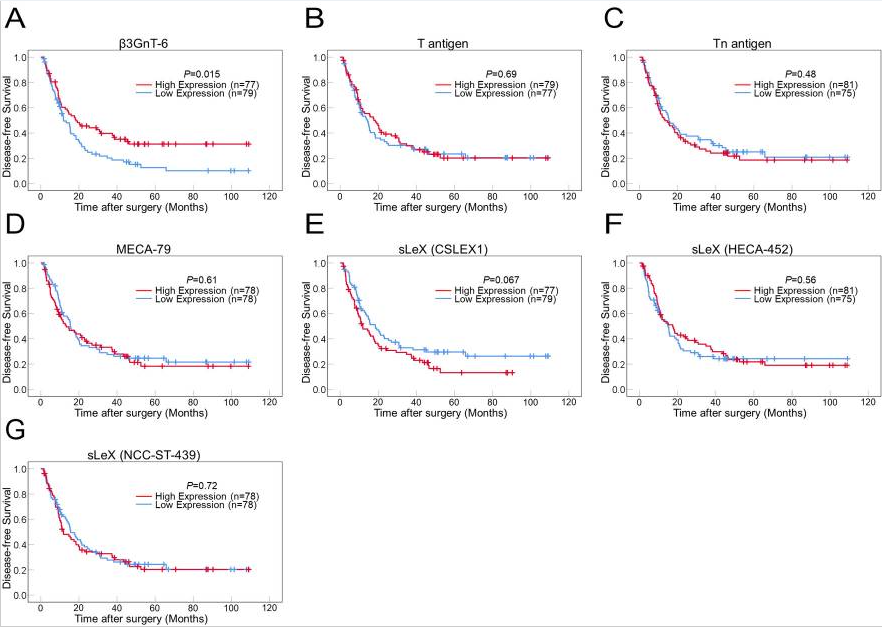
In pancreatic ductal adenocarcinoma, Tn-antigen and sialyl-LewisX antigen are highly expressed.
However, there was no correlation between these expression levels and disease-free survival (DFS).
Interestingly, however, there was a clear correlation between β3Gn-6T glycosyltransferase and DFS, indicating that higher expression of β3Gn-6T resulted in longer DFS.
The β3Gn-6T glycosyltransferase is a necessary enzyme for the synthesis of Core3 O-glycans.

At this stage, the mechanism of why the Core3 structure and its extended structure increase DFS is not known.
Let’s look forward to the progress of research in the future.  That may lead to the outcome of breaking down the general concern that “Glycan is just a physiological expression of disease state”, .

Simplified sample preprocessing of RT-PCR in novel coronavirus (SARS-CoV-2) detection: heat treatment only

RT-PCR is the Gold Standard for testing for covid-19. Samples are taken from the nasal cavity with cotton swabs, nucleic acids are extracted by pre-treatment, and then RT-PCR is performed, but reagents and consumables are running out due to the increase in the number of tests worldwide.
There is a report of how this preprocessing process can be simplified as follows.
https://journals.plos.org/plosone/article/authors?id=10.1371/journal.pone.0243266

As a result, a sample of 20uL to 40uL was heat treated at 95°C to 98°C for 2 to 20 minutes to obtain good RT-PCR results.
The RT-PCR kit evaluated were
ABI TaqMan fast virus 1-Step RT-qPCR kit,
Meridian Bioscience Fast 1-Step RT-qPCR kit.

However, when the sample was suspended using UTM Viral Transport COPAN, this method failed to produce any detectable signal.
The cause is unknown because the composition of the reagent is not disclosed. So, depending on the combination of reagents used in the RT-PCR Kit, it seems that a simplified pre-treatment of heat treatment may not work properly.

Colorectal Cancer and Tn-Antigen

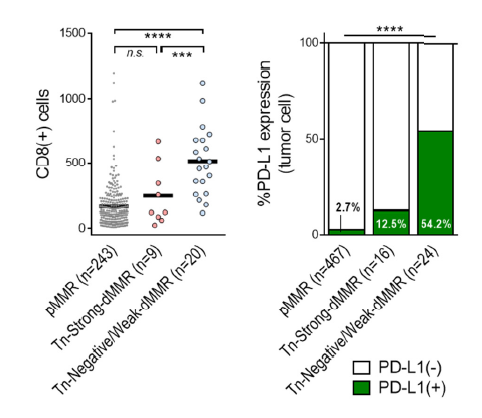
A group from Fukushima Medical University has discussed about a key-point on colorectal cancer immunotherapy based on colorectal cancer and Tn-antigen.
https://www.mdpi.com/1422-0067/21/23/9081

In cancer, mutations are accumulated in the genome and epigenome. In colorectal cancer, 85% are derived from chromosomal instability and 15% from deficient mismatch-repair (dMMR).
It is also well known that in cancer, aberrant glycans are expressed on the cell surface, and O-type glycans are truncated, and resulting Tn-antigens are highly expressed. Tn-antigen binds to macrophage MGL and promotes il-10 secretion and acts immuno-suppressively, as well as inducing T-cell apoptosis. As a result, cancer cells evade immunity attacks.

Cancer cells with deficient mismatch-repair have significantly higher expression of Tn-antigen than those that are not. In addition, those types of cancer cells tend to have less infiltration of CD8+ T-cells and lower expression of PD-L1 as an immune checkpoint molecule. Therefore, they have concluded that immunotherapy targeting on Tn-antigens and inhibition of immune checkpoint molecules may be effective for colorectal cancer with a strong deficient mismatch-repair.

The effects of ACE2 inhibitors in the new coronavirus (COVID-19), Dangerous in Diabetes Mellitus

The new coronavirus (COVID-19) is known to cause serious diseases with underlying disease such as acute kidney disease, diabetes, immunodeficiency, and obstructive airway disease.
Acute renal disease (HR = 3.23, 95% CI: 2.01 to 5.19),
Diabetes (HR = 2.07, 95% CI: 1.32 to 3.26),
Immunodeficiency (HR = 2.33, 95% CI: 1.29 to4.2),
Obstructive airway disease (HR = 2.13, 95 % CI: 1.06 -4.3),

Since ACE2 is the main infection receptor for SARS-CoV-2, the following group has performed statistical analysis based on data obtained from 617 patients on side effects of ACE inhibitors.
http://www.ijkd.org/index.php/ijkd/article/view/5920/1222

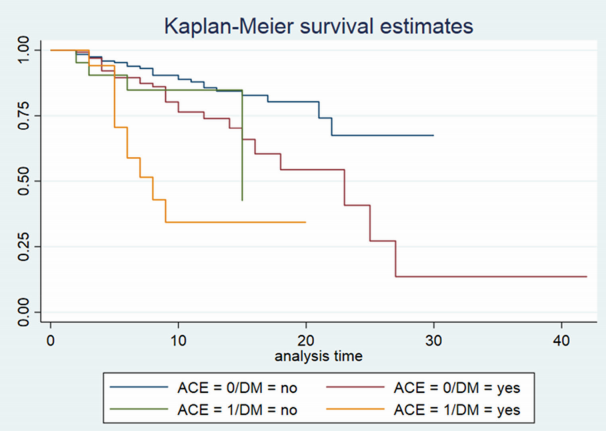
Side effects of ACE inhibitors are particularly severe in diabetes (HR = 3.51, 95% CI: 1.59 to 7.75).
In the figure below, DM=Diabetes Mellitus, ACE=0 means no ACE inhibitors, and ACE=1 means with ACE inhibitors.

CD147 is also suspected as a route of infection in the new coronavirus (SARS-CoV-2)

In envelope-having viruses, the binding of receptors and envelope proteins on the cell membrane surface of the host cell initiates the infection. In the new coronavirus (SARS-CoV-2), it is generally recognized that ACE2 is its receptor. ACE2 is expressed in the liver, lungs, stomach, kidneys, and large intestine, but ACE2 expression in the lungs is rather low, and it is suspected that other infection routes exist in view of the severity of COVID-19. C-type lectins, which are widely expressed in immune cells, are also candidates, but the following groups indicate that CD147 can be an infection pathway.
https://www.nature.com/articles/s41392-020-00426-x

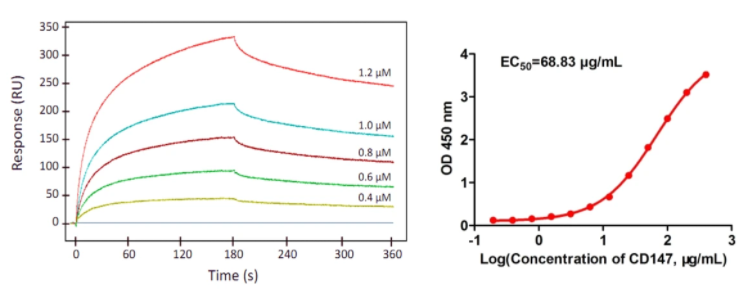
The interaction between CD147 and S-protein has been verified by SPR and ELISA methods, and actual infection experiments using VeroE6 and BEAS-2B cells have also been conducted.
Infection through CD147 is said to be endocytosis, not cell membrane fusion, as an infection mechanism.

A disposable qPCR chip for detecting the new coronavirus (COVID-19)

A group of  Imperial College London has reported a prototype of a disposable new coronavirus (COVID-19) detecting qPCR chip. Of course, this chip can also be used for other infections.
https://www.nature.com/articles/s41467-020-19911-6

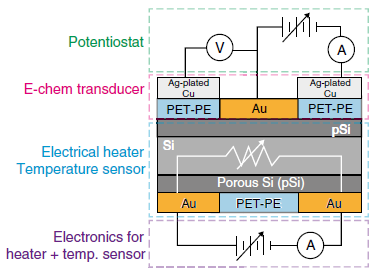
The chip has a very simple structure and is built on a Si substrate (the size of the chip is about 1 cm square). The cost when manufactured with a Si 4-inch wafer was about 40 yen/chip, so it will certainly be disposable.
The temperature control of the chip is done by controlling electric current flowing in the Si substrate, and the detection is performed electrochemically using methylene blue (MB) as a redox reporter. Since MB acts also as an intercalator of DNA, the electrochemical current changes when DNA is amplified.

Obesity is dangerous in covid-19

A group of Jinyun People’s Hospital, China has reported a relationship between covid-19 and obesity.
https://eurjmedres.biomedcentral.com/articles/10.1186/s40001-020-00464-9

Statistical analysis through 12,591 COVID-19 patients showed that the BODY Mass Index (BMI Index) in humans infected with covid-19 was higher than that of mild individuals (MD (average difference in BMI) of 2.48 kg/m2, 95% [2.00 to 2.96 kg/m2]CI). In addition, obesity was shown to be more likely to develop severer disease in the pathology of COVID-19, for example, ICU treatment (OR = 1.57, 95% [1.18–2.09]CI, ECMO use (OR = 2.13, 95% [1.10–4.14]CI).

Excessive infiltration of naïve B cells triggers severe coronavirus (COVID-19)

In patients with the new coronavirus (COVID-19), excessive infiltration of CD4+/CD8+ cells, plasma cells, and macrophages into lung tissues is common, which is believed to lead to severe damages to lung tissues and pulmonary fibrosis.
A group of the National Defense Medical Center, Taipei has reported that excessive infiltration of naïve B cells triggers  observed pathophysiology of COVID-19.
https://journals.plos.org/plosone/article?id=10.1371/journal.pone.0242900

Possible mechanisms include:
COVID-19 causes the accumulation and activation of naïve B-cells in the mediastinal lymph nodes through activation of β2-integrin and α4β1 integrin. Excessive infiltration of naïve B-cells activated by SARS-CoV-2 S-proteins secretes large amounts of IgM and activates the humoral immune
response. This recruits a large amount of monocytes into lung tissues, and the monocytes differentiate to macrophages. The secreted IgM simultaneously activates the complement system, Fc receptors on dendritic cells, and macrophages, increasing the antigen presentation of SARS-CoV-2 and enhancing phagocytosis. In addition, an increase in antigen presentation of SARS-CoV-2 accelerates the extrafollicular response through stimulation of IL-12-dependent plasma cell differentiation in naïve B cell to produce more IgM , suppressing formation of germinal centers and B-cell proliferation.

In conclusion, the importance of therapies targeting naïve B-cells has been proposed.

Powered by WordPress |Copyright © 2020 Emukk. All rights reserved